Gardaí will not tolerate motorway or port blockades during EU Presidency, commissioner says
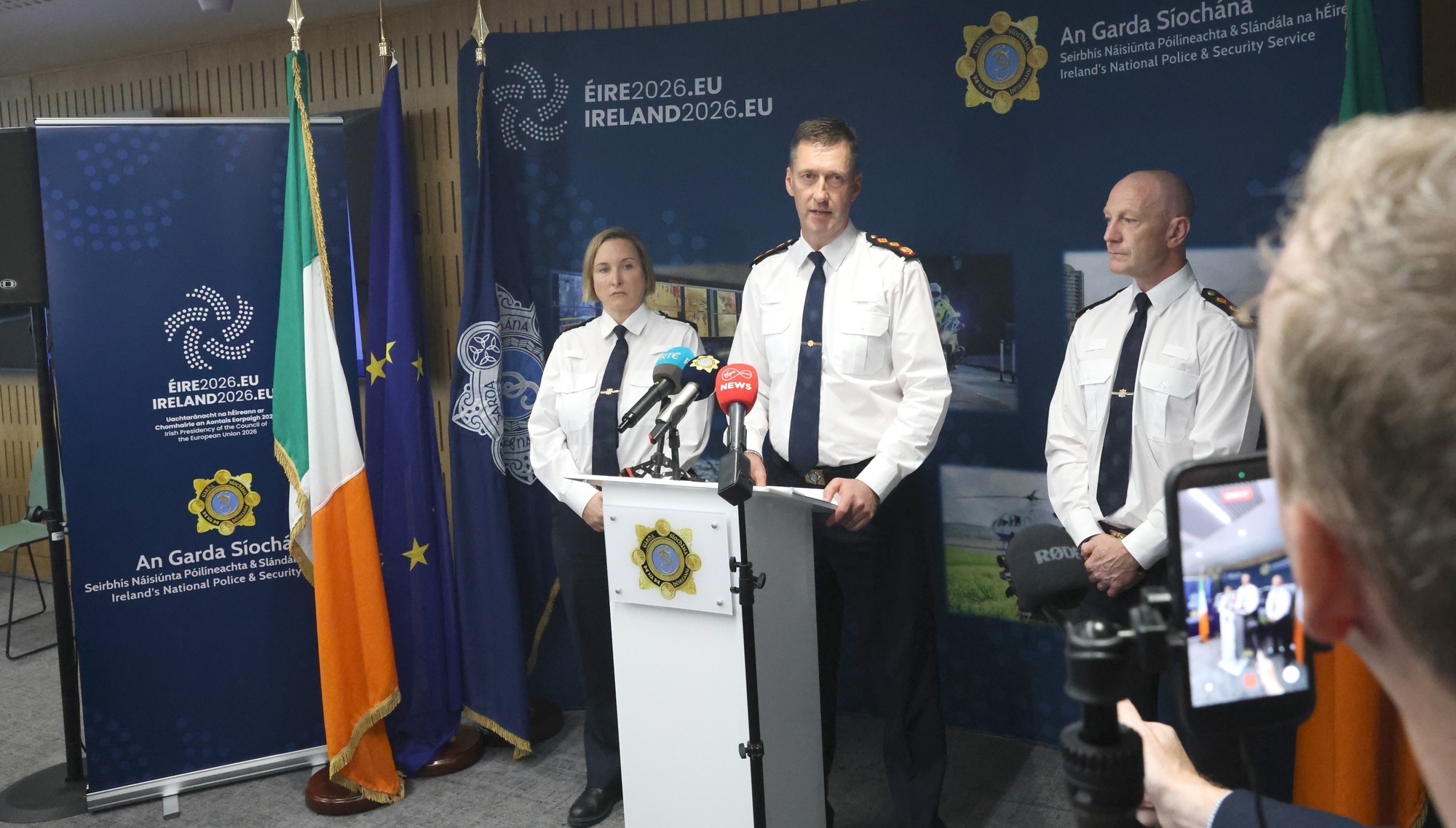
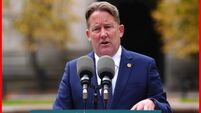
Garda Commissioner Justin Kelly (centre) at a press briefing regarding An Garda Síochána’s role in supporting Ireland’s EU Presidency in Walter Scott House this morning. Picture: Stephen Collins/Collins Photos
Gardaí will "certainly not" tolerate blockades of motorways or ports by protesters during Ireland's Presidency of the Council of the European Union, with "robust" policing measures to ensure critical infrastructure remains open, Garda Commissioner Justin Kelly has said.
The commissioner also said he was "confident" that last-minute workplace concerns raised by frontline gardaí would be resolved and that presidency events — which begin in Cork on Saturday — will run smoothly and safely.
Speaking in Dublin, Mr Kelly described the EU Presidency as the "biggest policing and security operation in the State", adding that An Garda Síochána has been planning for the event for the past two and a half years.
He said gardaí have been liaising with police forces from countries that have recently held the presidency and that specialists, including experts in counter-drone operations, from several EU police forces will assist during the six-month term.
Read More
He said the Government has funded the purchase of new equipment, including a surveillance aircraft, escort cars and motorbikes, a heavily armoured tactical vehicle, and body armour for public order units.
As previously reported by the , An Garda Síochána has also invested significantly in drone and counter-drone capabilities, with members of the Garda Special Tactics and Operations Command (STOC) undergoing extensive training and exercises abroad.
The commissioner said there was an "excellent relationship" with the Defence Forces, with the various services conducting training and exercises — including with neighbouring navies — in preparation for the presidency.
Mr Kelly said the organisation had prepared extensively for a wide range of threats, from public order incidents and hybrid threats to blockades of critical infrastructure, similar to those seen during the fuel protests in April.
He said: “Critical infrastructure is absolutely vital that it remains open, not only during the EU presidency but all the time, so the week before last, I met all the chief superintendents, the 21 [of them] all around the country.
“We issued a new instruction to them how they lead their people and particularly around critical infrastructure. We certainly would not have a position that critical infrastructure would be blocked, we can’t allow that, so we will have robust policing in place should that occur, not just during the EU presidency but at any stage.”
The commissioner said critical infrastructure includes not only ports, airports and fuel storage facilities, but also motorways, which were targeted during the fuel protests by large trucks.
Asked how gardaí could protect motorways, the commissioner said: “I think it will be very clear, we will have a far more robust approach to blockages on motorways.
“Certainly, you saw at the end of the fuel blockades, how we dealt with some of the road blockages, we moved in quickly and made arrests and moved vehicles.
“We have put a lot of work around our capabilities and ability to move vehicles – we learned lessons from the fuel blockades. [It will be] certainly more robust."
Responding to the Garda Representative Association's (GRA) emergency meeting on Monday, which raised industrial relations concerns over policing the presidency, the commissioner said the large-scale movement of gardaí around the country for such events was complex, involving issues such as allowances, payments, travel and subsistence.
Mr Kelly said: "There can be divergence of views around how that is interpreted and we are in one situation at the moment."
The GRA is concerned that members may have to travel long distances in their own time to police presidency events in Dublin, Cork and elsewhere before working 12-hour shifts the following day.
The commissioner said: "There is an established process to review these issues, and it's in that process. I'm confident it will be resolved. I'm very confident the policing of those events will go ahead and we will have safe and secure events."
CONNECT WITH US TODAY



Be the first to know the latest news and updates