Michael Moynihan: Cork firefighter to be honoured at National Bravery Awards
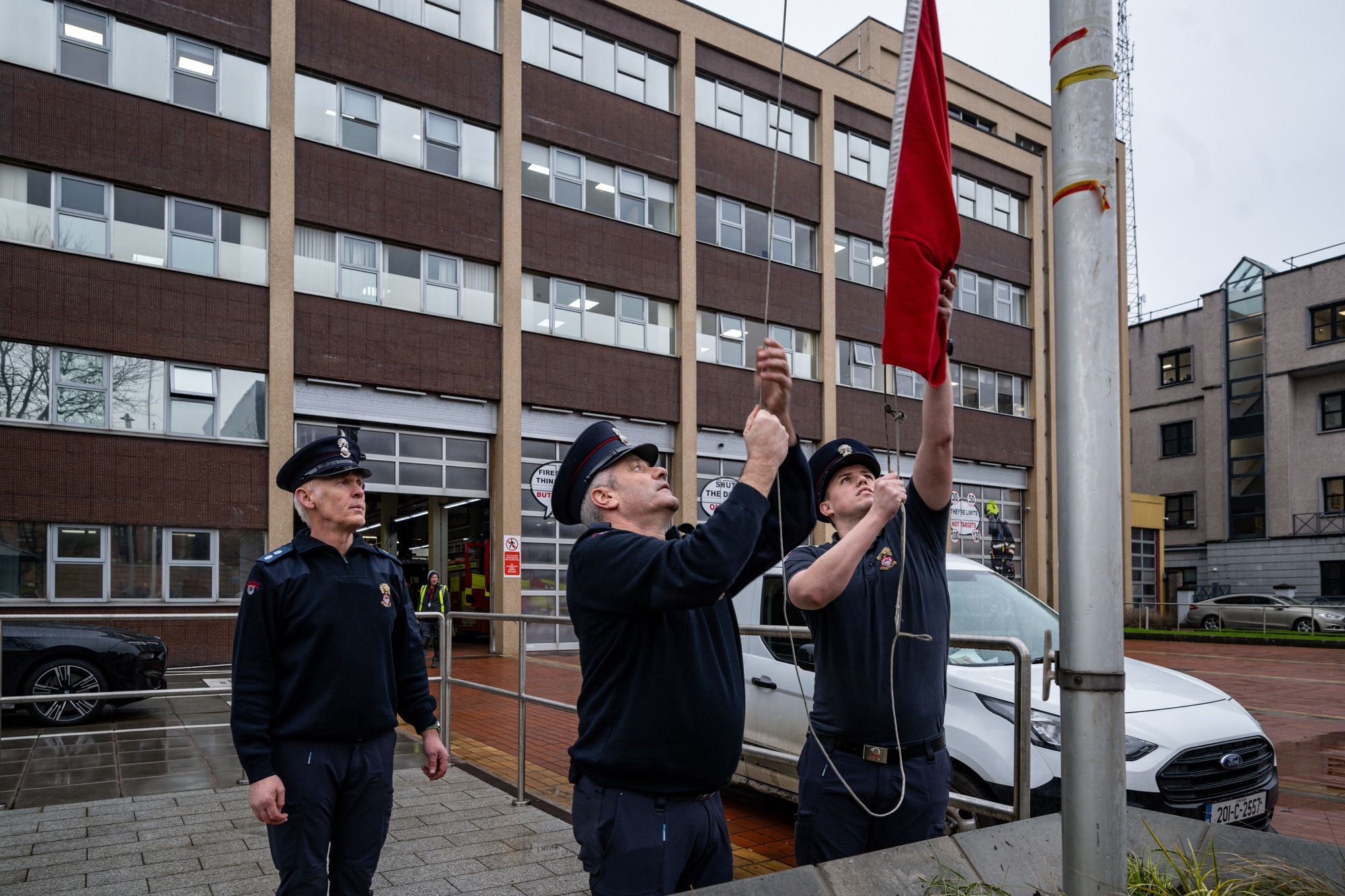
Firefighters Michael Daly, Brian Ring, and Tony Donoghue lower the flag outside Anglesea St station to half mast to mark the 50th anniversary of the death of Dick Beecher who was killed in the line of duty. Mr Beecher will be awarded the Posthumous Bronze Medal and Certificate for Bravery at a ceremony in Leinster House tomorrow. File picture: Chani Anderson

Tomorrow the National Bravery Awards will be presented in Dublin.
They were established in 1947 to provide suitable recognition by the State for deeds of bravery, and are given to people from all walks of life, and all sections of society, who have saved a human life involving personal risk to them.
I can’t confess to being au fait with the awards until now, though I was struck by some of the information I have since discovered.
To give a good example of the changes in Irish society, for instance, the awards website explains that in its first year it reviewed 83 reported rescues and made awards in respect of 29 of them.
Three of those involved people being rescued from “runaway horses”, which is not quite as pressing a problem these days.
I mention these awards because one of the people being honoured tomorrow is Dick Beecher, the member of the Cork City Fire Brigade who died attending a fire in Washington St in 1975.
Read More
I’ve written about him here before, and not just because as a small child I met him at the old fire brigade substation in Blackpool, where he was a work colleague of my father’s.
My reason for mentioning him here in the past was a nagging sense that there hadn’t been due recognition of the sacrifice he made over 50 years ago, when he gave his life for the people of this city.
I’m not blaming anyone in particular for that. It should also be acknowledged that the mid-1970s was a wholly different era, obviously enough.
Our understanding of trauma and its long-term effects is far more sophisticated now than it was then.
Also, the gravity of what happened that day is acknowledged by the inscription on the plaque which honours him on Washington St — if you turn off Grand Parade the plaque is on the left-hand side of the street about 60yards up and reads:
“On the 12th of February 1975 Fireman Richard Beecher lost his life on this site in the service of the people of Cork.”
When writing on the history of Cork Fire Brigade Pat Poland fleshed out a fuller portrait of Dick Beecher — as a prominent member of Monkstown and Cork Harbour Rowing Club, where he was stroke of the club’s schools crew, as a member of the Military Police Corps of the FCÁ, as the son of Mr and Mrs John and Elizabeth Beecher, as the youngest of four siblings, and engaged to be married at the time of his death, when he was just 23.
It’s entirely fitting that he should be conferred with the posthumous Bronze Medal and Certificate for Bravery at a ceremony in Leinster House tomorrow, and there is huge credit due to Pat Poland and Dick’s other former comrades in arms who put together the submission to have him recognised.
When people like Pat Poland get involved in projects they tend to come to fruition, but credit must also go to Comhairle na Míre Gaile, which adjudicates on these awards.
(I only learned this week that this body incudes the Ceann Comhairle, the Garda Commissioner, and the Lord Mayor of Cork, among others.)
Remembering people like Dick Beecher is important. So is the way we remember them. Thanks to Pat for putting me in touch with someone whose memories go beyond a plaque on a wall in the middle of town.
Trish Harris is Dick’s niece. She was 12 when he died, and he was a vital presence in her family’s life.
“My mother Maighréad was his godmother, so she was both his sister and his godmother. I remember him well coming up to our house in Monkstown for his bath, for instance, and he’d bring his clean clothes up in a yellow bucket for when he was finished.
“We could hear him singing away to himself in the bath — Two Little Boys was the popular song of the time and he’d be singing that, he had a beautiful voice.
“Then eventually the bathroom door would open and he’d come out through the steam, the aftershave on, and the clean clothes — and the clothes he had been wearing, the dirty clothes, in the bucket.
“In my mind’s eye I can still see his white towel hanging on the bucket, and then he’d head away off.”
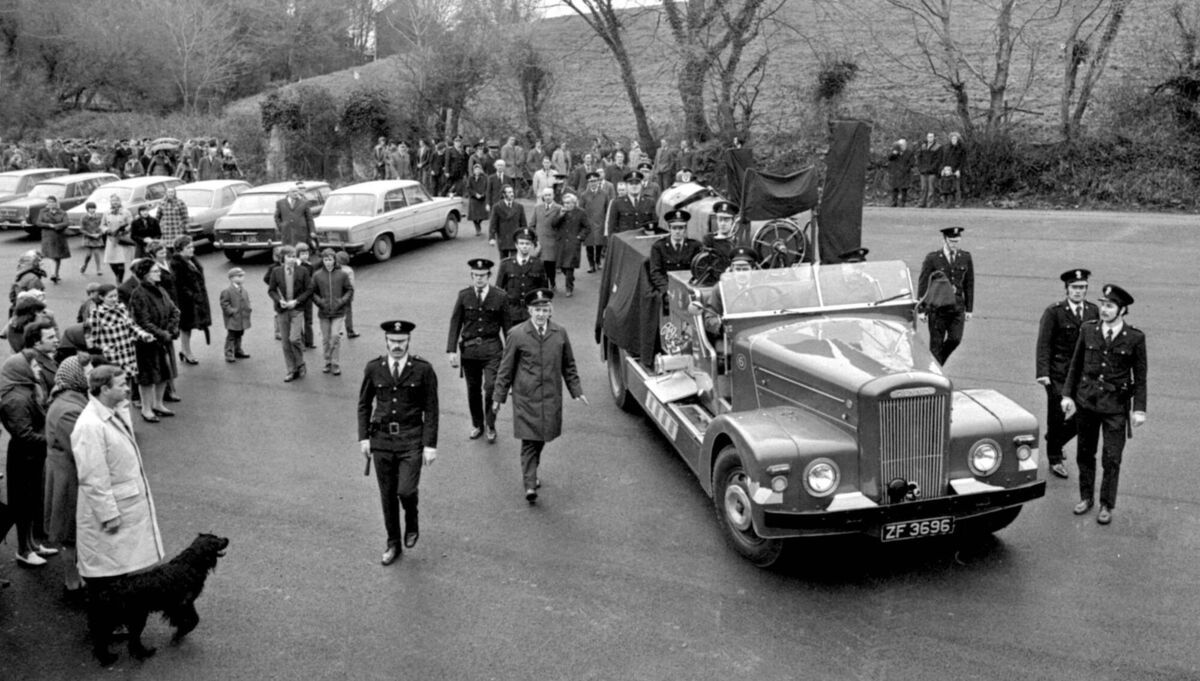
Trish saw him the morning he died: “I waved to him that morning — I was on the bus and got off to go to school at Regina Mundi, while he stayed on to go to work.
“His death shattered my mother, and the rest of the family. It had a huge effect on the whole community, really, a 23-year-old dying like that.
“My mother went to his grave every day for months. She’d walk up there. My grandfather, Dick’s father, would go down to the local for a pint and I remember asking him if he was OK coming home afterwards. ‘Sure Dick walked me home,’ he’d say.
“My younger brother and I didn’t go to the funeral. I’d say our parents were protecting us. But recently enough I was cleaning out my mother’s house and found a photo album she had kept for years which was full of pictures of Dick’s funeral.
“I would still go to the cemetery and visit his grave. And I feel him on my shoulder when I’m there. When I do, I ask him to look after the members of the family — if someone is unwell or even if I was hunting for a parking space near a hospital I’d say ‘Dick, I know I asked you to look after me for parking last night, but can you do the same this evening’.
“Passing the plaque inside in Washington Street can be hard. I wouldn’t say a prayer when passing there but I would say hello to him.”
The family link continues. Dick’s grandnephew is in the fire brigade now, Josh Beecher. The connection remains strong to this day, says Trish.
“Last year was the 50th anniversary of Dick’s death, and we had a mass for him in Passage West.
“And because he was a member of the choir in Passage, they sang at the mass for him. The firemen came down for the mass and the tears came, certainly, when we saw them all walk into the church wearing their uniforms.”
Tomorrow’s recognition is appreciated by the Beecher family, she added.
“Of course you would prefer that it had never happened. When you strip it all away he was a son and a brother, and uncle and godson.
“But it’s nice to have this recognition now. It’s lovely to have him remembered for this. His parents would have been so, so proud, and my mother the same.
“I just missed him. He was a force of nature, and I missed having him in my life, but he has been part of my life at the same time.”
CONNECT WITH US TODAY



Be the first to know the latest news and updates