Clodagh Finn: We must tell the hidden histories of sexual violence in the Irish revolution
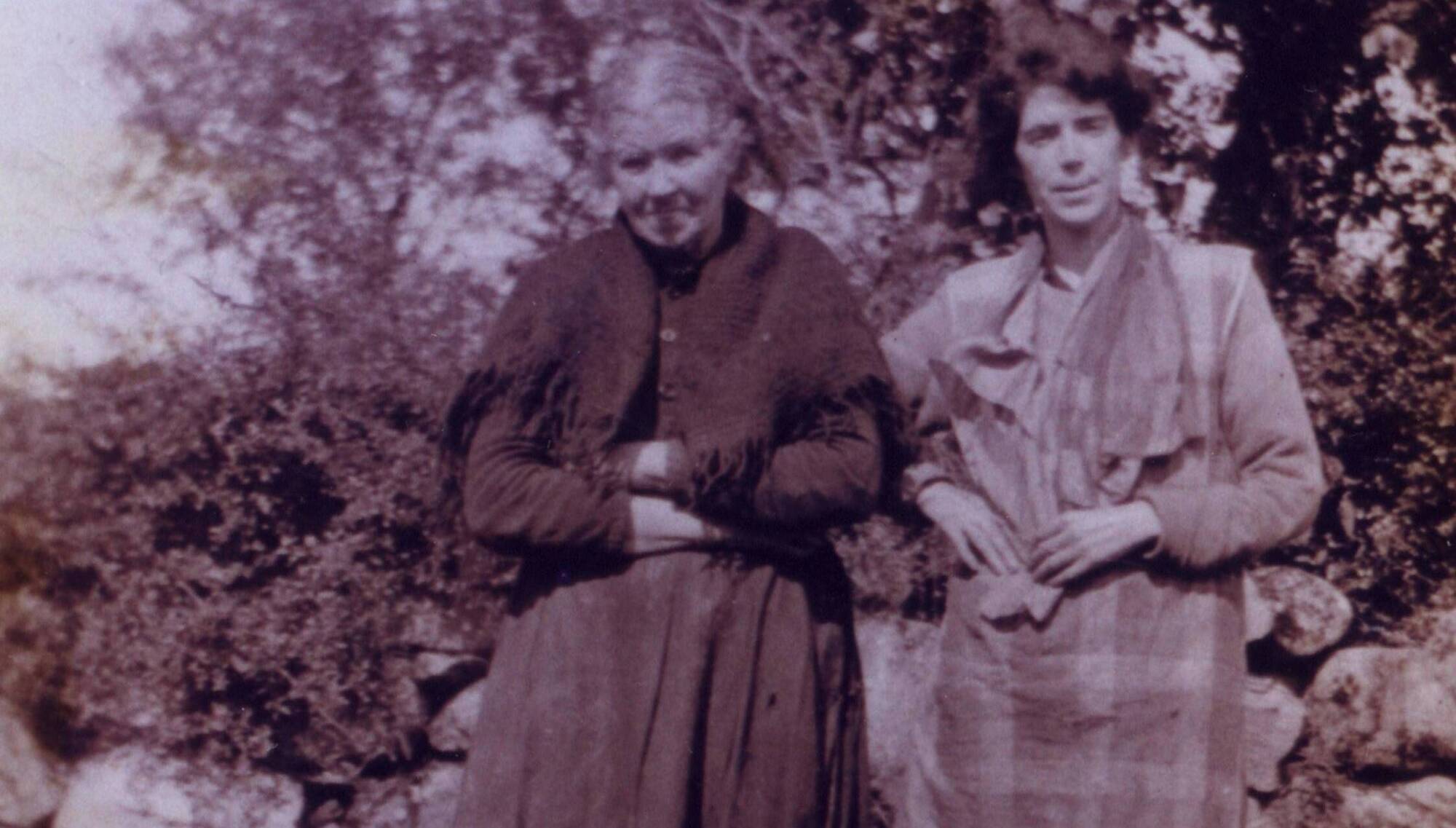
Few surviving sources document sexual violence in the Irish revolution in as much detail as the file describing the horror inflicted on Margaret Doherty, right, by the National Army in 1923. She is photographed here with her mother Catherine. Picture courtesy of her grandniece Edel Doherty and the Doherty family

“It was as if she was speaking to us from beyond the grave,” Edel Doherty says of her grandaunt Margaret ‘Maggie’ Doherty, who died five years after she was brutally sexually assaulted by members of the National Army in Mayo in 1923.
No one was ever held responsible for the attack.
Now, more than a century later, Maggie Doherty’s voice has re-emerged from the archives, resolute and clear, and it informs the harrowing account of her ordeal told with empathy, dignity and compassion in , the silence-shattering new book from Linda Connolly, professor of sociology at Maynooth University.
As her grand-niece said at the launch of the book in the Oak Room in the Mansion House in Dublin last month, it was as if Maggie Doherty wanted her story to be told.
In the same way, the memory of Eileen Mary Warburton Biggs’s brutal rape by several men in IRA uniform was poignantly recalled by acclaimed poet Eleanor Hooker, who warned of the danger of ventriloquising women from the past.
HISTORY HUB
If you are interested in this article then no doubt you will enjoy exploring the various history collections and content in our history hub. Check it out HERE and happy reading
Instead, she said, she came to know them through the archives, and to love and respect their fearlessness. Her poems were intended to give voice to their experiences.
Read More
She read two of them at a launch, which also included music from award-winning harpist Rachael Dooley, a poem read by Abdallah Aljazaar of Gaza, and speeches from Fergal Keane and Susan McKay, two award-winning journalists who have written extensively on the toll that war, both past and present, takes on women.
I mention that because you get a real insight into the essence of a book at the event organised to release it into the world. The gathering usually unites those who did the research and writing, with those, or relatives of those, who feature it in.
It’s a particularly affecting combination because, in this instance, the stories that have been hiding, sometimes in plain sight, are now finally being told in a manner that honours the grace, courage and resilience of the women who suffered violence, from all sides, during the Irish revolution and, later, during the Troubles.
“This book is all about the women,” emphasises author Linda Connolly as she signs books.
And, it becomes clear as the night goes on, it is also about setting the record straight.
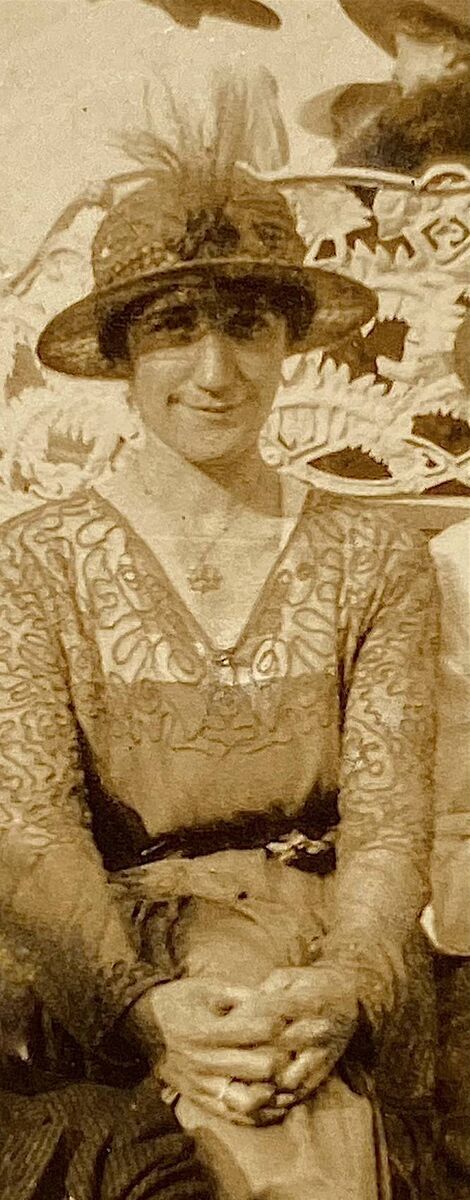
For instance — and be warned, this is a very distressing account — for many years Eileen Mary Warburton Biggs was incorrectly named as "Harriet". She was also described as "young" In fact, she was 43 years old when a number of IRA men broke into her home in Dromineer, Nenagh, Co Tipperary and “outraged” her, eight or nine times, in June 1922, to quote her own account in a compensation claim four years later.
Her attackers left her for dead.
But she was not dead, even if the grotesque violence done to her left her with immense physical and mental difficulties.
At least, in this account, the woman herself is not reduced to the barbarity inflicted on her. She is presented as a person who lived before her ordeal, and after it.
Though, as so often happened, there was no justice.
A number of named suspects appeared before a special court in Nenagh on August 9, 1922, but none of them were ever convicted.
The chief suspect in the case is commemorated as a revolutionary hero on four different memorials today, but there isn’t a single mention of Eileen Mary Warburton Biggs anywhere; not in the place where she lived nor in the place where she is buried, in an unmarked grave at Mount Jerome cemetery in Dublin.
As Connolly writes: “The disremembering of a woman brutalised in a documented gang rape, including by using her incorrect name, in comparison to such heroic remembrance raises very provocative questions about commemoration from the perspective of acknowledging that transgressive sexual violence 'happened' in the Irish revolution — and in terms of respecting the memory of female victims of atrocities of the Irish Civil War.”
She also points out there was an opportunity to acknowledge and ethically remember Eileen MW Biggs, and many other women who suffered in the same way, during the Decade of Centenaries, but it was not realised.
“Neither the State nor the Irish army have likewise officially apologised for such atrocities against women,” she adds.
It is hard to read those words and not feel livid, but the author succeeds in remaining dispassionate when presenting fact after horrific fact in a book that examines myriad sources to lay bare the widespread, and still largely hidden, impact of violent conflict on women.
And, as Gisèle Pelicot, the French woman who waived her right to anonymity in a multiple rape case, said: “Shame has to switch sides.”
The weight of that shame comes through particularly forcefully in Eileen’s case. At one point, she said: “We cannot hold up our heads amongst our friends and acquaintances.”
She stayed in Ireland, though, and went back to live in Dublin until she died in 1950, aged 69.
Would it help her to know that she is remembered? Or that we now have a correct record of her name and the crimes committed against her?
The fact her compensation claim very explicitly outlined her injuries, suggests so.
In the same way, reading the account of Margaret ‘Maggie’ Doherty, unearthed with help from historian Frank Fagan, shows both she and her mother Catherine were intent on seeking justice after “the hellishly barbaric treatment [she endured] at the hands of the Free State soldiers” in Foxford, Co Mayo, in 1923.
“The courage and conviction she displayed is evident in every line of her testimony, and answers to questions put to her,” writes Connolly.
In her military service pension application, Maggie’s mother Catherine wrote that her daughter, a member of Cumann na mBan, had been raped by three armed men in 1923, and that she had died five years later in the “mental home” in Castlebar in 1928.
It took a century for that document to come to light, and while there was no mention of it, Linda Connolly was sure there was a file on the court martial somewhere in the Irish Military Archives.
The account of how she located that file, the unusual circumstances of consulting it and the trial and subsequent acquittal of Lieutenant JJ Watters, Lieutenant J Benson, and Lieutenant Hugh Mulholland, all of the 61st Infantry Battalion, Ballina, is a sobering reminder of the exercise of power, and how it so often fails women.
“Maggie Doherty was treated almost as if she was a woman on trial despite what she had clearly endured,” writes Connolly.
There’s a sentence which, sadly, continues to be true to this very day, although there is some comfort in knowing the silence is finally being eroded.
While these are just two accounts of the many instances of sexual violence against women outlined in the book, Linda Connolly is at pains to point out that “every story mattered”.
And it is true. Here is a book that restores dignity and respect to every single woman mentioned in it. It also establishes an intergenerational continuum that links us, in the present, to the experiences of the women who went before us.
Erasing what happened to them from the history we learned in school left us with a huge knowledge gap about what we might face, as women, when we ventured out into the world, to reference an idea much better expressed by poet Eavan Boland.
On the flip side, retrieving their voices reminds us we are not alone in facing sexual violence and, like them, we can speak out and put the blame back where it belongs.
- by Linda Connolly is published by Routledge

BLACK FRIDAY
Already a subscriber? Sign in

CONNECT WITH US TODAY



Be the first to know the latest news and updates