Clodagh Finn: Fruits of the loom, a festival of welcome that could help us weave a new way of thinking
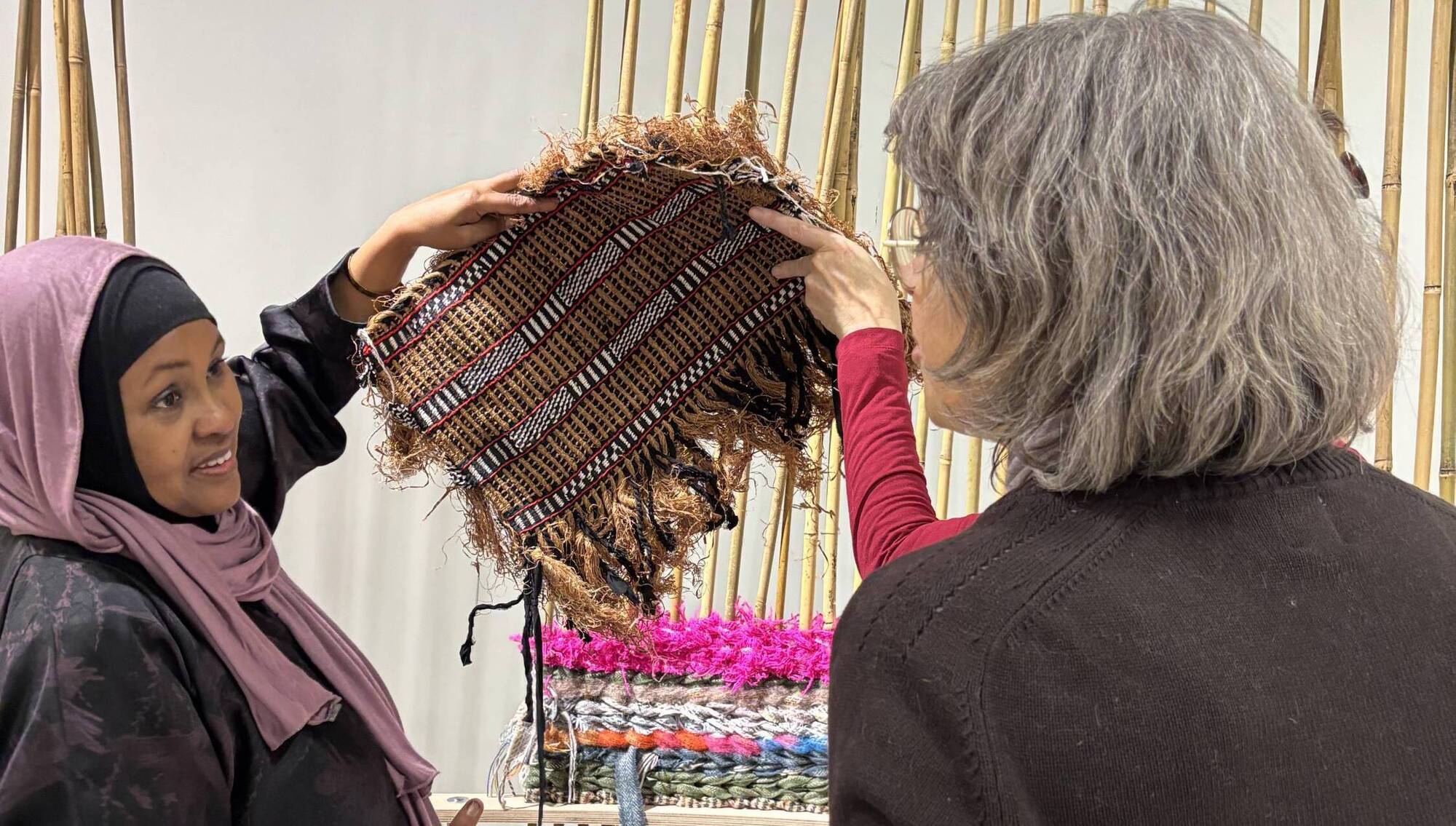
Saada Osman (left) of the Higsad Alool Weavers showing visitors how to weave a 'living room' as part of Common Threads: A Gentle Festival of Welcome.

For once, superlatives were actually needed. Some 50 world leaders gathered in Dublin over the last three days for the State’s largest-ever diplomatic event, prompting an unprecedented security lockdown.
The news today will continue to be full of it.
Elsewhere in the city, at the National College of Art and Design, the doors were wide open to any, and every, passerby on Thomas Street who wanted to join a three-day event that was rather poetically named ‘Common Threads: A Gentle Festival of Welcome’.
More than that, the work at its centre — the weaving of a ‘living room’ in the Somali tradition — was entirely visible as it quietly took shape in the glass-fronted gallery facing the street.
There will be less about that. And more’s the pity as this singular project, brought to Dublin by artist Jennie Moran as part of her residency at NCAD Field, offers a thought-provoking template for reaching across the divide to find common ground. And to do so gently.
Read More
On Tuesday, as the event settled into its own crowd-gathering rhythm, you could hear the whine of sirens and see a blur of high-vis vested gardaí on motorcycles whizz by as the city geared up to host the ninth European Political Community (EPC) summit.
Meanwhile, the slow, meditative and collaborative work of weaving the ‘walls’ of a living room was being guided by Somali woman Saada Osman, of the Higsad Alool Weavers, and Sheffield arts company, The Bare Project.
The two events seemed like polar opposites: one, overwhelmingly male, exclusive and behind closed doors; the other, overwhelmingly female, inclusive and transparent.
Their objectives, though, were remarkably similar.
Here’s Jennie Moran on the festival: “This is about learning how to sit together across difference. The aim is to allow, or invite, people who might not usually be in the same room to spend time together.”
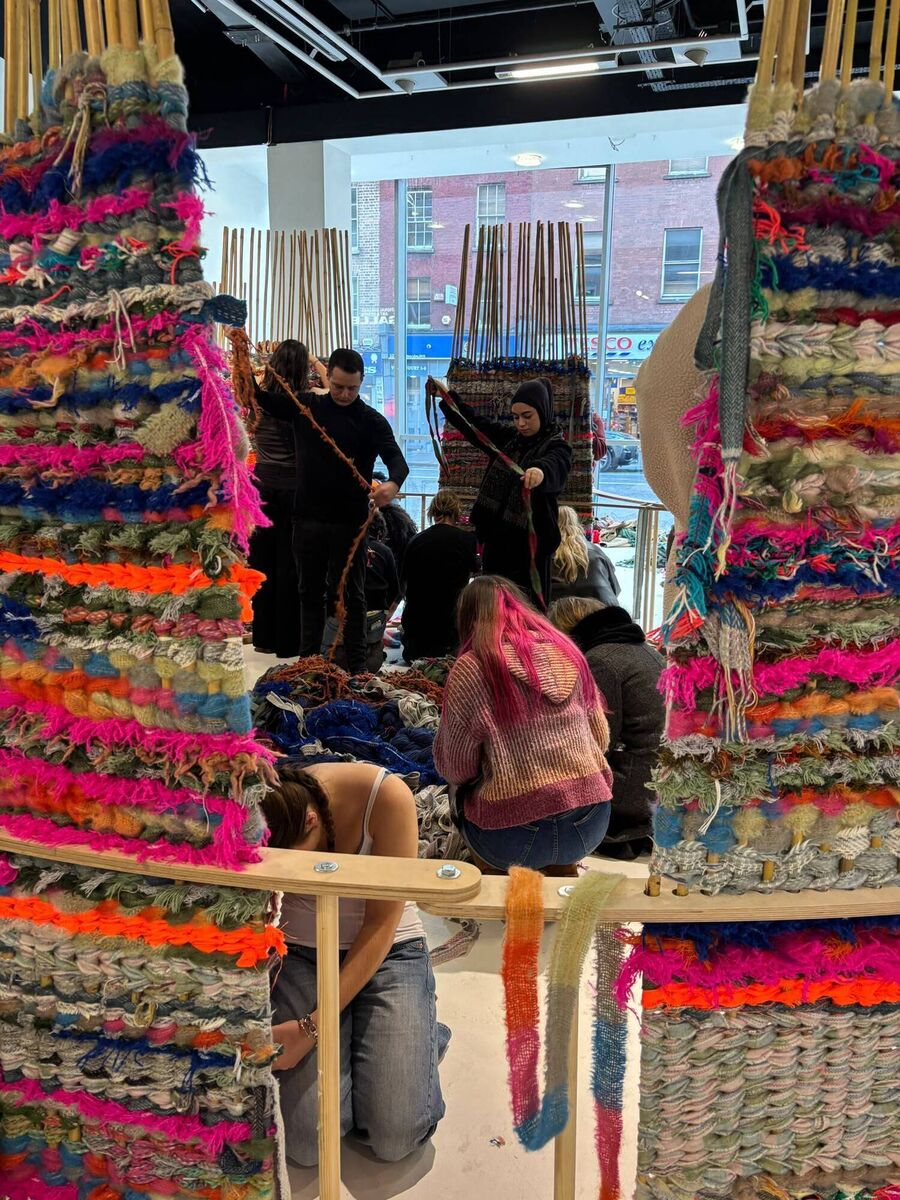
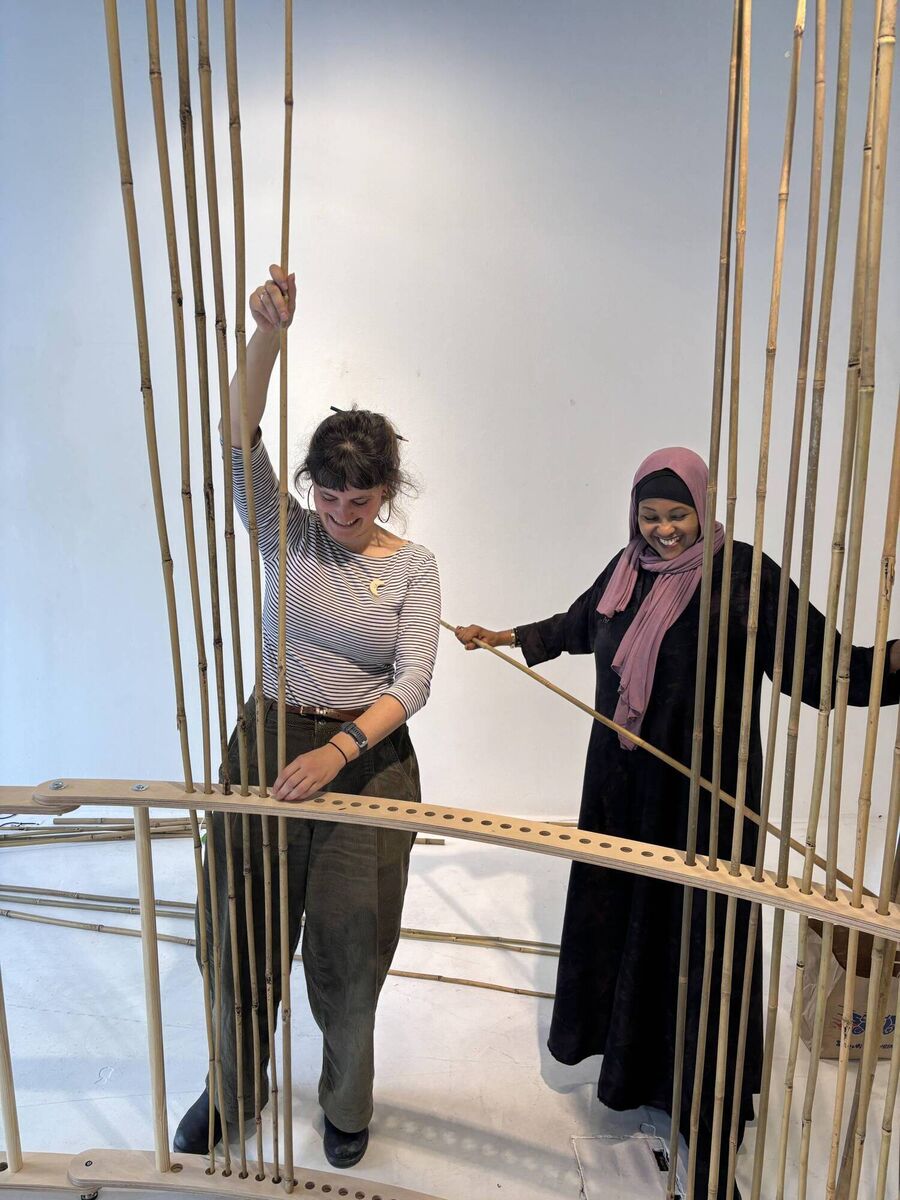
In this case, the site of conviviality was not a kitchen or dining-room table but a loom, or, rather, an upright frame that was being shaped into a Somalian-style nomadic home using wool offcuts from Foxford Woollen Mills, Avoca Handweavers and Botanic Weavers — and the fingers of anyone with the urge to give it a go.
Weavers worked side by side, rather than face to face, encouraging a unique kind of openness like the flow of conversation that can unfold when two people fall into surprisingly honest conversations while looking straight ahead in a car.
The Bare Project, based in Sheffield, runs a number of similar projects but all of its work “is marked by an urgency for conversations about what comes next — conversations that acknowledge the future weighs heavy, but that it doesn’t exist yet.”
That seems like a pretty good description of what was going on in parallel at the Convention Centre, but in a very different way.
The EPC summit, set up in 2022 after Russia’s full-scale invasion of Ukraine, is intended to provide a forum for EU and non-EU leaders to meet in an intimate setting to promote dialogue and address common challenges.
To find the common threads in a site of conviviality, if you will.
For a moment, imagine the conversations that might ensue if some of those leaders gathered in a room and sat, side by side, to weave a natural shelter that leaves no trace after it has served its use.
True, many worthwhile and open conversations between leaders must have taken place in corridors, over dinner and at elevenses over the last few days. Maybe the fruits of those will be in the media today.
But, let us take a moment too to look at the fruits of the loom, so to speak. Over three days, Common Threads: A Gentle Festival of Welcome looked at how hospitality, in its widest sense, can start conversations and establish links where none existed before.
Jennie Moran has already done fascinating work in this area. Her award-winning book, , tells the story of Luncheonette, her long-term art project centred on hospitality and food which explored the “gold dust” of shared experience.
The award-winning café of the same name, which she owned and ran for several years, was one joyful iteration of that.
Now, as part of her Field residency, she has been studying the laws, theory and philosophy behind the practice of hospitality. The research focuses specifically on sharing time, space, food, fun and joy with unexpected people, or those outside of our usual social circles.
“This is not a new challenge, but it seems particularly pertinent now to practise extending the table to those we might not fully know or understand,” she says. The gentle festival of hospitality has done just that by opening its ‘living room’.
There are many unexpected guests, such as the Somali family walking along Thomas Street who spotted, to their utter amazement, their country’s traditional craft being practised in Dublin. They came in, along with many others who were beckoned in when they pressed their faces to the gallery window.
Inside, there was food, mint tea, song, chat, storytelling and weaving. What emerged most forcefully was the happy fact that hospitality is recognised in every single culture. The Quran, for instance, is full of stories of people sharing food with strangers, says Moran.
“There are stories of people sharing the tiny bit they have with the stranger and pretending, by turning down the lamp, that they’re eating themselves when in fact they’ve given everything to the guests. They don’t want that to be revealed, so they make it dark.”
There are many similar Irish iterations in both modern — “hands off those, they are for the guests” — and ancient times.
Under the Brehon Laws, hospitality was a right to be dispensed to a range of people — lords, a king and his servants, historians, lawyers, doctors and, most feared of all, poets. If a poet left hungry, he (or she, there were a few female poets at work) could condemn you to shame in your lifetime — and very far beyond.
Take the case of poor Inghine Guile, or Guile’s daughter. Centuries have passed since her father sent her out to deter the approaching guests so that he wouldn’t have to entertain them.
She laid it on thick, according to an account written down in the 17th century. She told the would-be visitors that the road to the house was crooked and, if they managed to walk it, they would be met by mangy cats, gloomy dogs and a bleary-eyed hag.
As for the house, there was no food at all and, worse, “a continuously stinking, fart-streaming putridness” perpetually leaked out of it.
Jennie Moran tells the story — one of many during this festival of stories and welcome — to illustrate the deeply embedded respect for hospitality in Ireland, and the dangers of falling foul of it.
There are other discussions, too, about the prevailing human instinct to invite the stranger in, despite the possible danger but, then, you never know which side of the divide you might find yourself on.
Malaika Cunningham, artistic director with The Bare Project, and Sally Proctor, the project’s community producer, describe the special moments they have experienced in Sheffield when people gather in a city centre not to shop or spend money but to talk, sing and weave.
It’s not at all plausible to imagine world leaders taking similar time out, but if there was something of the spirit of this festival in the historic summit that took place in Dublin this week, then we are in with a chance.

CONNECT WITH US TODAY



Be the first to know the latest news and updates