Clodagh Finn: Anne Devlin — finding the woman behind the myth on her 175th anniversary
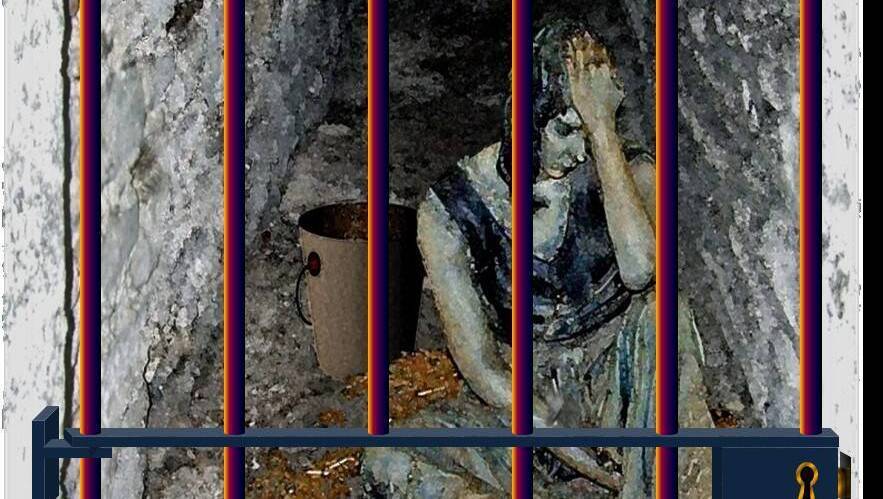
Anne in her prison cell. Picture: Mícheál Ó Doibhilín

She was a skilled horsewoman, a co-conspirator of the ill-fated Irish rebellion of 1803, a political prisoner and a determined nationalist who endured torture and death threats, but never revealed what she knew. She was also a working mother and a devoted wife.
Yet, mention the name Anne Devlin and many, if they know her at all, will remember her as the trustworthy housekeeper of executed leader Robert Emmet.
There has been a shift, though; one which will continue thanks to the release this week of a new children’s book from Carmel Kelly, .
The retired librarian and author of 10 children’s books in Irish and English first came across her while researching a book on Wicklow Gaol.
“I was motivated by the fact that she has always been referred to as the loyal housekeeper, in an afterthought way, to the much more famous Robert Emmet. We know now that she was much more than that,” she said.
HISTORY HUB
If you are interested in this article then no doubt you will enjoy exploring the various history collections and content in our history hub. Check it out HERE and happy reading
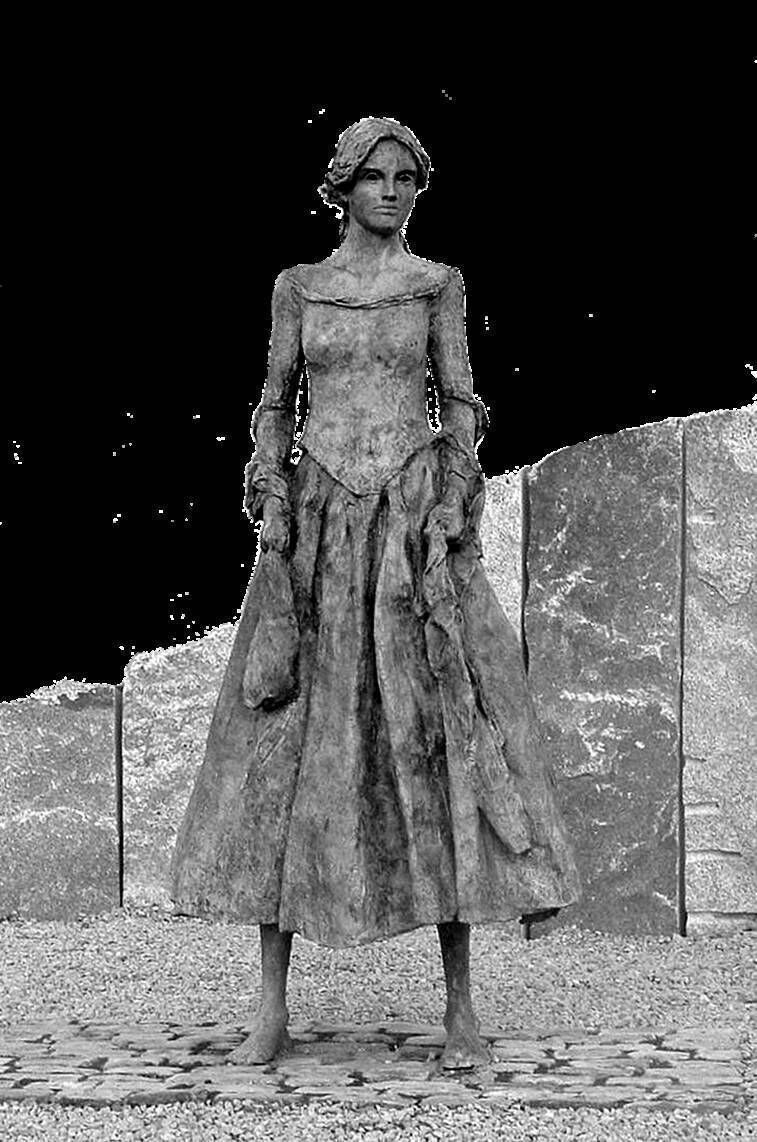
Anne Devlin will certainly be introduced very differently to a new generation of children, which is a fitting tribute on the 175th anniversary of her death, which fell on Friday.
I had the privilege of being introduced to her by the late Mícheál Ó Doibhilín, historian, tour guide, author and utterly committed devotee of Anne Devlin.
Read More
This is a wild claim but I’m going to make it anyway: I doubt there is anyone who has done more for the memory of the nationalist and heroine than Ó Doibhilín who spoke — and wrote — about her with the most infectious enthusiasm.
For example, I was instantly captivated by his time-travelling experiment, described in an evocative article in the , in which he ventures through the Liberties in Dublin to seek out the garret where Anne died in 1851.
Watch where you step now, he warns, because the cobbles of Thomas Street in central Dublin are uneven and the draymen might come from behind as well as in front of you.
There is the awful stench too. Legislation banning people throwing slops onto the roadside has been recently introduced but it has not been implemented here, he writes, as he imagines himself walking towards Little Elbow Lane in the heart of the Liberties.
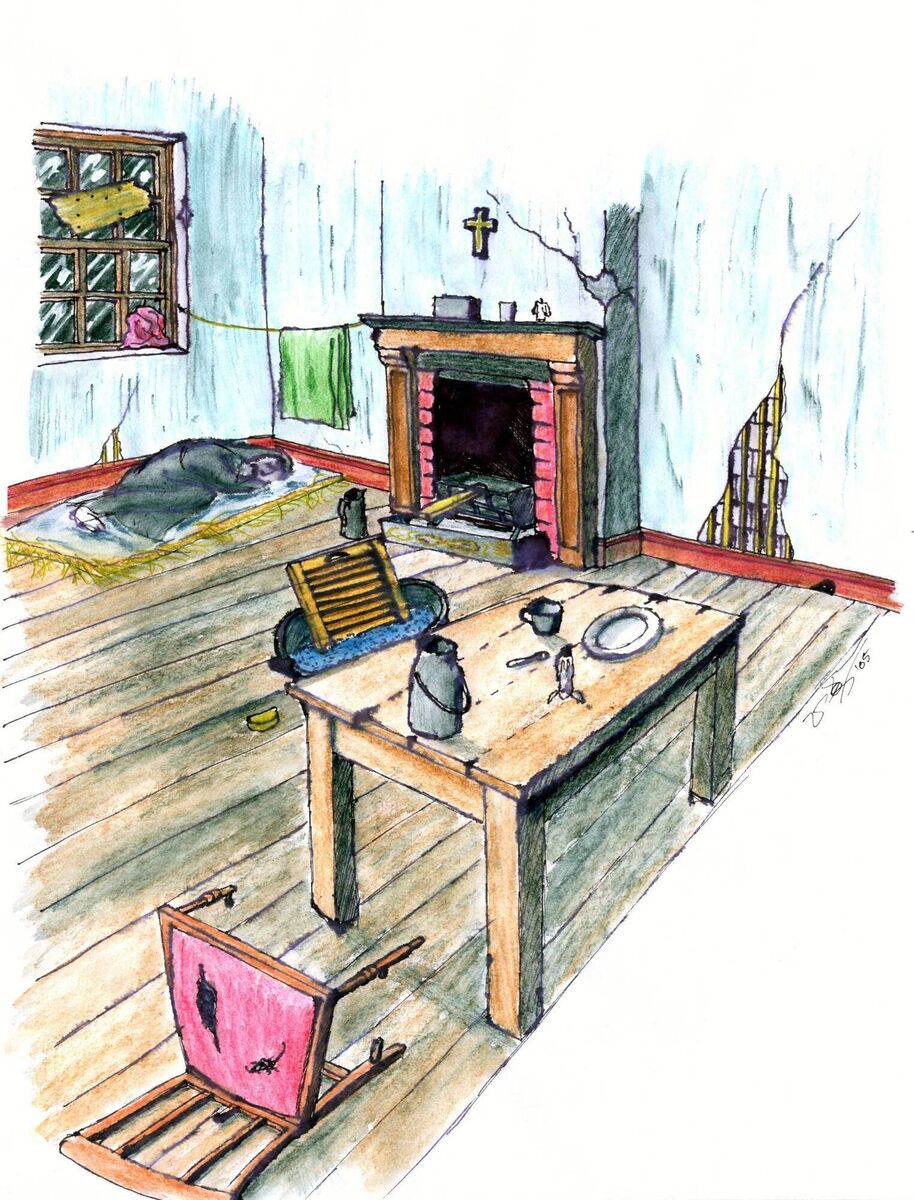
It was not only one of the worst slums in Dublin — with an average of 17 people living in a single house — but one of the worst in Europe. Anne Devlin died there on September 18, three days after pawning the last of her clothes to buy a loaf of bread.
The inscription on her grave described her as the "faithful servant of Robert Emmet". It went on to say she "possessed some rare and many noble qualities", adding she "lived in obscurity and poverty" until her death at the age of 70.
Indeed, the economic hardship she endured was later seen as something that might take from her memory.
As RR Madden asked in ; their lives and times: “Will the prestige of the heroine fade away when it is told that she was a common washerwoman, living in a miserable hovel, utterly unnoticed and unknown, except among the poor of her own class?”
Mícheál Ó Doibhilín’s answer to that was an emphatic no, and he spent several decades fleshing out the details of the real woman behind the myth.
The true heroes, he believed, were ordinary people such as Anne who stepped outside their comfort zone to do heroic things.
“She was indeed a nationalist and heroine, but she was also a wife and mother. She lived in a paternalistic society, where for women to do anything out of the ordinary was unusual and, frequently, frowned upon,” he wrote in an email to me while working on a piece for in 2022, a book commissioned by the then Lord Mayor of Dublin Alison Gilliland to shine a light on the city’s forgotten women.
“So,” he continued, “we could call her nationalist, heroine, wife and mother. Like almost all our heroic women, she multi-tasked!”
He joked he could add “rebelly bitch”, as her jailor Edward Trevor in Kilmainham once screamed at her in frustration. Here was a man in search of the story, with every detail included.
True to form, when he went looking for Anne Devlin he “found a living, breathing, real person, far more interesting and deserving of our admiration than the mythological person we had known”.
The details of the story are easily found now but Ó Doibhilín’s extensive writing on his heroine hammered home, in a new way, the devastating cost paid by Anne Devlin for working so closely with Robert Emmet.
She was released in 1806, but she was very weak and was suffering from the painful skin condition, erysipelas. Yet she recovered, and got work as a lady’s companion and later a laundress. She went on to marry happily. She and drayman William Campbell had three children.
But she was still not quite free. As Ó Doibhilín explains: “Everywhere Anne went she was followed by a policeman, unobtrusively at first, to identify those she might talk to. Later, he was in uniform, to frighten everyone away … thus effectively keeping Anne in solitary confinement in an open prison until her death.”
She never gave in, effectively ensuring the 50 or so others who had worked with Emmet were able to continue with their work.
Speaking of continued work, it is hardly surprising Mícheál Ó Doibhilín’s passion ignited an interest in his family too.
His daughter Aisling says: “We joked at Dad’s funeral [in 2022] that he had his wife Milla and his three daughters [Aisling, Jenny and Nessa], but there was also another woman in his life... Anne Devlin!
“He spent over 15 years organising an annual commemoration at her graveside. We’ve continued it on with the support of dad’s historian friends Liz Gillis, James Langton, Gerry Shannon, and Tom Young.”
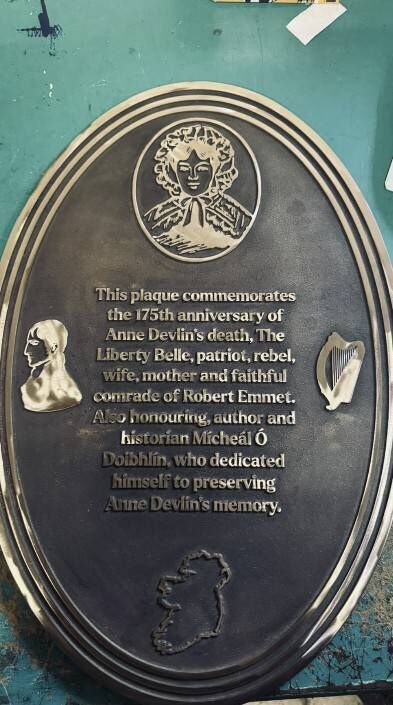
Anne Devlin and her husband will be remembered at a non-political commemoration on Sunday at 11am at Glasnevin cemetery while, later, a plaque will be unveiled at the Liberty Belle on Francis Street in Dublin, a pub that considers Anne “the belle of the Liberties”.
Owner Tom Young, himself a tour guide, said the plaque honours the woman herself but also the historian who dedicated himself to preserving her memory.
There are plans for a Liberty Belle whiskey too. When the first glass is poured, we might drink a toast to Anne Devlin, and one to Mícheál Ó Doibhilín, who has given us a masterclass in how to retrieve a woman’s life from history.
CONNECT WITH US TODAY



Be the first to know the latest news and updates