Gareth O'Callaghan: When nothing feels sacred, it was only a matter of time before a spiritual revival would surface
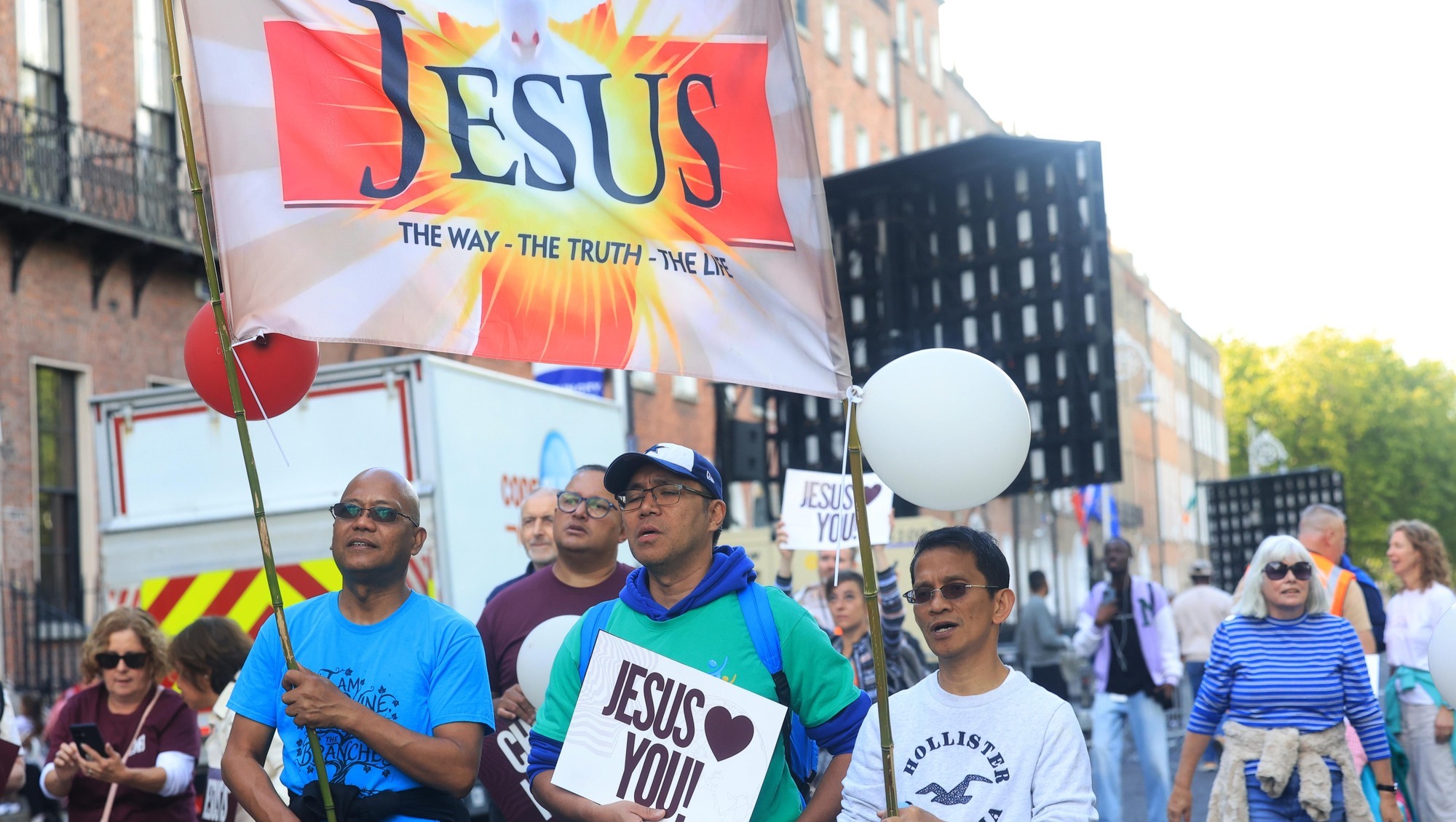
Supporters at the March For Jesus at Merrion Square in Dublin. Picture: Leah Farrell/RollingNews.ie

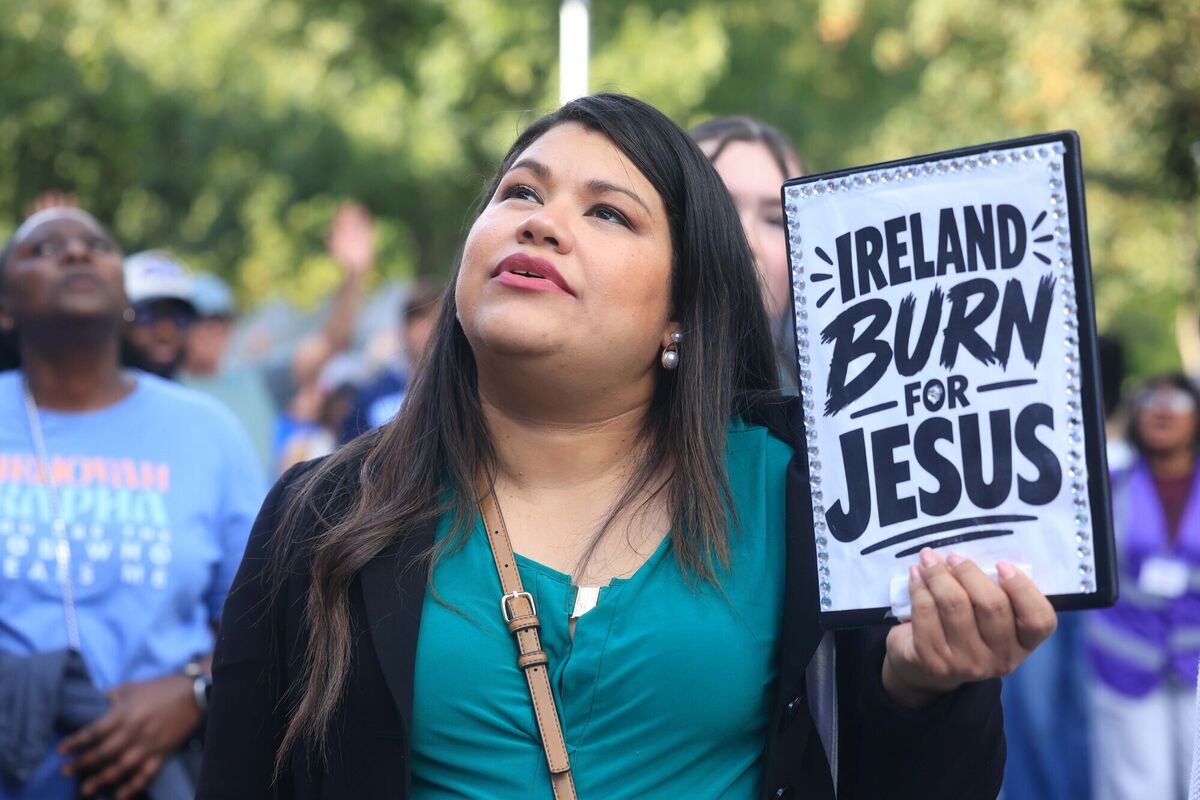
When things get really bad, that’s when praying becomes your parachute. An old friend who’s long gone now once said those words to me. I was reminded of them last week when I found myself walking in solidarity with tens of thousands of others on a march for Jesus. Let’s call it one of those spontaneous moments.
Saturday afternoons in Dublin City are synonymous with protests and demonstrations, but this was neither; and yet it was demonstrating something quite transcendent that I’ve never experienced before. No one asked me to join the throngs of walkers who were all chanting and singing and cheering, it just felt like the right thing to do.
It wasn’t about religions or denominations, or doctrines or cults, or any new age psychobabble. This was simply a celebration of one man’s short but extraordinary life, and how it has impacted humanity for two millennia. If the joy of spirituality could be bottled and sold, then someone could have got rich last week.
How did I feel afterwards? Enriched comes to mind, and a sense of peace. That oppressive unease that often feels like a cloud hanging over life lifted. The sun shone, people — all of us strangers to each other, from every corner of the world — were genuinely happy to share time and stories.
If I sound like I’m evangelising, it’s not intentional. I wouldn’t go as far as calling it a Damascene conversion, but I definitely experienced a lot of hope and gratitude while walking those couple of miles last weekend that I never felt before.
Read More
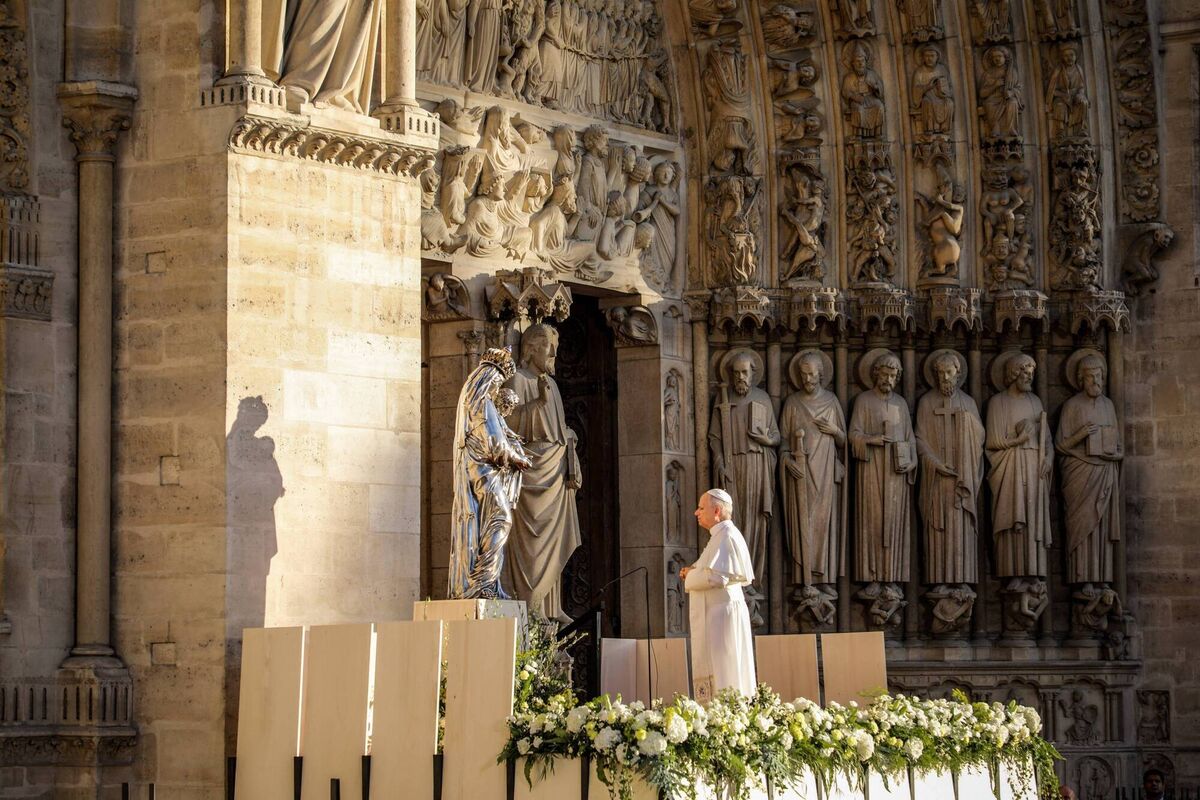
I felt something similar as I watched Pope Leo at Notre Dame during his recent visit to France, as he stood at the statue of Mary and the baby Jesus, and the roar of the crowd as they burst into the first verse of , my favourite hymn. (We all have one.)
As the camera swept across the huge crowd, it was obvious the majority who had waited hours to see him were young.
What’s wrong with our world right now? It’s a question I often hear. It wasn’t like this 30 years ago. Uncontrollability seems to sum up where we are at, in that we have all but lost our peace of mind.
What do I believe in? It’s a question I have been asking lately. What worries me greatly is I can’t find an answer, like perhaps I could have before 9/11, or before covid. It’s as though all that I held precious about pivotal values and beliefs that have underpinned our collective existence here for decades is now no longer relevant.
And I’m not alone in that belief. The grand narratives of our generation aren’t just redundant these days, they are dead.
Like most people my age, I was born into a world where there were explanations for most facets of life. They were known as grand narratives — such as the belief that science and technology would steadily improve our lives, replacing blind faith with truth, human logic, and freedom, and the inherent right of every individual to life. Scientific evidence replaced superstition.
The Age of Enlightenment changed the world. German philosopher Immanuel Kant famously defined this new era as humanity’s emergence from self-imposed immaturity through the use of one’s own intellect.
Kant might argue today that intellectuality has hit reverse thrust while literacy rates have plummeted since the arrival of the smartphone and its consequences.
Being able to finish a novel in a week seems almost like a symptom of positive mental health these days. The age of ignorance is not far off.
About 21% of the Irish population is functionally illiterate, according to the National Adult Literacy Agency.
Our once script-based culture is slowly switching to screen-based, or worse — as it will soon become — an AI slop-based society. Forty seven seconds is about all we can average on a screen before turning our attention to something else. Without real life stories, our brains are dying. Without storytelling, memory shrinks and goes potty.
We are slowly devolving into a primeval society, driven by the need for others to see us the way we want to be seen, surviving day to day in a mindset of anxiety that’s eating away at whatever peace of mind we have left. We have lost track of who we are, and there appears to be no way back because there’s no guidance to help us navigate.
The Marxist beliefs that human history is driven by class struggle, which will eventually end in a classless Utopian society, mean absolutely nothing anymore.
If anything, many argue they’re living back in the harsh inequalities of the Industrial Revolution.
We might no longer have as many slum housing problems as before where families were packed into poorly ventilated tenements; but look at how rapid urbanisation is a clear picture of what the future holds for anyone lucky enough to be able to afford a roof over their heads.
The Western Roman Empire collapsed in 476CE as a result of economic troubles, political corruption, and outside invasions. We’re not quite at that point yet, but it shouldn’t be ruled out.
Without grand narratives as historical markers to check progress, we’re like a boat bobbing about at sea without an oar or a compass. We live in a complex system that is collapsing under the weight of its complexity. That’s where we are right now.
So what does Jesus have to do with all this? Well, nothing actually; and perhaps refreshingly that’s what makes his words more appealing than asking why Trump is building a ballroom that costs $1bn while kicking 760,000 Americans out of healthcare last week.
I doubt “the poor, the crippled, the lame, the blind”, will be invited to the inaugural ball, as Jesus asked for them to be.
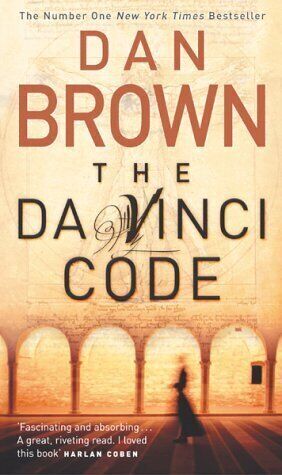
rocked the world in 2003, and its cinema release in 2006 was a massive success. Why? In a word — Jesus. The story generated a huge appetite for questioning traditional dogma, including the claims Jesus and Mary Magdelene had a hidden bloodline.
Its popularity thrived on a need to know more about this man called Jesus, and how the Holy Grail was encoded in Leonardo Da Vinci’s The Last Supper.
Both novel and film fuelled a curiosity in the mystery of this man who ironically never made an appearance. There aren’t many stars who can pull off that level of success.
Exactly one year after the movie (watched by over 100 million) fired up human imagination, Steve Jobs released the iPhone and fundamentally reshaped that fuelled imagination into something we could never have foretold.
At a time when society has never felt so unhinged, we yearn for a grand narrative we can find peace in. Clearly, more and more people are looking to what is perhaps the greatest of the narratives in the shape of this central figure in Christianity.
I felt that as I walked in unison with a bunch of strangers who are all searching for a sense of meaning in their lives. Everything has meaning until you don’t have peace.
More and more of us are done with lies and corruption, and how cheap life has become. It was only a matter of time before a spiritual revival would surface.
Let’s hope it grows. What else can we hope for? Maybe this renaissance is the postmodern grand narrative — a parachute to lighten the weight of the monkey on our backs. God knows we need it.
CONNECT WITH US TODAY



Be the first to know the latest news and updates