Sarah Harte: Openly admitting our mental health struggles could make society more tolerant
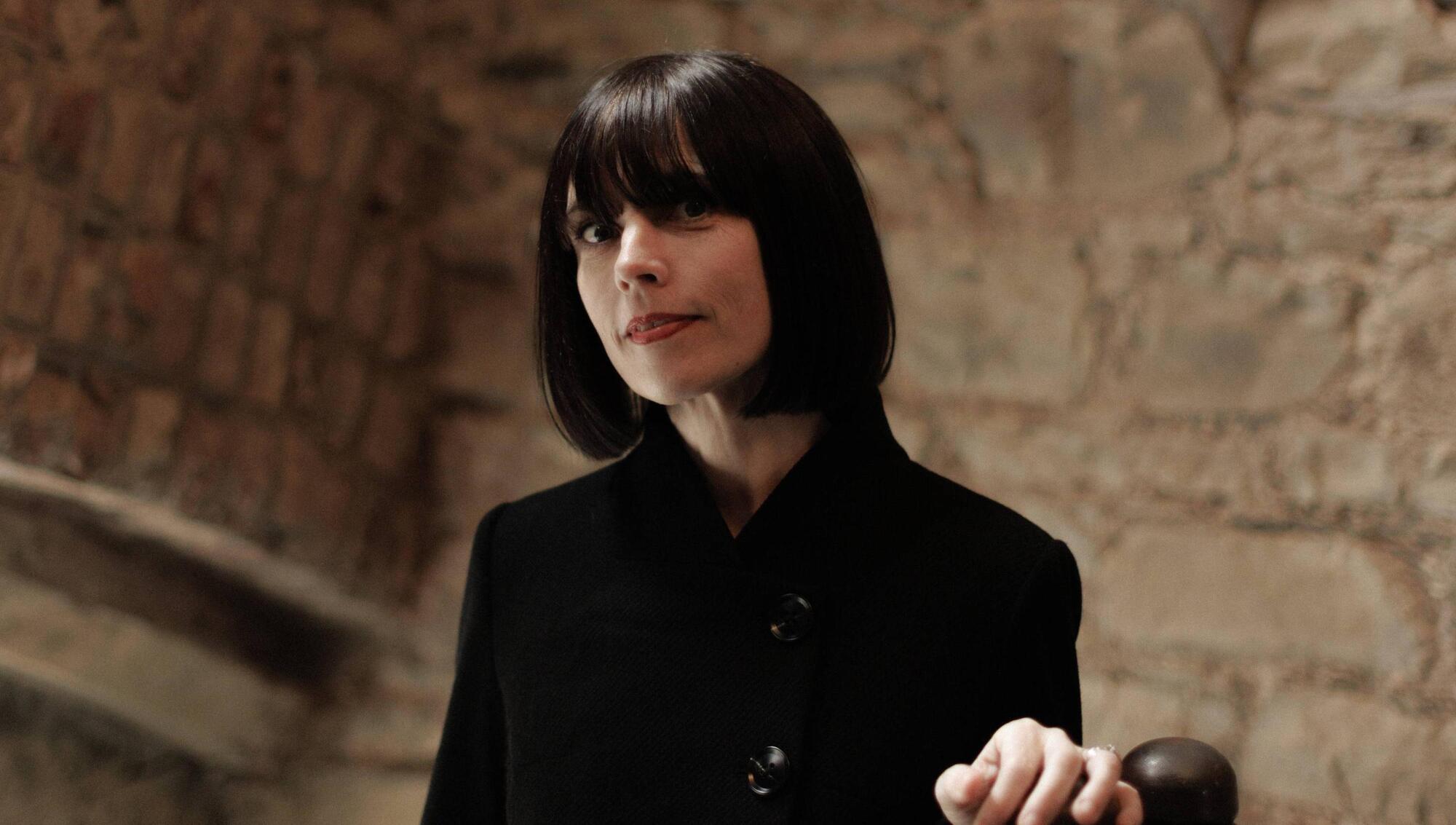
Doireann Ní Ghríofa’s new book, Said the Dead, which addresses the lost voices of people who were institutionalised because of poverty and mental illness has just been nominated for the Irish Book Week Non-Fiction Book of the Year at the An Post Irish Book Awards 2026. File picture: Bríd O'Donovan

It’s strange how the same issue keeps popping up on your radar. Recently, for me, mental health surfaced in different contexts.
I attended two literary events that touched on mental health and Ireland’s changing response to it.
Doireann Ní Ghríofa’s latest book, , has just been nominated for the Irish Book Week Non-Fiction Book of the Year at the An Post Irish Book Awards 2026.
It addresses the lost voices of people who were institutionalised because of poverty, mental illness, colouring outside the lines in their personal lives and being put away by family in a society that would not accept behaviour that challenged narrow social norms.
Doireann is a rigorous researcher and somebody who has suffered from depression. At the brilliant Island Drift Festival event I attended, the audience was diverse. Both men and women were enraptured by her.
Doireann mentions her depression in a way that feels true and not showy. It’s not her calling card, because her work speaks for itself.
Read More
Last week at the Cork International Short Story Festival, I moderated an event with Liz McManus and Dermot Bulger. The audience lapped them up, and it was also unusually mixed in terms of gender. Their respective books, and , feature mental health as a recurring theme, among others.
In a way, how could they not? Writers circle themes of mental health, as we do in our own lives. Fiction helps us understand our lives and other people’s.
We’re all trying to get through life, and some of us find it harder at certain times. Copy that for me at the moment.
In , the first story in McManus’s collection, protagonist Mary has been repeatedly raped and sexually assaulted and becomes pregnant while not understanding how. She has unwittingly transgressed, and so she is committed by her parents in 1919 to a Monaghan mental asylum.
In Bulger’s story, , Jerome approaches an old girlfriend, Carole, at a petrol station. Her life has gone horribly wrong because of mental illness. A person slips in and out of functional and dysfunctional periods. When the latter outweighs the former, life gets irrevocably derailed.
The question of who is a victim interests me. Some argue that in modern life we now embrace the term "victim" too easily. This view is considered right-wing.
Many of my generation and those who are older instinctively have low tolerance for public displays of suffering that turn ordinary unhappiness into a personal identity or what you might call the modern-day trauma plot.
The one you commercialise and sell when suffering becomes an identity. Grievance becomes a moral and bankable prestige.
I recently listened to a public figure detail her struggles, which came across to this listener as the normal ups and downs of life, and I’ll be honest, I thought, stop speaking about yourself as a specialist Mastermind topic. Do something for others.
Because I think the Christian thing to do is sometimes to try to get outside yourself and think about how you might, in small ways, help others and give back, or, if you’ve a public platform, change the system.
But maybe that view is of itself unfeeling and therefore unchristian.
Ireland changed slowly culturally for decades, but when the change finally came, it felt like the Berlin Wall coming down, as though a society that had seemed immovable had changed almost overnight and become more liberal and tolerant.
And yet, while we hear a cohort of people with public platforms readily detail their pain in a way their grandparents would have found mortifying, stigma around mental health hasn’t gone away.
It was reported last week that Defence Forces personnel across the Army, Naval Service and Air Corps fear mental health disclosures could harm their careers.
Only 22% of 687 respondents to a survey conducted by Dr Dan Fitzpatrick, who served in the Defence Forces for 22 years, said they would disclose to seek support for a mental health condition.
Some 94% of serving personnel surveyed feared that admitting to a mental health problem could damage their careers, raising questions of "institutional responsibility and governance within the Defence Forces".
Thirty-four per cent of them reported having had suicidal thoughts, 9% had made a previous suicide attempt, while 10% reported previously engaging in self-harm. In addition, one-fourth of them screened positive for probable post-traumatic stress disorder.
These are findings from the survey, not figures that can automatically be applied to every member of the Defence Forces, but they raise valid questions.
Colm Ó Luasa, the Defence Forces deputy chief of staff support, questioned the "level of reluctance" found in the study among members to seek support.
He also noted that this stigma is societal. Two things can be true at the same time.
Ó Luasa is correct that a stigma persists around disclosing mental health difficulties in Irish society, but the figures, as Dan Fitzpatrick told the Oireachtas last week "justify closer institutional examination".
A related issue is how The Defence Forces have consistently been treated poorly.
In February, the European Committee of Social Rights ruled that Ireland violated the European Social Charter by refusing to pay Defence Forces members sufficient overtime compensation. Officers are working overtime for rates as low as €4 an hour.
Their workplace culture, as we have learned, has included bullying, rank misogyny and sexual harassment, with cover-ups of rape and sexual assault as revealed by the Women of Honour and the Independent Review Group (IRG) report.
This week in the High Court, a judicial review will be heard of an appeal by the Women of Honour for their Defence Forces tribunal legal costs to be paid on an ongoing basis.
As Diane Byrne, the spokesperson for Women of Honour, pointed out: "It’s a ridiculous situation that we are in at the moment that we are having to argue for funding to be able to take part in a tribunal that we fought so hard for."
All of this paints a less-than-rosy picture of the working environment and how it might affect mental health.
There’s something profoundly wrong with a system in which people can be expected to show extraordinary resilience in the service of their country, while being scared to admit to psychological distress because it could jeopardise their careers.
To quote Fitzpatrick’s research, despite "elevated levels of distress, formal help-seeking remains low".
To loop back to mental health more generally. There’s a difference between turning suffering into an identity, demanding that the world revolve around you, wallowing and quietly drowning because you’re afraid to tell the truth about your struggles.
I’m not sure the distinction is that straightforward though.
Maybe the price of creating a culture where people feel safe admitting they’re struggling is that people like me learn to be more tolerant of public figures we view as emotionally incontinent when they air their pain.

CONNECT WITH US TODAY



Be the first to know the latest news and updates