As church numbers dwindle, Catholic dioceses are forced to merge and adapt
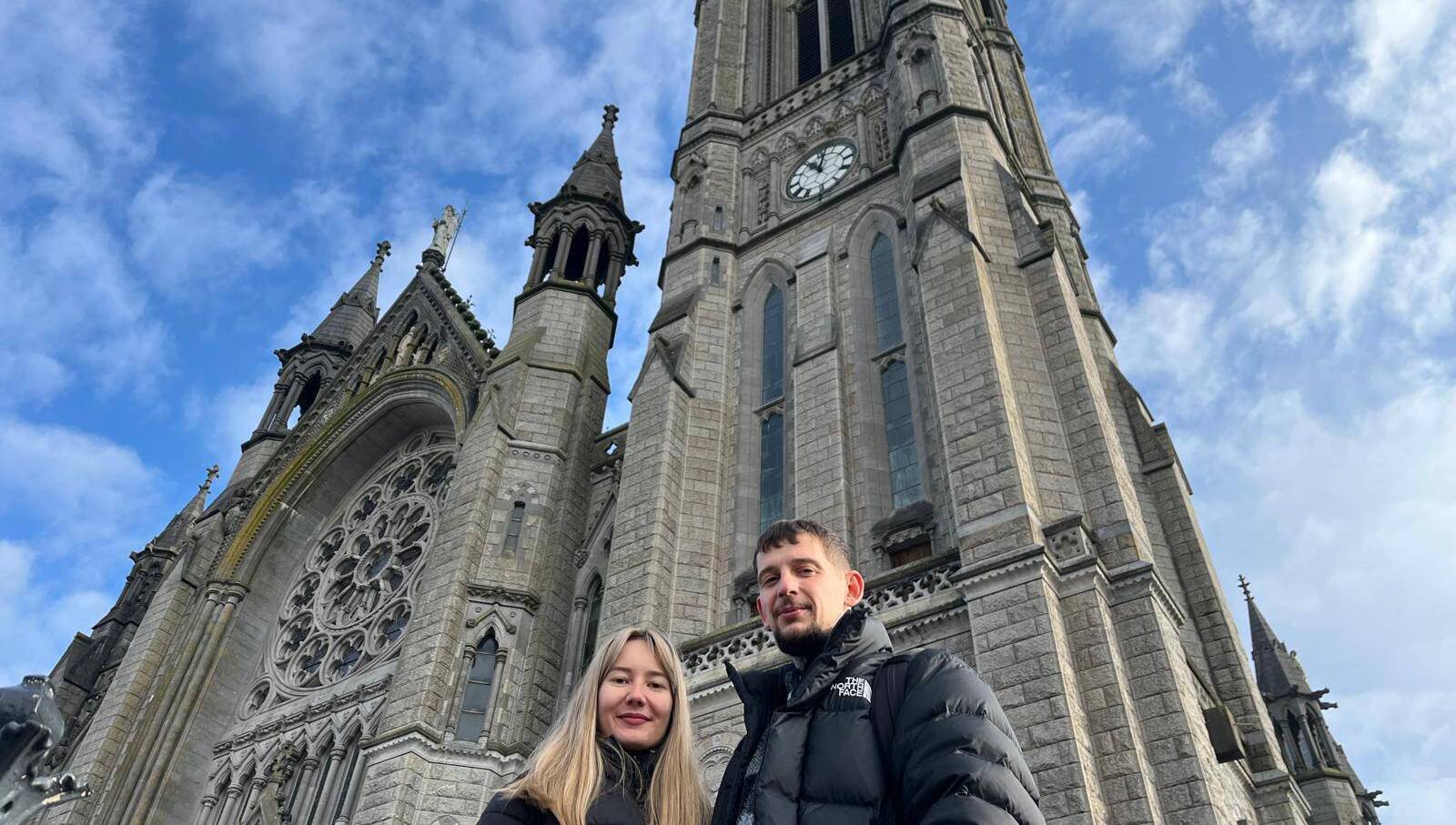
Joana Colonascu and Julian Regina from Moldova, enjoying their visit to St Colman's Cathedral in Cobh. Questions have been raised about the frequency of masses there as the diocese of Cloyne prepares for amalgamation. Picture: Donal O'Keeffe
“God Almighty, does that mean we’ll have to go to Mass in Kerry or Limerick?” asked one of the Sunday morning faithful outside Cobh’s St Colman’s Cathedral.
At the start of the month, news emerged that the Diocese of Cloyne is likely to be amalgamated with a neighbouring diocese in the coming years.
The River Lee — more or less — divides the county of Cork into two Catholic dioceses: Cloyne in the north with a Catholic population of about 150,000, and Cork and Ross in the south with 224,000.
In early October, a consultation document was circulated privately by the seven bishops in Munster, presenting multiple merger options. Four related to Cloyne, variously proposing its merger with Cork and Ross, Waterford and Lismore, Kerry, or Limerick.
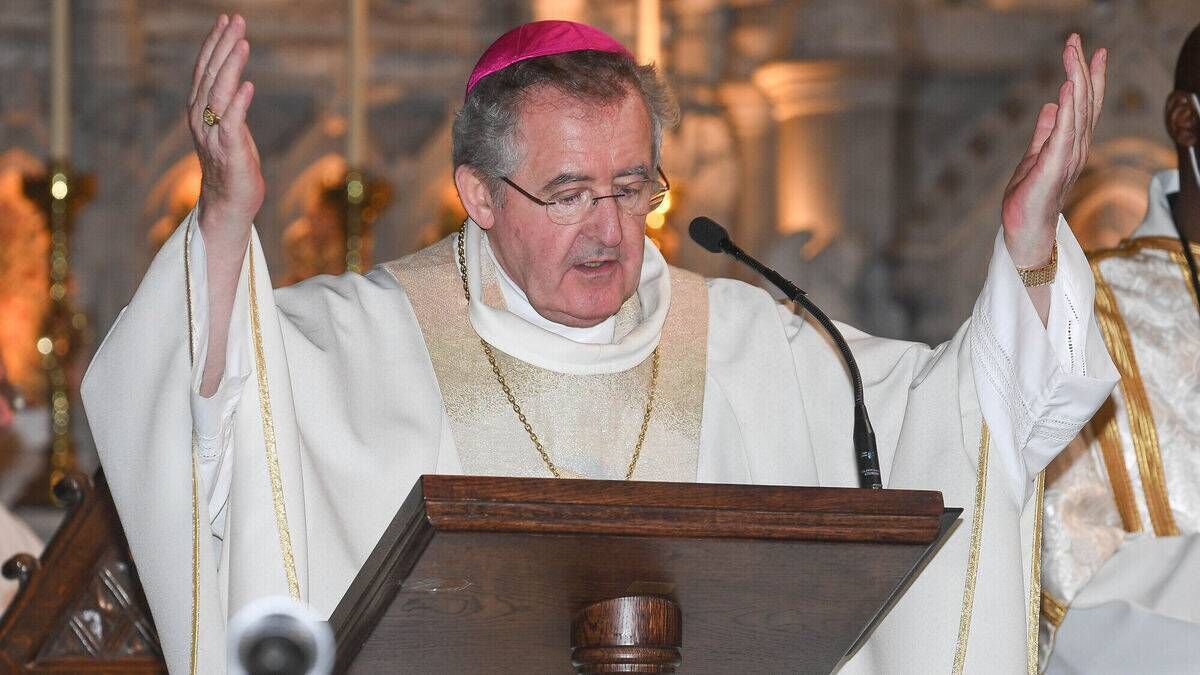
Any merger would likely take years to complete, with the dioceses initially continuing as separate administrations under the management of one bishop, before eventually becoming a single entity. Such an amalgamation is made more likely for Cloyne because its current bishop, William Crean, will in December reach the Church’s retirement age of 75.
It is thought that the most likely coming together would be between Cloyne and the neighbouring Cork and Ross, ultimately creating a new diocese with a Catholic population of 375,000.
Read More
With vocations to the priesthood plummeting in recent decades, parishes across the country have merged as “families” in recent years, with priests operating across multiple areas.
To address the concerns of the Cobh parishioner concerned about having to travel to the other end of a merged diocese for Mass, one priest told the that the more immediate effects of any such merger would most likely be felt by clergy.
“Let’s say it’s going to be Cloyne and Cork and Ross,” he said. “At the moment, you could have a priest serving, say, in Mitchelstown, and Bishop Crean might move him to, let’s say, Youghal, about an hour’s drive.
“If we had one large diocese, that priest might be asked by the new bishop to move from Mitchelstown down to Crookhaven, which is a two-hour journey.
“Now, there is a certain logic to having all of Cork in one diocese, and there is a bit of history there too.”
That might be an understatement.
The original Diocese of Cork was established by the Synod of Ráth Breasail in 1111, but four decades later the Synod of Kells established the separate dioceses of Cloyne and Ross. In 1326, Pope John XXII, at the behest of King Edward II, issued a papal bull for the union of Cork and Cloyne, which was eventually enacted a century later in 1429.
For the first half of the 18th century, the Catholic bishop of Cork and Cloyne was the administrator of Ross, before Cork was broken off by Pope Benedict XIV, with Cloyne and Ross amalgamated. In 1850, Cloyne and Ross were separated, and Cork and Ross merged in 1958.
Now, that diocesan dance will begin again, and one priest quipped: “Amalgamation once again.”
The merging of parishes is part of the Catholic Church’s ongoing efforts to address the continuing collapse in numbers of priests in Ireland, and the ongoing decline in religious observation.
Half a century ago, 141 new priests were ordained in Ireland, and there were 5,618 priests in diocesan ministry. Some 25 years ago, 22 priests were ordained, with about 3,300 priests in ministry.
Last year saw six priests ordained in Ireland, with about 2,000 in ministry across the country.
In the 2022 census, 3.5m people, or 69%, identified as Catholic, signifying a 10% decline on 2016. In September, an Ipsos/B&A survey of people living in rural Ireland, undertaken for the , found that 34% of people in rural communities go to Mass weekly.
Just 13% of people aged between 25 and 34 said they were weekly church-goers, but the figure was 26% for the youngest cohort surveyed, those aged 16 to 24. The highest weekly Mass attendance, at 65%, was in the 65-plus age group.
Four years ago, the bishop of Cork and Ross, Fintan Gavin, said the Catholic Church in Ireland “could not try to maintain a system that was there for a different time, when there was a lot more priests and a lot more people” attending Mass.
“We can’t keep going with all the churches that we have; how do you decide where Mass is on a Sunday, and if we believe that it’s gathering people together, how do you bring them together, rather than having a splinter group here and there and Father rushing in his car from one to the other?”
Predicting that implementation of the family of parishes model would be where “rubber meets road”, Bishop Gavin said it would be in practical decisions that difficulties would become apparent.
“I think everyone understands it until there won’t be a Mass here, ‘We always had a baptism here and all our children were baptised here, in this particular church’. You could keep that system going for another few years, tipping around, but what is the Church for? It’s not about just keeping churches for the sake of it.”
In February, the Augustinian friars announced that St Augustine’s Church in Cork city would close. For generations the church had been at the heart of the city’s spiritual life.
As a religious order, the Augustinians operated in the diocese with the consent of the bishop and had not come under the family of parishes regime. However, the order was as prone to dwindling numbers as any other part of the Catholic Church in Ireland.
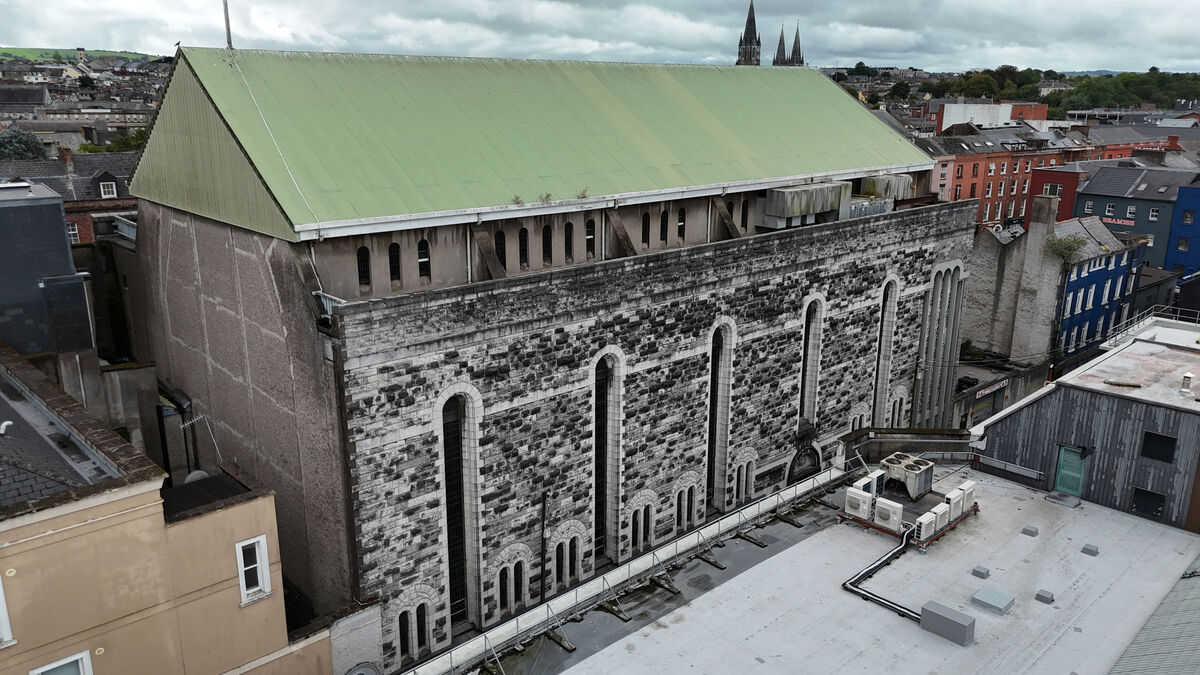
When he announced that the Augustinians’ 750-year association with the city was soon to end, vicar provincial Fr Paddy O’Reilly said the order in Ireland had only 10 friars under 70, with more than half of its priests over 80.
Fifty years ago, he said, it would have had “at least 12 novices and three to four ordinations every year”.
“Today we would be lucky to have one novice and most years we have no ordinations. We are also getting older and less able.”
In July, when the Augustinians held their final Mass in Cork city, St Augustine’s Church was full to not far from twice its 1,200-strong capacity.
The heat in the 84-year-old building was almost unbearable, and many of those in the congregation admitted they had not regularly attended Mass there but had wanted to be there one last time out of love for St Augustine’s.
In the sacristy after the ceremony, one celebrant joked wryly that he had never realised there were so many Catholics in Cork.
In February 2025, the then cardinal Robert Prevost — now Pope Leo XIV — met with the four Irish archbishops to discuss reconfiguring dioceses.
Last year saw the diocese of Achonry merged with Elphin under Bishop Kevin Doran. This year has seen Killala merge with Tuam under Archbishop Francis Duffy, and Ossory merge with Ferns under Bishop Ger Nash.
With church attendance and clerical vocations unlikely to improve, the policy of downsizing is certain to continue under the new papal nuncio Archbishop Jan Romeo Pawlowski, who was appointed last month. The 65-year-old Pole was formerly papal nuncio in Greece. He replaces Archbishop Luis Mariano Montemayor (70), who served in Ireland since 2023.

CONNECT WITH US TODAY



Be the first to know the latest news and updates