Joyce Fegan: Why women are still being judged for their reproductive choices and careers
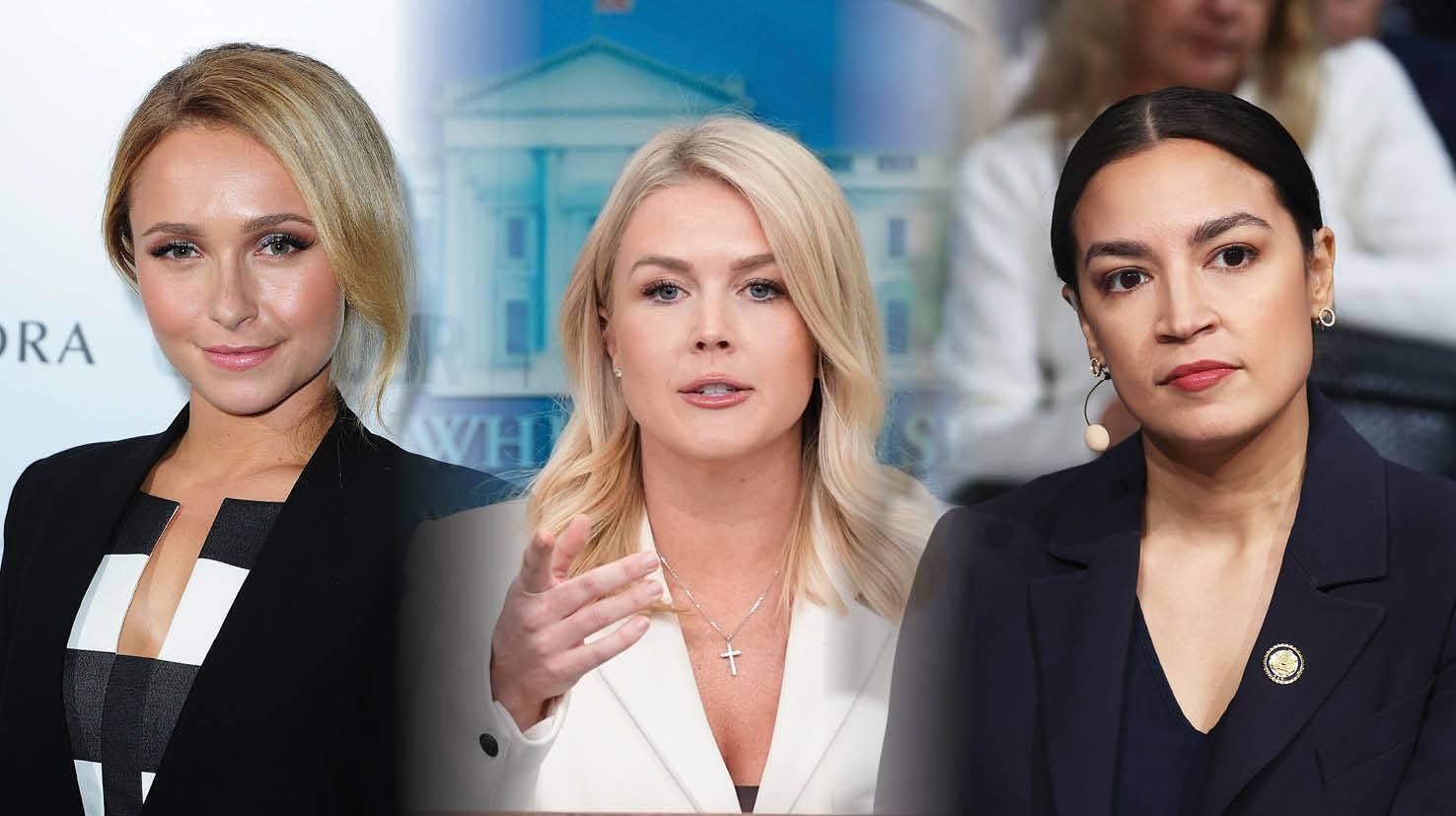
Hayden Panettiere, Karoline Leavitt and Alexandria Ocasio-Cortez have all made headlines over their decisions on motherhood.

This week, 36-year-old American actor Hayden Panettiere, of and fame, was found dead in an apartment in South Carolina. She was in cardiac arrest when paramedics arrived and was pronounced dead at the scene.
For a woman who had publicly discussed many of her personal experiences, from domestic abuse to alcoholism and addiction, and the perils of child stardom, the narrative of her death circled around motherhood.
Her recently published memoir was pored over for quotes about her now 11-year-old daughter, whom she ceded custody of, to the child's father when the girl was two. In one publication, an entire article focused on Panettiere's experience of motherhood, in comparison to that of another woman's.
In the public conversation that searched for answers to her death, motherhood somehow managed to emerge as a lead talking point.
And as the investigation into her death continued, another very public conversation was simultaneously taking place in America this week, that of the reproductive choices of another 36-year-old woman — New York congresswoman, and possible 2028 democratic presidential nominee, Alexandria Ocasio-Cortez.
Ocasio-Cortez had videoed and posted the process of freezing her eggs on social media. The backlash was intense. She was "delaying the opportunity of motherhood".
But as the congresswoman said in her own words: “This is a choice that I am making to feel more in control of my life".
Read More
And just as the late Hayden Panettiere was having her "motherhood" compared to that of another woman's, Ocasio-Cortez's reproductive choices were being publicly compared to another woman's — soon-to-be former White House press secretary Karoline Leavitt.
Staunch ally of US president Donald Trump, Leavitt, 28, gave birth to her second child in May, and shortly after returning from her maternity leave, announced her decision to step down as press secretary.
"The truth is since returning to the White House after the birth of my daughter, I have felt in my heart that I cannot be the best mom my two young children deserve while devoting the constant time, energy, and attention required of the White House press secretary — and that is why I have ultimately made the bittersweet decision to depart the White House and embark on a new chapter in my life," she wrote.
One large media outlet headlined it as "Two high-profile women. Two very different approaches to careers and motherhood".
It is as if women become pregnant, birth children and rear them in absolute and utter isolation, and any problems they encounter along the way are framed as a "she problem" we have every right to publicly dissect, not a "we problem" we must challenge ourselves to address.
In the midst of these conversations this week was a statement on Wednesday, on World Humanitarian Day, by the executive director of the United Nations Population Fund — the sexual and reproductive health agency of the UN.
Diene Keita used the day to call for the protection of motherhood.
"Every day, we witness the courage of the millions of pregnant women and mothers who do all they can to protect new life as conflict upends their own. This unwavering commitment to nurturing the most vulnerable should compel us to do everything we can as an international community to ensure their protection," she wrote.
She was speaking specifically about the mothers of Gaza, Sudan and South Sudan, who continue to hold and tend to infants and toddlers and children in the face of soldiers and systems hellbent on destruction.
In Gaza, for example, where all sorts of bureaucracy blocked all manners of aid, there was one thing that could not be blocked. Called informally the "circle of love" GINA (Gaza Infant Nutrition Alliance) was founded in April 2024 to help as many mothers as possible breastfeed.
Delivered face-to-face and online by trained volunteers around the world, by mid 2025, GINA had supported over 5,271 mothers across Gaza to exclusively breastfeed, achieving an overall rate of 48.5% for infants under six months of age.
And when GINA, founded by Dr Reem Al Soufi, a Palestinian breastfeeding mother and an emergency medicine consultant in the UK, did a call-out for knitted hats for newborns, the charity received about 100,000 pieces of handmade clothing from people all around the world.
For almost all of our evolutionary history, humans lived in community, in support.
A landmark study published in the in 2023, by Dr Nikhil Chaudhary, an evolutionary anthropologist at the University of Cambridge, and Dr Annie Swanepoel, a child psychiatrist, found our ancestors reared children in community, with children having a team of dedicated caregivers.
The study showed communal living in hunter-gatherer societies resulted in a very high ratio of available caregivers to infants/toddlers, even exceeding 10:1.
“Parents now have much less childcare support from their familial and social networks than would likely have been the case during most of our evolutionary history. Such differences seem likely to create the kind of evolutionary mismatches that could be harmful to both caregivers and children," said Dr Chaudhary.
The study contradicts our modern framing of raising humans as the singlehanded endeavour, and sole responsibility, of an individual woman.
A "we job" got turned into a "she job" and we called it motherhood, thanks to 18th-century thinkers such as Jean-Jacques Rousseau, who wrote: "When mothers deign to nurse their own children, then will be a reform in morals; natural feeling will revive in every heart; there will be no lack of citizens for the state."
Through war and all manners of challenges, women have continued to single handedly support the future citizens, and taxpayers of our world, but we have failed to assist them.
In a 2004 PBS interview, the now 90-year-old Benedictine nun Sr Joan Chittister was asked her views on abortion. Her answer has continued to reverberate around the public domain 22 years later.
"I am opposed to abortion, but I do not believe that just because you're opposed to abortion, that that makes you pro-life. In fact, I think in many cases, your morality is deeply lacking if all you want is a child born but not a child fed, not a child educated, not a child housed.
"And why would I think that you don't? Because you don't want any tax money to go there. That's not pro-life. That's pro-birth. We need a much broader conversation on what the morality of pro-life is," said Sr Chittister.
In almost every conversation on "motherhood", we cast public comment and private judgment on the myriad of ways women try to personally navigate the work of raising future citizens.
We have framed a public issue, as a private one, yet we want every say in every way that that work is being done — whether that's how one arrives at pregnancy in the case of Alexandria Ocasio-Cortez, or women's attempts to balance paid work with the labour of care, in the case of Karoline Leavitt.
It seems many of us have a lot to say about "motherhood", but absolutely nothing to do with the work of it, despite benefitting heavily from the taxpaying adults it eventually creates.


CONNECT WITH US TODAY



Be the first to know the latest news and updates