Matrescence is as important as adolescence — why is it so unknown?
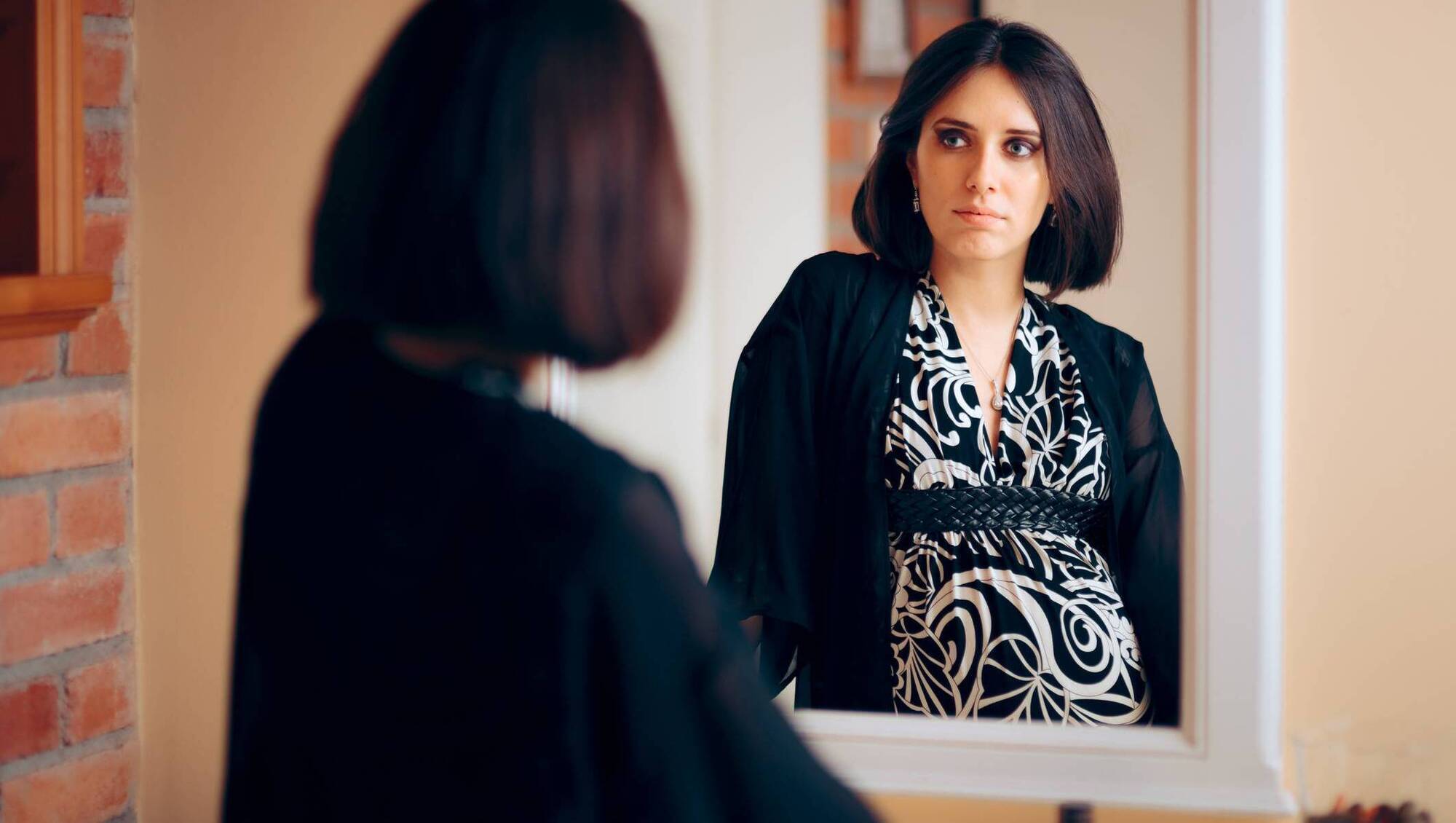
The transition to motherhood is life-changing for women — the term matrescence covers this period of change.
A feasibility study is currently under way to ascertain if a site at St Vincent’s Hospital in Dublin is suitable for Ireland’s first perinatal mother and baby unit, according to minister of state at the Department of Health Mary Butler in answer to a parliamentary question by Social Democrats TD Rory Hearne.
Ten years after Ireland’s National Maternity Strategy (2016-2026) was launched, we are no closer to having adequate supports for the mothers who need access to this vital service.
The maternal mental health landscape in Ireland has been under increased scrutiny lately, with many reports highlighting how services fall short.
There is report after report available on perinatal mental health services that show many mothers report maternity and postnatal services are more focused on infant wellbeing than their own. They also report gaps in services and inconsistencies of services available in different areas.
Mental Health Reform has published research showing suicide is the leading cause of late maternal deaths in Ireland.
And World Health Organization figures show 10% of pregnant people and 13% of people who have just given birth experience a mental health condition.
Mental Health Reform also highlights that “after giving birth, people are at a notably higher risk of being admitted for treatment of a psychotic illness, even more so when they have a history of mental health difficulties. This elevated risk persists for at least two years following delivery.”
Read More
One of the findings in a study by the Maternal Mental Health and Maternal Morbidity in Ireland showed some mothers were afraid to disclose their mental health experiences for fear of being judged, and a fear around receiving unwanted treatment.
Psychotherapist for mothers Jacqueline Kelly says in her experience a diagnosis of postnatal depression does not always fully fit the mother's mental health experience.
So what are we missing? Much-needed supports for a start. But we’re also missing a whole framework and language that could offer mothers an understanding of what happens when we become mothers.
It’s called matrescence. And while it won't eliminate postnatal depression or psychotic episodes, practitioners believe all maternity professionals should be educated in matrescence.
Matrescence is not a pink science or a pink ‘trend’.
It's a developmental transition that is not widely understood yet. It’s still being researched and developed. But it is an all-encompassing, biopsychosocial experience that every woman goes through when she becomes a mother, no matter how her children come to her/them.

The word was first coined by anthropologist and midwife Dana Raphael in the 1970s, and revived in the 2000s by psychologist and research professor at Columbia University in New York Dr Aurélie Athan.
Dr Athan describes matrescence as “a developmental passage where a woman transitions through pre-conception, pregnancy and birth, surrogacy or adoption, to the postnatal period and beyond”.
The changes occur across many areas of a woman’s life and the transition is likened to adolescence.
We all experience adolescence and it is thankfully widely researched, documented, and understood. Matrescence is not.
It's not just about the immediate postpartum period.
It is a whole-person reconfiguration process that touches every part of the mother’s life.
And while there are some aspects that will have a “fixed action pattern”, as Dr Athan puts it, every woman will have her own experience of matrescence.
But many of us don’t have this word to process or describe what happens to us when we become mothers.
Even now, Dr Athan says she still gets a pejorative glance from some people who view the field of study into matrescence as ‘pink science’.
Jacqueline Kelly, who is also a matrescence practitioner, highlights the importance of understanding matrescence and says it gives us a framework through which to understand the experience of mothers.
In her experience, when women are struggling in motherhood and when they speak of isolation and loneliness, matrescence offers a new lens through which to view these experiences.
Ms Kelly says she believes all maternity professionals should be educated in the language of matrescence.
Similarly, Dr Athan has pointed out just how pivotal the knowledge could be in other clinical settings for mothers.
If you search for the word matrescence on the World Health Organization’s website, the search returns nothing, so that will show you how much of a battle women face.
Becoming a mother follows a fairly general pattern, in that we get pregnant (and for the purpose of this article we’ll assume the pregnancy was wanted and the act was consensual), attend our appointments, we're weighed, measured, and mauled. The baby's heartbeat is checked and it's generally all very exciting.
We also learn about the mechanics of birthing our baby. Every mother will experience some iteration of the above and it’s called antenatal care.
After bringing your baby into the world, you’ll be signed off after six weeks from State care. Whether your birth was straightforward or you faced complications, six weeks is generally the bookend of our care.
And at our six-week check-up, the level of care we can expect is questions such as “would you like to go on birth control”? I can imagine that’s top of every new mother’s check list at six weeks postpartum, as a guest on my podcast, , recently highlighted.
We don’t just grow a baby in our bodies and birth it and that’s it. Our brains rewire, our sense of self shifts, and our priorities and values also shift. It’s the psychosocial elements of matrescence that we are not prepared for. Not once throughout my pre- or post-natal care was I told I would move through a developmental transition that would touch most, if not all, areas of my life.
While we might be supported physically or mechanically, we are not supported in understanding what is happening to us across all of the different layers when we become a mother.
Knowing what matrescence is is the missing piece because it helps understand our experiences using a very specific lens that fits what we are going through.
Just as menopause is recognised as a natural, biological transition, matrescence should now be recognised too. It should be part of our everyday language, in biology textbooks in schools, and part of our maternity care.
Whether you are a mam, mammy, mum, mom — they’re all just a word and none of them really capture the physical and emotional depth and breadth of becoming a mother and none of them come with a guidebook.
Not even the hundreds of thousands of books available on having a baby, all of them packed with dos and don’ts and the latest new way you should do something, mention the word matrescence.
Let’s change that.
- Ciara Ní Bhroin is a journalist, life coach for women, and host of podcast

CONNECT WITH US TODAY



Be the first to know the latest news and updates