Sarah Harte: Judge's comments in Russell Brand case show change is coming for predators

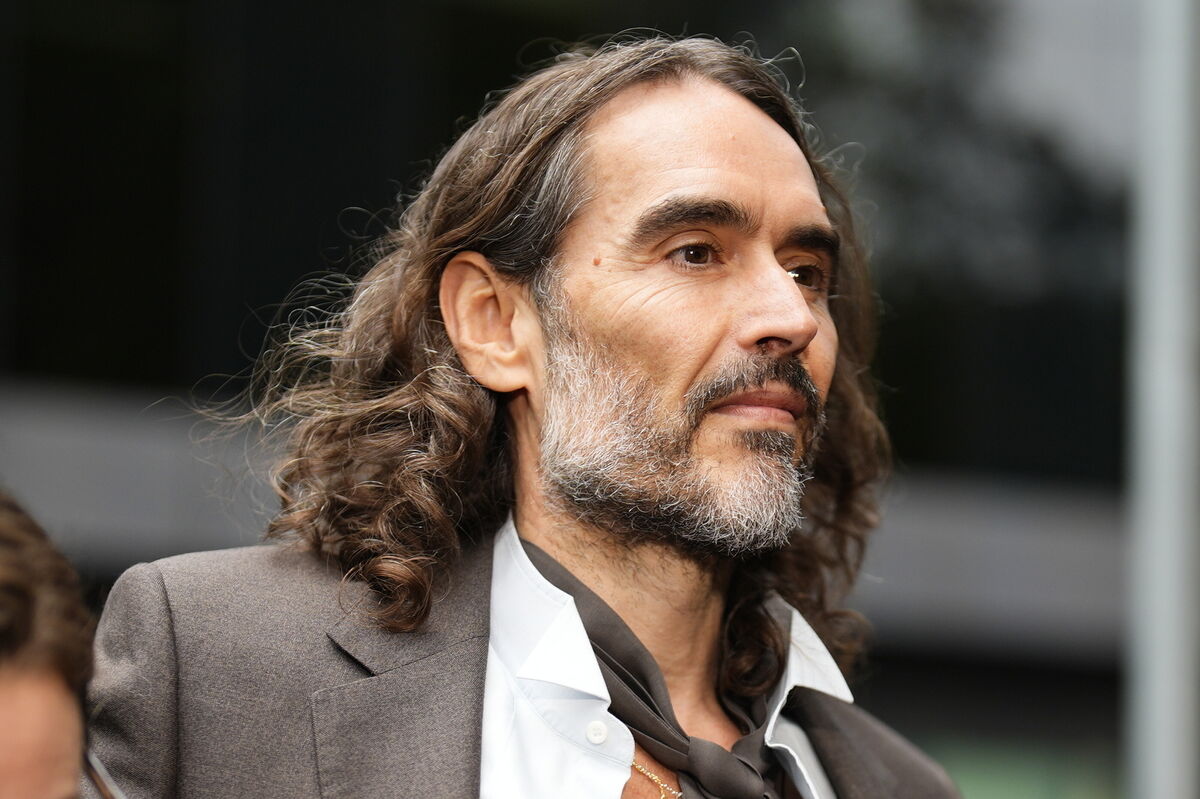
Mr Justice Bennathan made a clear statement around consent when passing sentence on Russell Brand for raping one of his fans and sexually assaulting three other women. Picture: Cameras in Court/Press Association
Last week, my column about the possibility of change and remaining hopeful generated messages showing how strongly that idea resonated with readers.
Esther McCarthy wrote an article in the Irish Examiner on Saturday about how hope is replacing doomscrolling, and reading it made me feel more hopeful.
Obviously, as a columnist, you want to avoid producing fantastical analysis that makes the reader think, "Pollyanna, move over, this one has lost the plot". But after some thought, I decided to rewrite this week’s column, realising there was a more positive way to analyse recent events, particularly when gauging whether public morality and culture have changed.
In March, René Redzepi, the head chef and co-owner of the famous restaurant Noma, resigned after a exposé for allegedly mistreating employees and interns, including slamming them against walls and punching them, allegedly between 2009 and 2017.
In an interview at the weekend ahead of the new drama series about him, dropping on Netflix this week, Supernova head chef Ferran Adrià of the 3-Michelin-star restaurant El Bulli fame said this about the affair. "Times have changed. The culture has changed. You have to be less tough."
He describes a change in notoriously brutal restaurant kitchens, but public morality and what is acceptable in the broader culture, including the entertainment industry, have shifted too.
Read More
Before we examine the three former pals, Russell Brand, David Walliams and Jonathan Ross, who popped up relentlessly in our newsfeeds over the last week, let’s time travel back to 1998.
Specifically, Bill Clinton’s impeachment, involving Monica Lewinsky and the light it shone on public taste and how we treated young women.
Philip Roth, in his masterful novel , described that time as "a purity binge" when "a virile, youthful middle-aged president and a brash, smitten twenty-one-year-old employee [carried] on in the Oval Office like two teenage kids in a parking lot".
Roth describes those who took Clinton to task as "righteous grandstanding creeps" in a calculated moral frenzy "moralising to beat the band".
It’s a brilliant piece of writing technically, although Roth, who remains one of my favourite writers, was a big-dog old-school misogynist who pursued relationships with female college students and relationships marked by significantly skewed power dynamics.
The man had form, and his lens was coloured by that. So, the fact he entirely minimised the victim-blaming that Monica Lewinsky suffered was unsurprising, and he wasn’t alone. That was the default cultural position.
In her early 20s, Lewinsky was relentlessly bullied. The line that was parlayed was that she knew what she was doing: a cheap seductress who became a national punchline.

The insane power imbalance was discounted. A naïve young woman became cannon fodder.
I don’t believe that would happen today. I don’t believe that we would fail to detect the power imbalance or that the media would pillory a young woman like that.
That’s why, on the surface, what was once an open joke is now unacceptable. Television personality Jonathan Ross is in the hot seat because of a joke he made.
At the 2004 British Comedy Awards, he noted that the event was 15 years old. He said: "And like all 15-year-olds, it’s drunk, it’s unpredictable, and it’s probably going home with David Walliams." The camera then panned to a laughing Walliams. People around Walliams in the shot laughed too, which is noteworthy.
That sort of gag would not be seen as entertainment now because the needle on what’s acceptable has moved.
David Walliams is said to be in a psychiatric facility. The metropolitan police have also been clear that they’ve not received any reports of sexual assault or other criminal offences by Walliams.
The ITV documentary about him, which I watched, is available on YouTube. It’s the fruit of joint investigations by ITV News and the revealing allegations dating back to 2003 that David Walliams preyed on teenage girls and young women for sexual purposes.

As an aside, we need to support this kind of in-depth journalism. Media, that when they’re properly funded - sorry, cliché coming through - shine a light into dark places. Of course, mentioning alleged sex pests and their antics in Ireland is not easy because our defamation law is so draconian.
Walliams’ legal attempt to quell the media allegations against him via a super injunction failed.
This led to valuable commentary and criticism in the media about those types of injunctions, as well as Non-Disclosure Agreements, or ‘NDAs’, used to silence victims because the use of NDAs by powerful people needs closer examination.
Then Mr Justice Bennathan, in the Russell Brand case, in a landmark judgement, dispelled rape myths and rejected victim-blaming.
Brand, as you’ll know, is in prison, having been found guilty of one count of rape and three of sexual assault. There are also fresh allegations against him.
Bennathan said:
After an event with activists, professionals, academics, experts, and survivors, many of whom have worked for decades on the frontline of domestic and sexual abuse and trafficking of women, we shared a meal and agreed how refreshing and rare it was to hear such a clear statement around consent.
We should acknowledge that progress. It felt like the opposite of the "she was asking for it" narrative that has been parlayed in courtrooms for too long.
Increasingly, victims are forgoing anonymity to speak out. Mia Latter, who was 16 when in a relationship with Russell Brand, who was 30 at the time and sent a car to collect her from school, has called for a staggered age of consent.
She was inspired by Gisèle Pelicot, who noted the need for shame to change sides. British Labour MP Louise Haigh, essentially prime minister Andy Burnham’s right-hand woman,
says the idea of staggered consent, although undoubtedly complicated, deserves consideration.
The UK culture secretary Lisa Nandy has summoned representatives from TV, film, and publishing to discuss potential protections for women or children in the industry in the wake of Brand’s conviction and the allegations against David Walliams.
Of course, a coterie will always believe themselves above the laws and norms that govern the rest of us. Some will see much of what is described as the age-old story of older men with younger nubile women.
Russell Brand’s father Ron still sees his son as the victim. Others may secretly agree. To think otherwise is delusional.
You may be cynical about codes of practice, particularly voluntary ones. But codes and crystal-clear judicial pronouncements, along with important public conversations, send a clear cultural message: the person who crosses a line, no matter how powerful, will face consequences.
There is presumably also a chilling effect on Lotharios willing to engage in morally questionable behaviour to obtain sexual gratification.
And if we look back over the last 30 years and track the changes, we see how culture and public taste have changed, even if slowly. Amen to that.
CONNECT WITH US TODAY



Be the first to know the latest news and updates