Sarah Harte: We can't let the worst of human nature blind us to the best of it 
The awful deaths of Adina Raluca Constantin, Jamey Carney, and Mackenzie Michalski threaten to overwhelm us, but there are many good people living quiet lives of decency
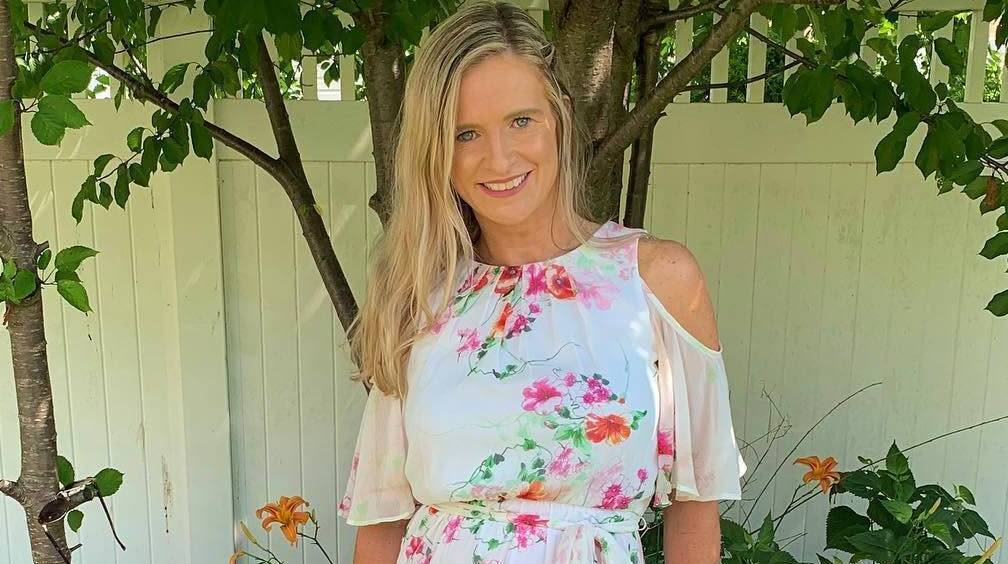
Following a column about the murders of Jamey Carney (pictured) and Adina Raluca Constantin on Saturday and the human rights problem of domestic violence that should concern us all, some male readers expressed the view that there was a link between the increased level of domestic and sexual violence and the increased rates of migrants coming to live in Ireland. Photo: Facebook

Following a column about the murders of Jamey Carney (pictured) and Adina Raluca Constantin on Saturday and the human rights problem of domestic violence that should concern us all, some male readers expressed the view that there was a link between the increased level of domestic and sexual violence and the increased rates of migrants coming to live in Ireland. Photo: Facebook

We can despair at the acts of violence our fellow human beings are capable of, and then somebody comes along and reminds us of the empathy and connection we are capable of, too.

In a week when Adina Raluca Constantin and Jamey Carney were killed, we saw an Irish man described variously as a "property developer" and "marketing executive" sentenced for the murder of American nurse Mackenzie Michalski in a Hungarian court. This all happened in a harrowing six days.

Reading about Mackenzie Michalski’s murder should come with a trigger warning. The Hungarian judge reportedly commented on the murderer’s ‘nonchalant’ attitude.

Migrant rhetoric

Following a column about two of the murders on Saturday and the human rights problem of domestic violence that should concern us all, some male readers expressed the view that there was a link between the increased level of domestic and sexual violence and the increased rates of migrants coming to live in Ireland.

This harmful anti-migrant rhetoric has been spreading. 

To take just one local example, as my fellow columnist Mick Clifford wrote in March, the attempts by the Cork North Central TD Ken O’Flynn to link a rise in reported sexual violence with immigration are, according to An Garda Síochána and groups working with women who have experienced sexual violence, unsupported by evidence.

What has been defined as "femonationalism" has become more prevalent. Women’s rights are invoked selectively to justify exclusionary nationalism rather than pursued as a universal commitment to gender equality. Donald Trump would be a high-profile practitioner of this rhetoric.

Where is the data supporting the link between our rising levels of violence and migrants? Migrants are human beings like you and me, so logically they have strengths and weaknesses, are capable of good and bad behaviour, including abusive and violent behaviour.

By trying to scapegoat them for domestic and sexual violence, you turn your face away from the sheer scale of the problem of domestic and sexual abuse and who is responsible for it.

Maybe we don’t want to accept that, as Jennifer Carrol Mac Neill told the Irish Examiner this week, it is male attitudes driving the violence.

Maybe we don’t want to accept that the perpetrators of domestic and sexual violence are our sons, fathers, brothers, cousins, neighbours and colleagues raised by us in our families and in our culture.

Mackenzie Michalski. Reading about her murder should come with a trigger warning. Picture: GoFundMe

The culture of violence towards women in this country went deep with Church and State roots.

We have a long history of physical, institutional, reproductive, psychological, economic, and obstetric violence against Irish women, as evidenced by mother and baby homes such as Bessborough in Cork, which only shut down in 1998. 

The attitudes that conceived of those homes, and consented to the imprisonment of women, do not go away overnight.

As for what now fuels those pre-existing misogynistic attitudes, it is welcome that the minister for justice, Jim O’Callaghan, is to seek Cabinet approval to create new offences to make the possession, production or distribution of extreme and violent pornography a criminal offence. 

As reported in the Irish Examiner, the High Court recently found that no offence is in place in this jurisdiction to address possession of extreme pornographic material.

An Garda Siochána, in repeated statements, including via the Garda commissioner Justin Kelly and his predecessor, is in no doubt that the exposure of men and boys to extreme pornography is normalising violence and sexual violence against women.

In the Mackenzie Michalski case, the Irish murderer ran a ‘rough sex’ or BDSM defence, which the court rejected. There are disturbing details that have been reported in connection with the case which suggest objectification, sexualised violence, choking/strangulation, and possible porn use.

Migrant acculturation

There are several wide-ranging, interesting explorations of migrant acculturation. They include a key study, Are They Acculturating? Europe’s Immigrants and Gender Egalitarianism, published by Oxford University Press using European Social Survey data over ten years ago.

Several researchers have continued this work, including Change in Migrant Political Attitudes: Acculturation and Cosmopolitanization which was published last summer in the American Journal of Political Science, but which explores migrant attitudes in Europe in 28 destination countries.

Unsurprisingly, migrants from countries with more unequal gender relations tended, on average, to express ‘less gender-egalitarian attitudes’ than the host population. But data-based research shows that, over time, attitudes converged toward those of the destination country, meaning culture isn’t fixed or immutable, as we’ve seen in the shifting attitudes in our country.

Reducing people to categories, turning them into abstractions or loose groups, and ascribing attributes to them based on their skin colour or nationality will not solve this problem.

Don’t lose sight of the individual person

There’s another aspect to this. When we do that, we also lose sight of the individual person. After a week spent contemplating the worst of what people can do to one another, a friend sent me something that restored my faith in what can happen when we stop, pay attention to another human being, and really see them.

It’s a video of a beautifully dressed 90-year-old man named Joseph as part of the Model Strangers’project.

The project was founded three years ago by South African Christopher Ward, a filmmaker based in Northern Ireland.

Ward approaches people, asks if he can take a video of them, and invites people to talk about their lives and the lessons they have learned.

At its emotional core is the idea that strangers are no longer strangers when we stop and listen to one another.

In the ‘Old London is gone’ video, Joseph recounts his experiences during the Second World War. He missed out on a formal education, has great respect for education, and wishes he had had the chance to be educated.

His refinement, his lack of entitlement, and his restraint stand out. He laments a London where people helped each other, but his central message is that life goes so quickly, you should enjoy it while you can.

Joseph is an "unhistoric person" whose quiet wisdom and humanity affect us. You know that famous passage in Middlemarch, “the growing good of the world is partly dependent on unhistoric acts, and that things are not so ill with you and me as they might have been, is half owing to the number who lived faithfully a hidden life, and rest in unvisited tombs.”

Those people who live good lives and harm nobody are drawn from all strata of society; they may come from different cultures and countries and settle here contributing to the economy and lifeblood of Ireland, or they may have lived all their lives out in some parish as their ancestors before them did.

We all have stories inside us, some good, some bad. Some stories horrify us; others, like Joseph’s, restore us. When you see what the worst of humanity is capable of, as we did in those three cases involving the deaths of women who had their lives brutally cut short, what saves us is not pretending that darkness doesn’t exist.

It’s remembering that the other lighter side exists too. Sometimes that is simply how we keep going.

More in this section

Revoiced

Newsletter

Had a busy week? Sign up for some of the best reads from the week gone by. Selected just for you.

Cookie Policy Privacy Policy Brand Safety FAQ Help Contact Us Terms and Conditions

© Examiner Echo Group Limited