Michael Moynihan: Shame no longer exists as a tool to moderate people’s behaviour
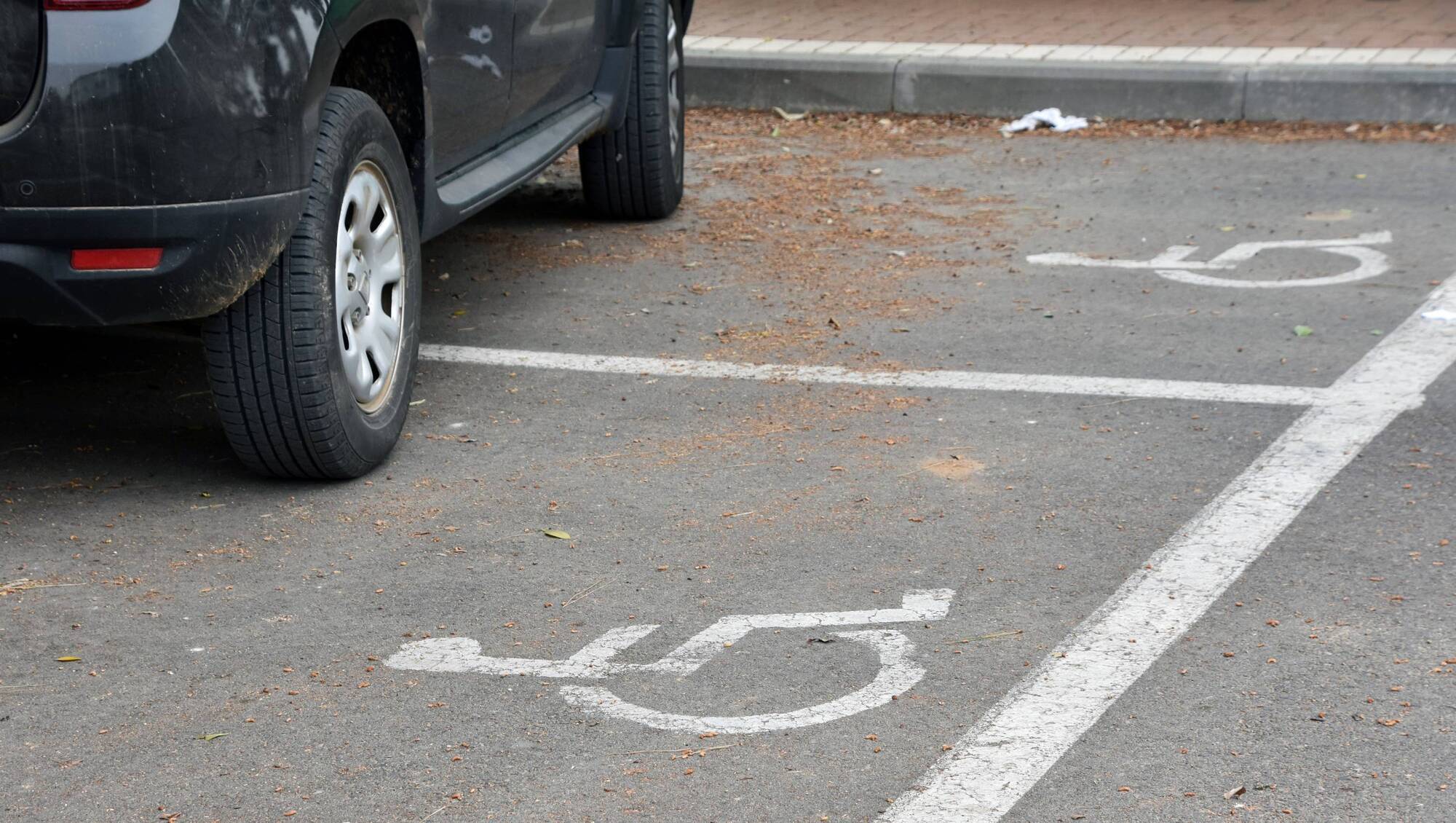
Thoughtless, entitled parking is one of the ultimate expressions of selfishness, and you don’t have to wait for a big sports or music event to see that in action. File picture

My thanks to readers who got in touch after a recent column I wrote about accessibility in Cork, many of whom had a specific gripe about one angle in the piece.
Those correspondents were particularly exercised about the problems caused by poor parking — problems that have a direct impact on other people.
Whether we’re talking limiting access, endangering pedestrians, or obstructing vital services, the message is the same: Thoughtless, entitled parking is one of the ultimate expressions of selfishness, and you don’t have to wait for a big sports or music event to see that in action.
Every school — primary and secondary — will witness evidence of this supreme self-absorption at drop-off and pick-up times every day, with drivers blithely ignoring vast empty spaces as they try to beach their vehicles half-inside the classroom door.
Why, just around the corner from me — Anyway. Complaining is all very well. What’s the real alternative? Traffic wardens can’t be everywhere - or anywhere, it seems sometimes - so is there room for . . . vigilantism?
Don’t panic. I’m not advocating violence. I saw the films when they came out, like everyone else, but I never wanted to emulate Charles Bronson.
Read More
However, I was struck recently by an account which popped up unbidden on my social media feed recently, one which focuses on bad parking. (Side note: of course your phone is not listening when you complain to your loved ones about some lúdramán’s parking — it’s a complete coincidence that your phone presents a parking-related account for your enjoyment immediately afterwards, absolutely.)
The account name is not one I’m keen to share before the watershed, but it rhymes with Barking Tankers: I’m sure readers can puzzle it out pretty fast.
The account posts short video clips which begin with, say, a stationary car occupying a couple of parking spaces in a supermarket, thus preventing someone else from using one of the spaces.
Then we see, in someone’s hands as they approach the car, an official-looking yellow sticker edged in black with writing across it. The writing might say PENALTY CHARGE NOTICE: YOU PARKED LIKE A , or something similar. The notice is affixed to the windscreen or back window and then the person filming repairs to their own car and waits.
When the driver returns to their badly parked car he or she tries to remove the sticker but soon finds that it’s very difficult to do so, and it can sometimes take 10 minutes or more to scrape it off. We know this because the person who slapped the sticker on waits nearby and films their reaction.
Juvenile? Yes. Mean-spirited? Probably. Privacy issues? Quite possibly. Incredibly enjoyable? Very much so, to judge by the number of people who follow the account (over 70,000) and enjoy the clips (one episode has over two million views).
Clearly taking the law into your own hands is a fraught business, but one which many people seem to enjoy watching.
Something else which is fraught: Your blood pressure when you can’t find somewhere to park because someone abandoned their own car to “run inside for a minute”.
There’s something oddly appropriate about those yellow stickers being so difficult to remove, because it clearly takes a good deal of time for the affected driver to remove one of them, far longer than it would have taken for them to park properly in the first place. You could say the punishment certainly fits the crime on that basis.
One notable aspect of this account is that those who operate it maintain their own anonymity — they don’t appear in the video clips and obscure their commentary through voice distorters. I acknowledge the rationale: No vigilante likes to blow their cover. Even Batman wears a mask.
Not all those enforcing social norms remain unknown, though.
Last year American Cameron Roh visited London, where he met up with a journalist and gave a running tutorial (cough) on the work he does.
Work which has earned him the nickname: the ‘sidewalk vigilante’.
He told the that pavement etiquette is getting worse, largely because of people using smartphones while walking: “I call these people neck breakers. People stuck at a 45 degree angle on their phones, not with us in reality.”
Roh added: “If you’re walking badly — so not in a straight line, or dragging something — but your pace is adequate, then you’re probably not affecting my journey . ..
“If you’re zigzagging, aimlessly cutting people off, not paying attention to your surroundings, that’ll lose you a few points automatically.”
Roh’s ‘points’ are used to evaluate people’s walking, and he’s no fan of bikes and scooters on the footpath, people dragging wheeled suitcases behind them which could be carried, and pedestrians who crash into people head-on.
Just to clarify, he doesn’t approach people on the street and point out their failings (from the photograph accompanying the article his nose looked unbroken).
He films walkers and uploads the footage to social media and then grades them based on a variety of categories — speed, direction, foot placement, phone usage.
I was toying with the idea of inviting him to film inside the English Market on a Friday afternoon during the summer, but I thought it might blow his categories to smithereens.
There can’t be a place on the planet where walking is more lawless than one of the side passageways when a dozen Spanish tourists decide to visit . . . very . . . slowly.
The sharp-eyed among you will have already spotted an issue with Roh’s crusade, of course. He told the that he obscures the faces of those he films, and that he doesn’t film children, the elderly, and people with disabilities.
Still, filming people in public is a tricky legal area — we saw this recently enough in Cork, when an ‘influencer’ had one of his clips removed from TikTok because he had filmed a medical emergency involving a young woman in Cork City.
Read More
There’s an additional contradiction with Roh filming people, once he acknowledged the contradictions inherent in his stance: he’s criticising people for being too wrapped up in their phones to walk properly, yet he’s contributing material to online platforms himself.
It’s interesting that in both of the cases above the ultimate recourse is to social media. Yes, the parking vigilantes will put a sticker on an offending car, and Roh is filming people as they walk, but in the end the interactions are virtual: no-one is being confronted in real life.
Is that the most effective way? God knows that shame no longer exists as an effective tool to moderate people’s behaviour, so maybe public ridicule and embarrassment are more effective.
A comment on the street or in the car park — literally made in passing — might be shrugged off or forgotten almost immediately. A brief clip online lives forever.
I’m not sure about applying these methods in Cork myself. But even if I don’t start filming offenders it would be great to think that even the possibility might be a deterrent.
CONNECT WITH US TODAY



Be the first to know the latest news and updates