Colin Sheridan: Expertly operating the machinery of influence
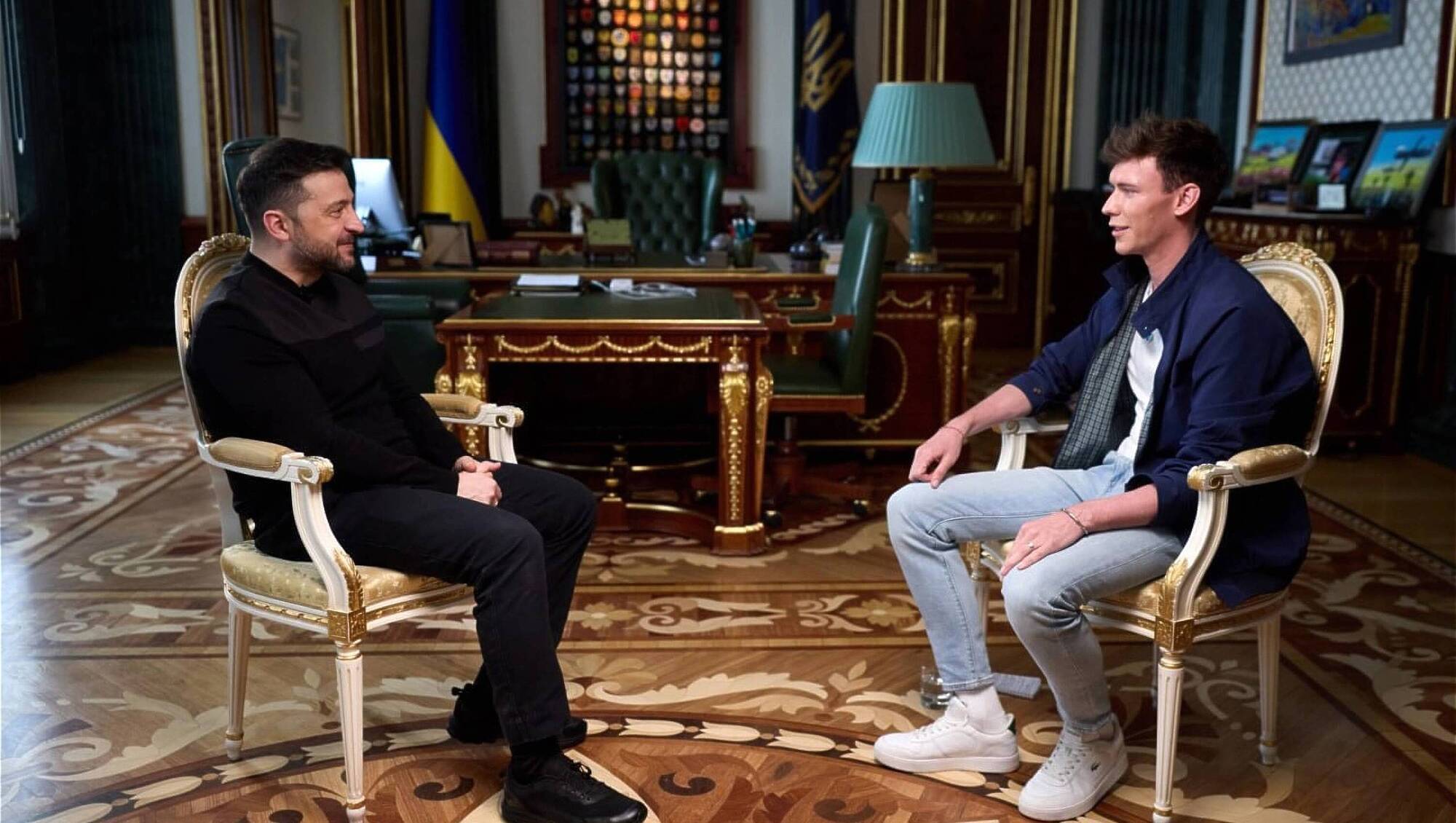
As cameos go, Caolan Robertson's was as impressive as it was puzzling
YouTube journalist Caolan Robertsoninterviewing Ukrainian president Volodymyr Zelenskyy. Picture: Zelenskyy/Official

YouTube journalist Caolan Robertson
interviewing Ukrainian president Volodymyr Zelenskyy. Picture: Zelenskyy/Official

When YouTube journalist Caolan Robertson returned to Ireland recently to cover the Aughinish Alumina controversy, he did so fully equipped with the tools of modern attention.

The story was presented as an urgent revelation. A moral contradiction. Evidence that something important was being ignored. 

For about a week, Roberston was ubiquitous across Irish news feeds. Those of us unfamiliar with his canon were quickly put on notice. 

On Friday, he was speaking at Trinity College Dublin. On Saturday, he was awarded Ukraine’s order of Merit 3rd Class from Ukrainian president Volodymyr Zelenskyy.

Many Irish people had never heard of him, yet, for a few days he owned a news cycle. As cameos go, it was as impressive as it was puzzling.

One piece of the puzzle was that the story he “broke” wasn’t being ignored. 

The questions surrounding Aughinish, Russian-linked supply chains and sanctions compliance had already been reported by Irish media outlets.

Journalists had covered it. Politicians had been asked about it. Public debate was already under way.

That doesn’t make the story any less important. If anything, it underlines its significance. But there is a difference between uncovering a story and reframing an existing one as evidence of a deeper, conspiratorial moral failure.

That distinction matters because it gets to the heart of what interests me about Robertson. 

Not his reporting from Ukraine. Not his criticism of Russia and his native Ireland. Not even Robertson himself. 

What interests me is the machinery of influence he operates with an expert’s ease.

Fascinating media figure

Robertson is one of the most fascinating media figures to emerge from Ireland in recent years. 

Before becoming one of the most recognisable English-language voices covering Ukraine, he occupied a very different corner of the internet, working alongside right-wing hatemongers such as Tommy Robinson and Alex Jones.

By his own telling, he saw the light, and in doing so his story can be neatly framed as one of redemption. 

Because, people change. They should be allowed to change. 

The red mud waste by-product lakes at the Aughinish Alumina refinery on the Shannon Estuary near Foynes, Co Limerick. Picture: Neil Michael

Anyone who believes individuals are forever defined by their worst decisions isn’t really interested in redemption at all. 

But I find myself returning to a different question.

What if the beliefs changed, but the incentives didn’t?

That is not an accusation, nor is it a claim about Robertson’s sincerity. It is a question about objective truths, motives over morals, and the internet.

Over the past decade we have become obsessed with political tribes. 

We endlessly debate left and right, populism and liberalism, nationalism and globalism. 

Yet we spend remarkably little time examining the methods that succeed regardless of ideology.

Garnering attention

The internet has no political philosophy. 

The algorithm doesn’t care whether somebody is campaigning against immigration, defending Ukraine or promoting environmental causes. 

It rewards only attention. And attention is rarely generated by moderation or uncertainty. 

Objectivity and discernment get lost in the noise. Scepticism is debunked as cynicism. We venerate or eviscerate. Rarely do we honestly critique.

And in that malaise attention is generated by stories that feel time precious and consequential. 

Stories that position the audience as witnesses to something of great import. 

Stories that suggest others have missed — by accident or design — what is hiding in plain sight. 

The villains change. The causes change. But it seems to me the incentives often remain remarkably consistent.

That’s what most striking about Robertson’s career. Not the ideological shift itself, but the continuity of method. The sense of urgency and the moral framing. The positioning of events within a larger struggle. The invitation to the audience to see what others refuse to.

None of these techniques are unique to Robertson. In fact, they are increasingly common across the digital media landscape.

For most of the last century, journalists derived authority from institutions. 

Newspapers, broadcasters and news agencies acted as intermediaries between reporters and the public.

As the influence of those same institutions waned, audiences increasingly placed their trust in individuals.

The journalist becomes the brand, the war correspondent becomes the product.

The relationship is direct, devoid of a middle-man. That creates opportunities. It also creates problems, because when your influence depends upon maintaining the attention of hundreds of thousands, sometimes millions, of followers, audience expectations begin to matter. A lot. 

Especially to your bottom line.

Blurred lines

The strongest online personalities are not simply reporting events. They are interpreting them. Framing them. Giving them meaning. 

And that is where journalism starts to blur into something else, and that something else can often look a lot like self-interest.

One of the stranger aspects of the current media environment is the assumption that questioning a commentator automatically implies hostility towards the cause they support. 

Criticise a prominent pro-Ukraine voice and somebody will inevitably suggest you’re helping Russia.

That logic is deeply corrosive.

You support Ukraine’s right to defend itself and believe Russia’s invasion was wrong, neither of those positions should prevent us from asking questions about media personalities who have become influential through their coverage of the conflict. 

If anything, the opposite is true. The stronger the cause, the less reason there should be to fear scrutiny.

What is concerning, then, is not criticism of Ireland’s handling of Aughinish. Criticism is healthy.

What concerns me is the tendency to construct narratives that are more emotionally satisfying than they are analytically rigorous. Take the suggestion, repeated by Robertson on social media, that Ireland is eager to sanction Israel while dragging its feet when it comes to Russia.

It’s an effective piece of rhetoric because it speaks to a broader feeling of hypocrisy.

The problem is that it doesn’t stand up particularly to the most menial scrutiny. Ireland has not sanctioned Israel. 

The Occupied Territories Bill remains a proposal — and a tokenistic one at that — rather than an implemented sanctions regime.

By contrast, Ireland has participated fully in the European sanctions framework against Russia. 

It has provided extensive humanitarian assistance to Ukraine, welcomed large numbers of displaced Ukrainians and maintained a consistent diplomatic position in support of Ukrainian sovereignty. 

That doesn’t mean there aren’t legitimate questions surrounding Aughinish. 

But there is a difference between exposing a contradiction and constructing one.

Influencer journalism

And that difference sits at the centre of modern influencer journalism.

The most successful personalities of the digital age are often those who can identify a genuine, emotive issue and then place it within a much larger moral drama. 

Sometimes that drama is justified. Sometimes not.

The challenge is that the audience is rarely rewarded for making those distinctions. In fact they are rewarded for being outraged.

We have become remarkably comfortable placing our trust in people who are exceptionally skilled at attracting and holding attention. 

We celebrate their courage. We admire their access. We follow their reporting.

What we are less inclined to ask is how they acquired those skills in the first place.

Are the skills that once helped build audiences around one contemptuous worldview fundamentally different from the skills that build audiences around another more righteous one?

In an age of influencer journalism, that feels like a question worth asking.

x

More in this section

Revoiced

Newsletter

Had a busy week? Sign up for some of the best reads from the week gone by. Selected just for you.

Cookie Policy Privacy Policy Brand Safety FAQ Help Contact Us Terms and Conditions

© Examiner Echo Group Limited