Why hasn't Ireland nationalised Aughinish Alumina?
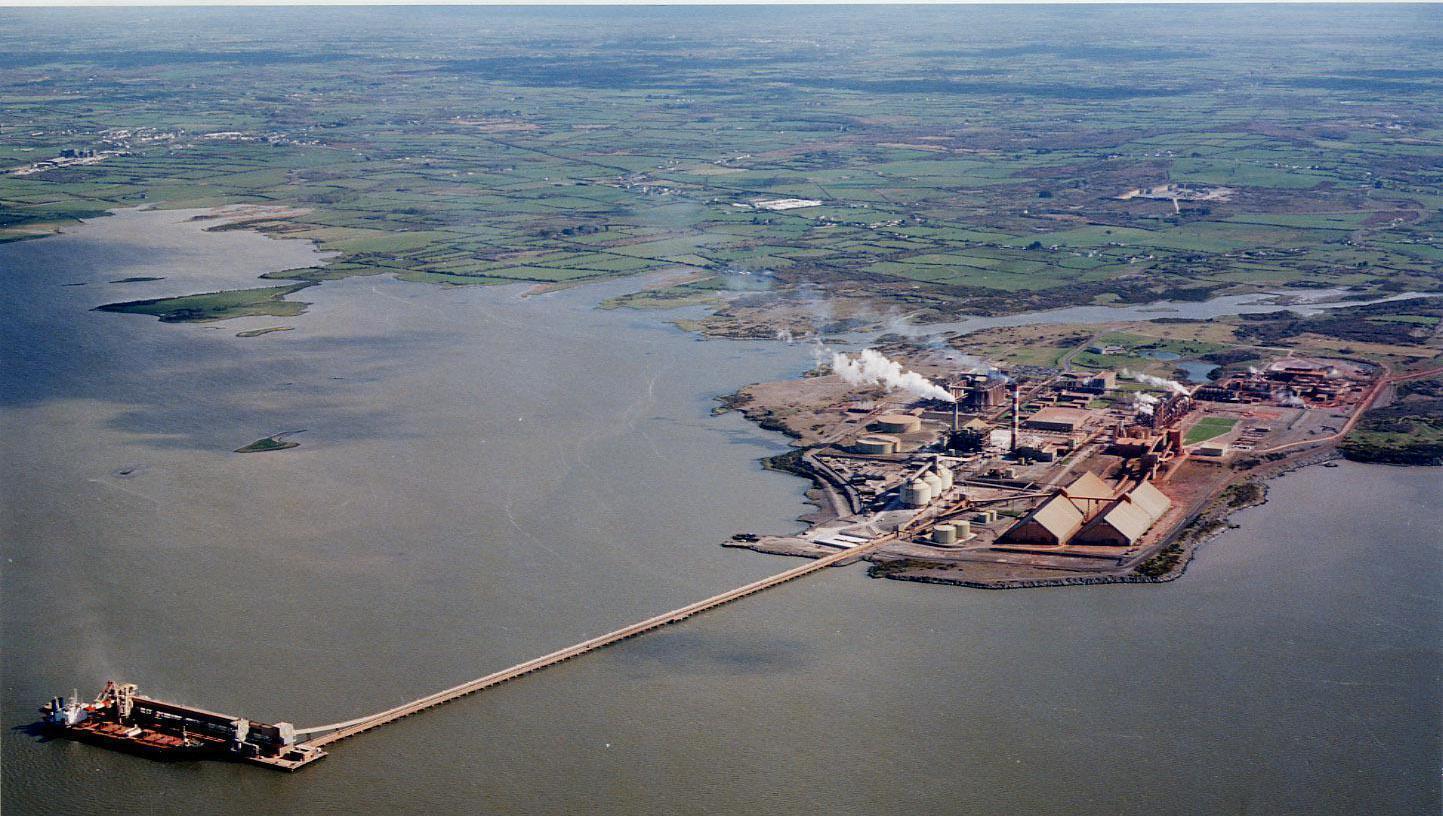
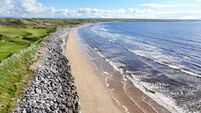
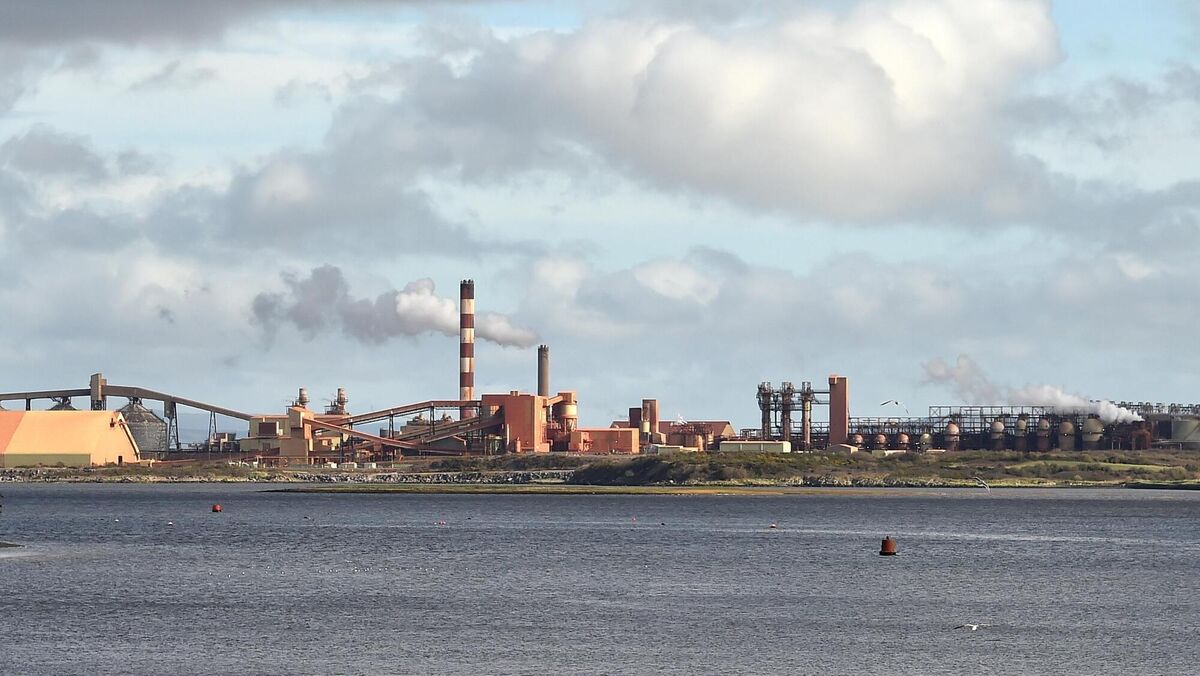
The Aughinish Alumina Refinery on the Shannon Estuary, one of Russia’s most important industrial assets in Europe, remains untouched by sanctions.
At a presentation in Dublin last Thursday to Irish executives and entrepreneurs, I half-joked that perhaps one of Putin’s oligarchs holds kompromat over the Irish Government. How else to explain Ireland's continuing deference to Rusal, the aluminium giant founded by oligarch Oleg Deripaska?
The remark was made partly in jest. Yet more than four and half years after Russia's full-scale invasion of Ukraine, it’s difficult to understand why Ireland continues to host one of the largest Russian-owned industrial assets in the European Union with so little scrutiny.
The Aughinish Alumina refinery in Co Limerick is not some obscure industrial outpost. It is one of Europe's largest alumina refineries and a strategic asset in the global aluminium supply chain. Since 2007, it has been owned by Rusal, the company built by Deripaska, one of the wealthiest and most politically connected oligarchs to emerge from Russia's chaotic post-Soviet era.
Deripaska's rise was forged in the brutal "aluminium wars" of the 1990s, a world of corruption, violence and political intrigue. He went on to become one of the oligarchs most closely associated with Vladimir Putin's regime and has been personally sanctioned by the US, EU and UK.
In late March, Putin summoned Russia's top oligarchs to the Kremlin for a wartime whip-round amid rumoured budget cuts. According to , the independent investigative outlet, only two put their hands up to contribute billions of rubles. One of them was Deripaska.
Whether such contributions are genuinely voluntary is beside the point. In Putin’s Russia, commercial success and political loyalty are tightly bound together.
Read More
I met senior Rusal executives socially in Moscow as recently as August 2021. As tensions with Ukraine mounted, I was left in little doubt where their loyalties lay. At a gathering in the ultra-wealthy enclave of Rublyovka, one senior executive told me about “a very bloody crusade” to reunite the Russian and Ukrainian Orthodox churches.
Like much of Russia’s corporate elite, Rusal operates within a system where proximity to the Kremlin was not merely advantageous but essential.
That is what makes Ireland's position so difficult to explain.
Since February 2022, European governments have repeatedly declared their determination to isolate Russia economically and reduce the Kremlin's ability to finance its war against Ukraine.
The objective has been clear: to weaken the Kremlin’s ability to finance its war against Ukraine. Sanctions have spread across virtually every sector of the Russian economy. Banks have been cut off from Western financial markets, assets frozen, oligarchs sanctioned, and Western companies forced to exit Russia at significant cost.
The approach has not always been consistent. Waivers were granted in some sectors and several EU countries continue to import Russian oil and gas. But the overall aim remains the same: to reduce the revenues sustaining Moscow’s war effort.
Yet one of Russia’s most important industrial assets in Europe remains untouched.
The standard argument against intervention is that Ireland must respect property rights and protect jobs. Both are legitimate concerns. Aughinish directly employs hundreds of workers and supports many more indirectly. No responsible government should place those livelihoods at risk lightly.
But this argument has become increasingly difficult to sustain when viewed against the backdrop of Russia's own behaviour, as Ukrainian cities are bombarded and civilians massacred.
Since the invasion of Ukraine, the Kremlin has effectively seized or expropriated the assets of more than 100 Western companies worth over $50bn, according to Moscow law firm Nektorov, Saveliev and Partners.
France’s Danone and Denmark’s Carlsberg both lost control of their Russian operations after the state appropriated their local subsidiaries, later transferred to a relative of Chechnya’s leader Ramzan Kadyrov and a Putin ally.
The message from Moscow is unmistakable: commercial rights exist only so long as they serve the interests of the Russian state.
European democracies should not imitate such behaviour. The rule of law matters and property rights matter. But why is it that Moscow sees no limits on what it can do to Western assets, while European governments so often behave as if they have no leverage at all over strategic Russian assets in their own backyard?
In reality, we have options. Germany showed the way when it moved to nationalise Gazprom Germania, the German subsidiary of Russia's gas monopoly. Faced with a strategic threat to energy security, Berlin concluded extraordinary circumstances required extraordinary measures.
Other EU members have taken robust approaches. Italy has seized luxury properties and yachts linked to sanctioned Russian tycoons and propogandists. France is discussing using frozen Russian assets to help fund Ukraine, while several member states have revoked passports and residency rights previously granted to tycoons linked to the Kremlin.
These steps show that, where the political will exists, EU nations can turn sanctions into real pressure rather than symbolic gestures.
Irish Bank Resolution Corporation (IBRC), a Government entity, is currently negotiating to sell Seán Quinn’s former assets in Russia, an office skyscraper in Moscow and a massive logistics centre in Kazan, at a knockdown price, according to reports by Russian business outlets and .
This is a murky deal which has barely been reported. The IBRC is selling the assets via its Dutch subsidiary to Kama Capital, a new Russian investment vehicle which has been hoovering up Western assets. We, as taxpayers, will take the hit.
My book, , reveals for the first time that two of Putin’s top oligarchs once tried to acquire Irish “golden passports.” Mikhail Fridman and Petr Aven, who were both sanctioned by the EU in 2022, were also hired in 2013 by the Irish government to retrieve and manage the Quinn assets. There was no tender process — they were simply given the role.
So, my point is that deals can be done and Ireland could save some much needed face by stopping the supply of alumina to the supply chains feeding Putin's war economy.
Our Government has already explored stronger measures than many realise.
In 2022, Government officials prepared a confidential plan that envisaged placing Aughinish into State control as “a last resort”. Under the proposal, State-appointed administrators would oversee operations during a transition period, maintaining production, protecting the 500 or so core jobs, and insulating the refinery from potential sanctions.
The existence of such a plan matters. It shows nationalisation was not some fringe notion dreamed up by newspaper columnists. It was actively considered by the Government.
To be clear, nationalisation would not be straightforward. Ireland has a dreadful record when it comes to State ownership and industrial intervention. Any takeover would likely require legal, financial and political support from the European Union.
But these are practical challenges, not insurmountable obstacles. What appears to be missing is political will from this Government led by Taoiseach Micheál Martin, who said it would be “too simplistic” to nationalise.
No one is arguing that Ireland should emulate the Kremlin's disregard for legal norms. Any intervention would have to be lawful, transparent and proportionate. But the notion that nothing can be done is no longer convincing.
Ireland has opened its doors to more than 120,000 Ukrainians fleeing Russia's invasion and repeatedly professed its solidarity with Kyiv. Yet those declarations ring hollow while we continue to accommodate one of Russia's most significant industrial assets.
The question is not whether Ireland has the tools to act. The State’s own contingency planning suggests it does. The real question is why it chooses not to use them.
- Jason Corcoran reported from Russia for 14 years for , and the . He is the author of the recently published

CONNECT WITH US TODAY



Be the first to know the latest news and updates