Colin Sheridan: Bring back the drama. The football can look after itself
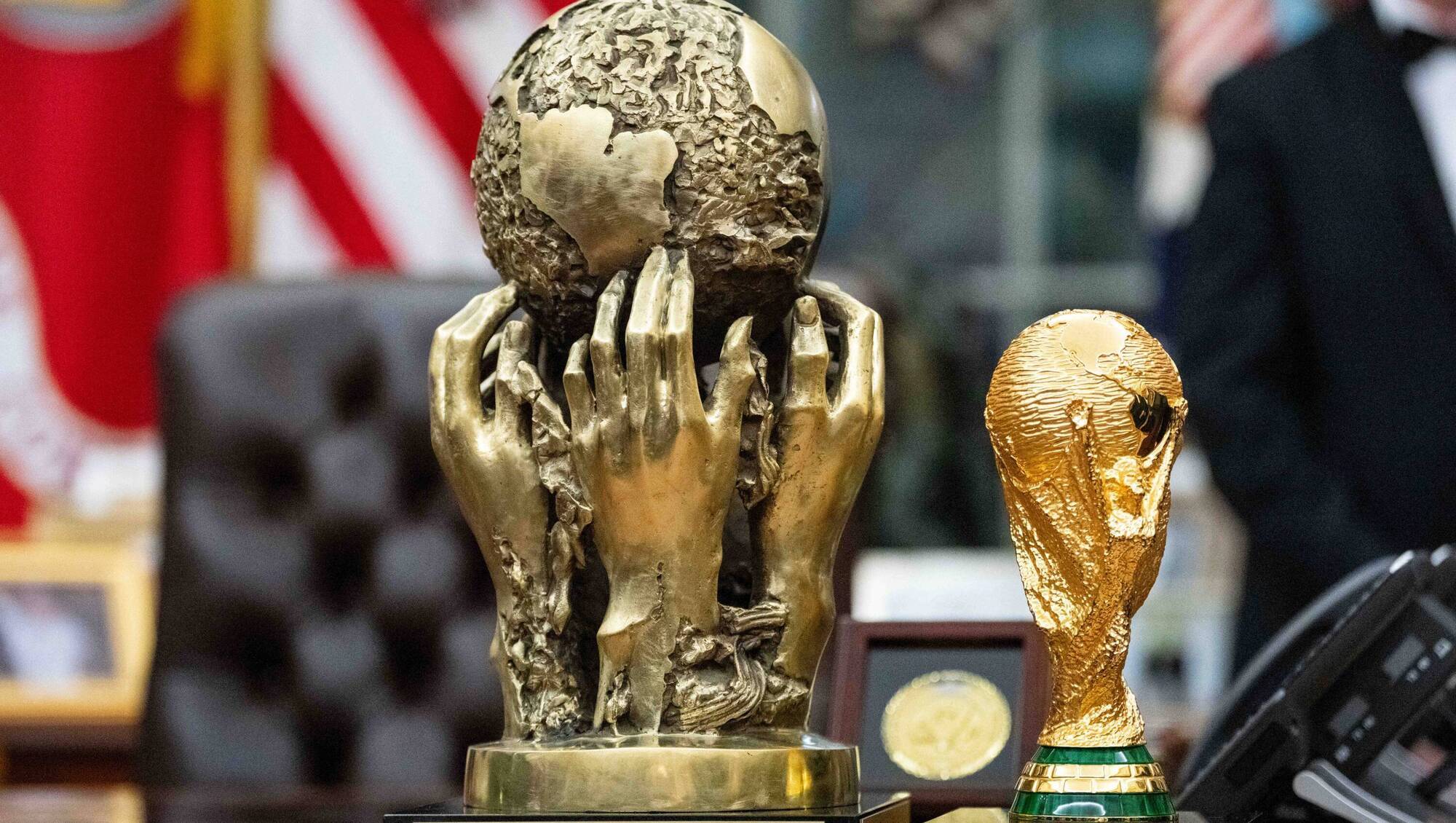
GOLDEN BALLS: The FIFA 'Peace Prize', presented to US President Donald Trump at the 2025 World Cup Draw sits alongside the World Cup Trophy in the Oval Office of the White House in Washington, DC. Pic: Bonnie Cash/UPI/Bloomberg via Getty Images

There’s only one thing more annoying than a middle-aged man taking to print by way of longing for the halcyon days of yesteryear, lamenting that everything was better when wives (and mistresses) were allowed to go to World Cups, players families were subject to kidnap threats, and Bobby Moore wallowed in a Bogotá prison cell for allegedly stealing a diamond bracelet.
And that one more annoying thing is the middle-aged man being right. The world was a better place when the build-up to World Cups was more memorable than the tournament itself. A sporting nod to the pool stages of cliche. “It’s the journey, not the destination.” I think that one was actually born in a bar in a Buenos Aires barrio during World Cup 1978.
You are reading this on Monday, four days out from arguably the most geo-politically fraught iteration of the planet's greatest football tournament, yet one that feels undeniably stale in terms of anticipation and suspense. There was a time when I was aware of where the England footballers were base-camping before attempting to summit the Jules Rimet mountain. A time before Twitter and Tik-Tok, when it was hard to get news, but get it I did.
I’d devour tales of team-bonding and table-tennis high-jinks between Matthew Upson and Danny Mills, all told to me by an experienced broadcast journalist from his perch outside a Gelsenkirchen hotel compound, the poor bastard sweating profusely through an ill-fitting white shirt. I’d yearn for a training camp bust-up, just to take my mind off Saipan, proof that, while all happy families are all alike; every unhappy family is unhappy in its own way.
Now, what do we get? A Champions League final at noon and a World Cup by midnight. It’s like arriving at a restaurant you only get to eat at once every four years and being handed your steak a split-second after you sit down. No perusing the menu. No letting the Châteauneuf-du-Pape breathe. No pretending to understand what an amuse-bouche means. While the tournament itself may drag, the preamble is over quicker than a Kardashian marriage. We wait so long to be given so little.

We wait so long to be given so little. Where are the subplots? Where are the villains? Where are the ridiculous stories that become inseparable from the tournament itself?
Take David Beckham's metatarsal. Children born after 2002 will struggle to understand the hold that a small bone in a footballer's foot once exerted over an entire nation. For several weeks, England ceased to be a functioning democracy and became an amateur podiatry convention. Every scan was analysed. Every training session scrutinised. Orthopaedic consultants became household names.
That was a proper World Cup story.
Nowadays, if a player tears a hamstring, the news is delivered via a cryptic series of micro-soundbites from a manager who says “monitoring the situation” like he’s talking about a missing Russian nuclear sub. We are deprived of the speculation. The mystery. The opportunity for a retired centre-half to stand in front of a telestrator explaining the biomechanics of the fifth metatarsal despite possessing all the medical qualifications of a Labrador.
The great tournaments of old were built on uncertainty. In 1978, the reigning masters of Total Football arrived in Argentina without Johan Cruyff. The world's greatest player simply wasn't there. For years, nobody seemed entirely sure why. Political protest. Commercial disagreements. Family concerns. By the time we learned the truth (a kidnapping plot), it mattered little. The drama was the juice.
The French, never knowingly excluded from a melodrama, spent the build-up to Spain '82 engulfed in stories involving Michel Platini, teammate Jean-François Larios and an alleged romantic entanglement better suited to an Alain Delon picture than elite sport. Whether entirely true or not scarcely mattered. World Cups used to possess the intoxicating quality of a village scandal that somehow grew large enough to encompass entire nations.
Then there were the WAGs. What we wouldn’t do for a WAG today. There was a glorious period in the early 2000s when England's prospects of lifting the trophy appeared inversely proportional to the amount of shopping being conducted by footballers' partners. Every handbag purchased in Baden-Baden was treated as a threat to national security. Every cocktail consumed poolside represented another nail in England's coffin. Looking back, it is difficult to determine whether Sven-Göran Eriksson was managing a football team or supervising the cast of Love Island. Yet we followed every minute of it.
Every tournament seemed to begin with reports of somebody being overtrained, undertrained, homesick, dehydrated or involved in a fistfight. Teams would disappear into secluded compounds in the mountains, jungles or deserts and emerge looking either spiritually enlightened or emotionally exhausted.
Perhaps this is why Saipan continues to occupy such a unique place in the Irish sporting imagination. It wasn't merely a dispute. It was an event. A saga. A John B. Keane play set on a tiny Pacific island.
It set an impossibly high bar.
And maybe that’s why the modern game has become too competent for its own good. Every message is rehearsed. Every controversy is neutralised before it can properly bloom. Players communicate through carefully curated social media posts. Managers reveal nothing. Press officers hover nearby like nuclear safety inspectors.
Everything is cleaner and everything is duller.
The next great tournament doesn't need better players or smarter tactics.
It needs somebody's wife to board the wrong plane. A goalkeeper to fall out with a fitness coach. A star striker to develop a mysterious injury that requires hourly medical bulletins. A television correspondent to perspire heroically outside a guarded hotel while inventing significance from absolutely nothing.
Bring back the drama. The football can look after itself.
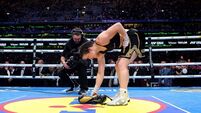
Katie Taylor deserves the ending every sporting pioneer dreams of but few actually receive. A homecoming. A packed Croke Park. A world title fight. One final walk beneath the lights in front of the people who followed her from church halls in Bray to Olympic gold and global superstardom.
Not every great athlete gets such symmetry. Some linger too long. Some disappear quietly. Some leave through side doors, wearing disguises. Taylor, fittingly, appears set to leave through the front gate of the national stadium. It is difficult to think of a modern Irish sportsperson more deserving.
Long before sold-out arenas and lucrative television deals, there was a young woman fighting for recognition in a sport that barely recognised itself. Younger fans may struggle to appreciate just how much of women's boxing's modern popularity can be traced back to Taylor's stubborn refusal to accept limitations imposed by others.
She didn't merely win medals. She changed perceptions. Which is why September should be less about the fight itself and more about the farewell. The occasion is the thing. Yet there remains a lingering anxiety that accompanies Irish professional boxing. Not because of Taylor, whose reputation has remained remarkably intact throughout a career spanning two decades, but because the sport has too often found itself brushing up against people and interests it would be better off avoiding.
Boxing's long and complicated relationship with organised crime is hardly unique to Ireland. It is a shadow that has followed the sport around the world for generations. The hope is that, for one night at least, that shadow stays outside the turnstiles.
Katie Taylor's story has always been bigger than boxing. It belongs to Irish sport now. The final chapter should be about courage, achievement and gratitude. Sometimes a sporting ending doesn't need embellishment. It just needs to be left alone.
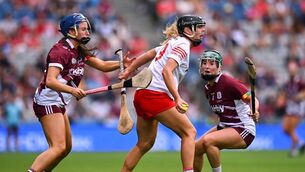
Galway's dismantling of Dublin in Saturday's Leinster final was less a victory than a statement of intent. For years, the Tribesmen have flirted with their potential, producing flashes of brilliance before disappearing into inconsistency. This felt different.
This looked like a team that knows exactly who it is, even if - under the erudite Micheál Donoghue - they try to keep it a secret. The blend is compelling: physicality, pace, scoring power and a defence capable of suffocating opponents. Most importantly, there was an authority about them. Galway may not yet be All-Ireland champions, but increasingly, they resemble champions in waiting.
It also teases the following: for the first time in a generation, a Galway football/hurling double doesn't sound completely deranged. God help us all.
A year ago, optimism around the Republic of Ireland women's team was in short supply. The messy aftermath of Vera Pauw's departure, combined with an ageing squad and the inevitable hangover from the 2023 World Cup, had tempered expectations. Qualification for Brazil 2027 felt more aspiration than likelihood. Not anymore.
Ireland's recent performances have transformed the conversation. Suddenly, Brazil no longer feels like a distant dream but a realistic destination. Much of the credit belongs to head coach Carla Ward who inherited a talented but uncertain group and has quietly rebuilt belief, identity and momentum. More importantly, she has persuaded her players to believe it too. Good coaches improve performances. Better ones change narratives.
Ward has done both.