Mick Clifford: Government solution to housing crisis is to pander to vested interests while young people lose out
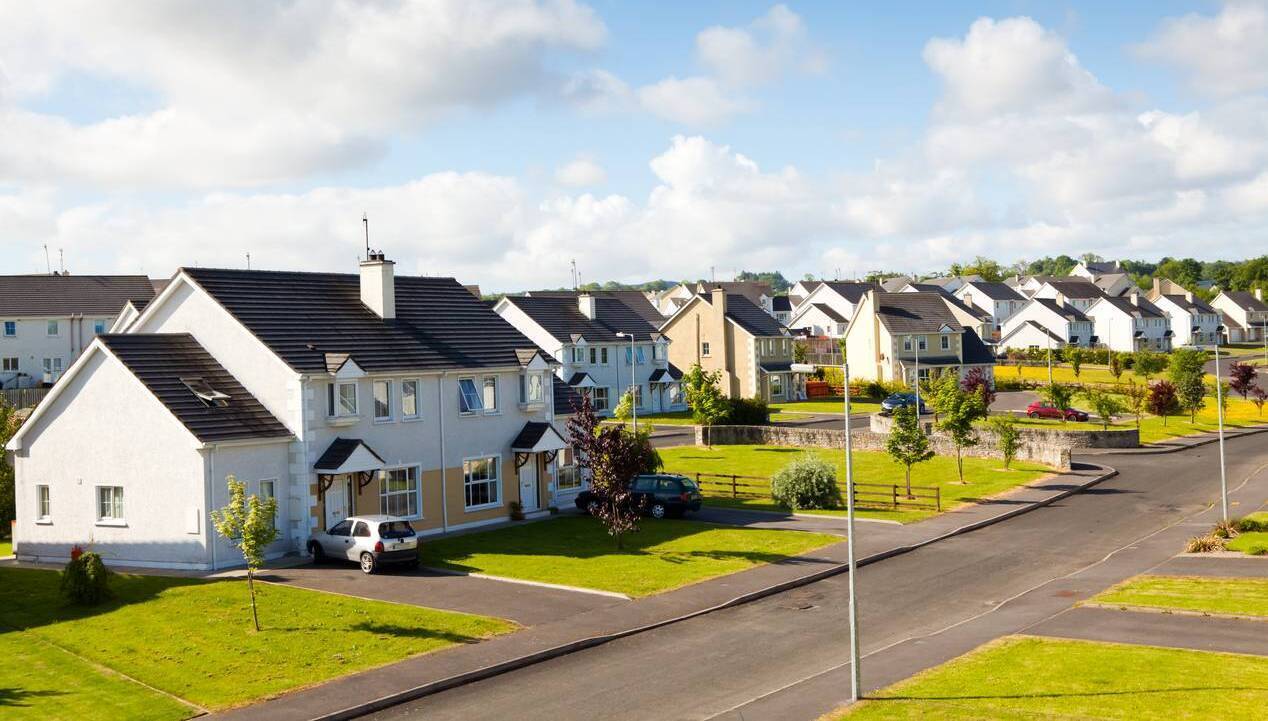
The ultimate losers in the current system are first-time buyers, who have to fork out for the uplift in the price of land on which their new homes are built. File picture
Every now and again, we get a glimpse of why housing is in such a mess. There are winners and losers, constituencies who hold power, and those who have none. Generally, the losers and the powerless represent the same, usually young, cohort of the population.
Currently, there is uproar among residents in West Dublin over a proposal to rezone land in order to build 500 homes. The site is in the Liffey Valley and adjoins an area of special conservation. There have been various attempts over the last 35 years to earmark housing for this area, in a city that is greatly expanding. The reported on Monday there have been about 1,600 “submissions” about the proposal. For submission, read objection.

On the whole, the submissions cite lack of infrastructure and projected traffic levels as reasons to object. Legally, any development today is obliged to provide infrastructure and take account of traffic. In reality, existing residents don’t want more houses because it might impact negatively on how they now live. That of itself is understandable, but the crucial question is how much change will there be to prevailing lifestyles in the area.
Some of the residents are glimpsing Armageddon over the horizon. One stated the lands in question were “sacred to local Lucan people”. Another fumed that “housing estates would be an absolute disgrace and disaster in this location.” In other words, build houses if you must but just not around here.
Yet another resorted to an attempt at shaming. Rezoning, it stated, would be “a terrible shame for the people of Dublin", akin to “rezoning Sandymount Strand for housing”.
An alternative view on what housing here might mean would to agree that, yes, it will bring change, but would that change really be as serious as the scaremongering screams?
Is some of the objection informed by a fear that new housing might affect the value of their own homes in a soaraway market?
The attitude that appears to prevail in this instance is not unique to residents in West Dublin. It informs a huge proportion of objections, which often lead to long delays in the building of houses throughout the State.
That does not infer that every proposal conforms to good planning, even when the proposal originates with public servants. But in general, there is far too often an attitude from homeowners of what we have, we hold, and thereafter a narrative is fashioned to rail against any change.
On a political level, those already in situ have all the power. They can petition, cajole or threaten their public representatives to properly, as they see it, represent their interests. In such a milieu, the common good, the future, the young people who have precious little chance of owning their own homes, are all somebody else’s problems.
Then there are the big winners. The lands in the Liffey Valley have a long history with proposed housing. It goes back to an attempts to rezone in 1993 and 1998. This was at a time when the main thrust to rezone land came from the landowners rather than public bodies. After those attempts failed, developer Seán Mulryan bought the lands and tried unsuccessfully again for rezoning. Following the crash in 2008, the lands ended up in Nama.
Then in 2013, billionaires John Magnier and JP McManus bought the land for €4.3m, which was, in terms of possible development, peanuts. The two gents are canny businessmen and they obviously saw a future where an expanding city would eventually require rezoning here for housing.
Once the lands are rezoned, the value goes through the roof, delivering an exponential return. This uplift in value has been tempered in recent years with a new tax on rezoned land, but it is remains a hugely profitable venture.
Fair play to Magnier and McManus. Land speculation of this order has long been a staple in high-end business, in a similar vein to the foresight to invest early in a company that will in the future turn out to be highly successful.
Rezoning is nominally effected to respond to housing needs. More than 50 years ago, the Kenny Report recommended the prevailing system be abandoned and instead rezoned land should retail at the agricultural price plus 25%. This would reflect that rezoning for housing is done in the name of the public interest, rather than presenting an opportunity for astronomical profits.
Yet no government, even today, with the price of houses way beyond the reach of many, has had the stomach to craft a system that renders the benefit of rezoning to the public rather than private interests.

The ultimate losers in the current system are first-time buyers, who have to fork out for the uplift in the price of land on which their new homes are built. While this and previous governments throw around words like “crisis” and “emergency”, they are unwilling to ever take measures that would be appropriate if they really believed what they are spouting.
Meanwhile, also this week, the Government began moving towards loosening restrictions on one-off rural housing.
By right, anybody who works in rural Ireland should be allowed to build near their place of work. Equally, provision should be made for native speakers in some capacity in gaeltachts. But the new rules are expected to go well beyond that, to satisfy simply those who can afford to live in splendid isolation from the nearest settlement, village or town.
As UCC economist Frank Crowley pointed out in this newspaper during the week, this will merely deepen the two-tiered system in housing.
The Government, he said, was “reacting to votes, it’s not reacting to economic realities”. The extra cost of the proliferation of services for one-off housing “will be borne by the general taxpayer and that’s what makes it unsustainable,” he said. Once again, the Government prioritises what it sees as its political interests above the public interest or the long-term cost.
This is what passes for decisive action at a time of crisis. In reality, the notion housing represents a national crisis is simply wide of the mark if we are to gauge it by the alleged attempts to tackle it.
For some, the current situation is a crisis. For more, it is merely an irritant. And for more again, it represents an opportunity. The cost will accrue over the long term and is likely to include a further fracturing of the social contract as far as younger people are concerned.
That is the ultimate price of prioritising vested interests and the next election over all else.