'Smart delivery' of once-off rural homes needed to keep pace with population growth
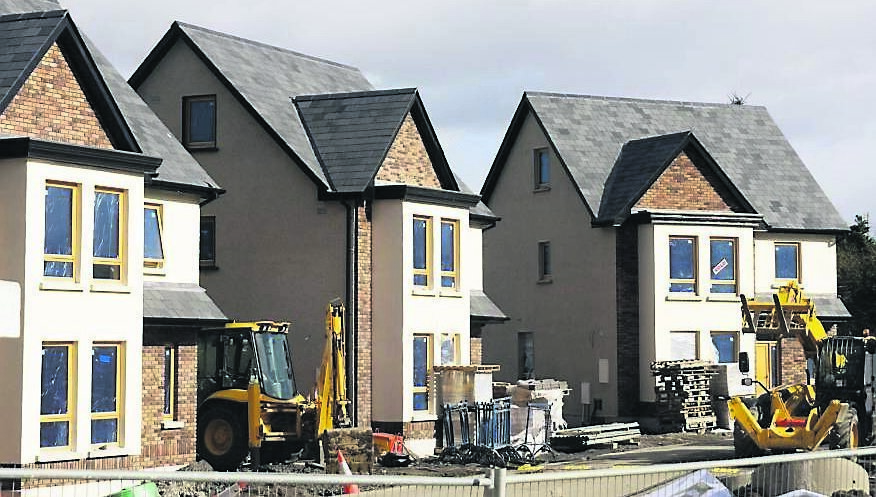
The Hardware Association of Ireland said that 'unlocking this sector could add at least a further 6,000 houses per year'. Picture: iStock
Thousands more "one-off" rural homes could be built each year, a report has suggested, while urging the Government to get rid of the so-called "housing need" requirement to help make it happen.
The report from the Hardware Association of Ireland argues that demand for such houses in Ireland is strong, but there are significant impediments to actually delivering this housing which can and must be addressed.
“Our study has identified that smart delivery of homes is required to keep pace with population growth,” the organisation’s chief executive, Martin Markey, said.
“Unlocking this sector could add at least a further 6,000 houses per year.
“[It] calls for urgent, targeted, and balanced reform, including a review and modernisation of the existing planning process to better support sustainable rural development.”
The report draws on 239 responses from a survey involving key stakeholders such as its own members, estate agents and auctioneers, architects, local councillors and TDs, and local government officials.
It points out that in 2006, at the height of the Celtic Tiger boom, some 23,250 one-off rural homes were built. However, in 2025, only 5,929 such homes were constructed in Ireland.
It argues that, while it is unlikely to reach mid-2000s levels in the short-term, doubling the existing number should be achievable.
As part of the existing requirements, applicants must demonstrate a “housing need” to build a house in a particular area, such as local ties or an agricultural need.
The Hardware Association of Ireland report recommends reforming or abolishing this requirement.
“Respondents consistently identified the regulation as a significant constraint on the construction of much-needed rural housing, directly contributing to the wider housing shortage,” it said.
“Furthermore, its operation is causing ongoing frustration and conflict between citizens, local authorities, and national Government.
"The evidence suggests that the regulation, while originally introduced with valid safeguards, is now acting as a barrier to appropriate rural housing delivery and is no longer aligned with current demographic and housing realities.”
Furthermore, there was an “overwhelming perception” among stakeholders of a “systemic bias” against rural housing in the planning process.
The association reported that planning was experienced as “adversarial, opaque, and heavily procedural”.
It led the authors to recommend an urgent step change in the planning approach to permit the building of rural housing in greater numbers.
“The summary of the report issues a stark message: Ireland does not have a demand problem in rural housing. It has a delivery problem, and the solution lies in reforming policy to enable construction at scale,” the association added.
CONNECT WITH US TODAY



Be the first to know the latest news and updates