Shona Murray: EU's refusal to act against Israel makes it complicit in crimes against Palestinians
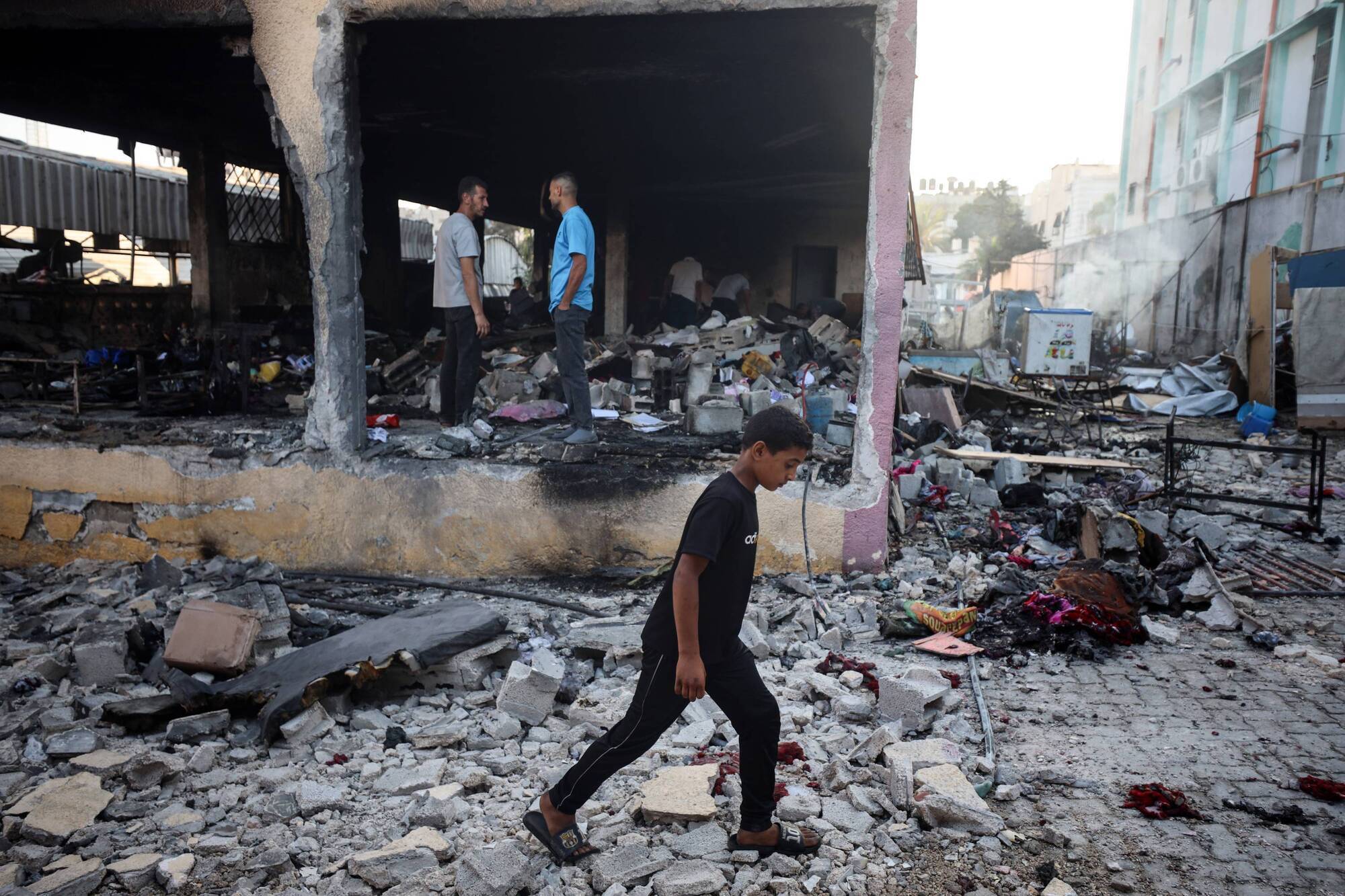
Despite its widespread military assault on civilians, family homes, as well as wholesale destruction of communities across the Middle East, the message from Europe is there is no red line when it comes to Israel. Picture: Majdi Fathi/NurPhoto via Getty Images

Once again when given the opportunity and an array of evidence, the EU refused to act against Israel for its deepening onslaught across the Middle East.
"This will be remembered as another shameful chapter in one of the most disgraceful moments in the EU’s history," Amnesty International's senior director Erika Guevara-Rosas said in response.
At the scheduled meeting of EU foreign ministers in Luxembourg, the matter of Israel’s occupation of Lebanon, ever-expanding settlements in the West Bank where communities are being violently expelled, and where life in Gaza is still hell on earth with nearly 800 Palestinians — mainly children and women, having been killed by Israel since the so-called ceasefire — was not even officially on the agenda.
It wasn’t on the agenda despite the EU issuing a statement critical of the death penalty law which passed the third stage in the Knesset and is designed to pave the way for the execution of Palestinians only in a military court system with a 96% conviction rate, according to Israeli Human Rights group B'Tselem.
The legacy of EU member states when it comes to this point in history is borderline complicity. In any other time, no country with such close economic, social and institutional ties with Brussels would be permitted to act with such impunity.
Days before the foreign affairs council, a letter to EU foreign policy chief Kaja Kallas on behalf of Ireland, Spain, and Slovenia, called for an urgent discussion to revisit previous proposals to partially or in full suspend Israel’s Association Agreement with the EU. And for the matter to be put on the agenda.
“Conditions in Gaza are unbearable, marked by continuous violations of the ceasefire agreement and the clearly insufficient entry of humanitarian aid into the strip.
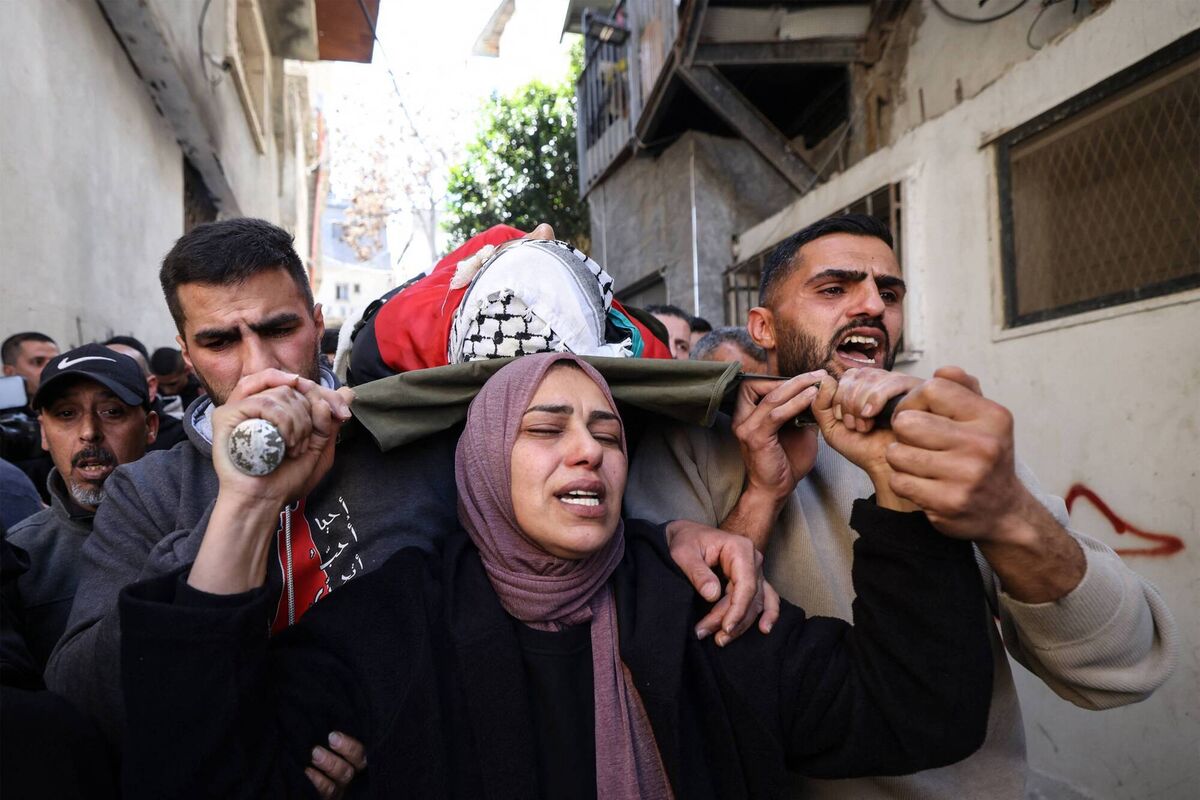
“The situation in the West Bank is rapidly deteriorating, with escalating violence against Palestinians: radical settlers are acting with absolute impunity, and alongside ongoing military operations by the Israel Defence Forces, are resulting in the intolerable deaths of innocent civilians,” the letter reads
It goes on to address the attacks on Christians and Muslims in the Old City in Jerusalem by Israeli settlers and backed up by Israeli police and soldiers.
And calls for the European Union to “uphold its moral and political responsibility” to defend core values which have underpinned the EU since its foundation at the end of the Second World War.
But the numbers weren’t there for a qualified majority to vote in favour of partially suspending the EU- Israel Association Agreement.
Ahead of the meeting, German foreign minister Johan Wadephul said sanctioning Israel would be “inappropriate”, The Italian foreign minister Antonio Tajani made it clear Italy wouldn’t support any measures, rendering the proposals dead.
Proposals aimed at putting pressure on Israel have been brought before EU member states on numerous occasions since Israel has been investigated for genocide in Gaza after the Hamas terrorist attack on October 7.
EU member states have been given a range of options, from full suspension of preferential trade with Israel, to partial suspension of Israel’s access to EU Horizon Research programme, which would amount to targeting a portion of about €200m of funds Israel receives from the fund.

At the lower end of the scale are options which don't require unanimous support to pass. Instead, such measures can be implemented with a qualified majority when a voting threshold of 15 out of 27 member states is reached, and those states representing 65% of the population of the EU. But none has ever reached the threshold.
The EU is already seen as squandering its role as a defender of international law, fundamental values and human dignity. In recent days, a Europe-wide Citizens Initiative calling for the full suspension of the EU–Israel Association Agreement recently reached the one million signatures required to trigger a response from the European Commission and the European Parliament. So far, there’s been no response from Brussels.
Belgium and the Netherlands are in the process of implementing plans to end trade with illegal West Bank settlements. Belgium and Spain have ended consular services to settlement residents.
The Netherlands — a leading Nato member — also announced a plan to reduce trade on military services, and declared Israeli far-right ministers Itamar Ben Gvir and Bezalel Smotrich — both Israeli settlers — as “persona non grata.” All of which is compliant with EU trade law.
There is no reason why Dublin can’t do same.

CONNECT WITH US TODAY



Be the first to know the latest news and updates