Fergus Finlay: Bank advertising makes me sick to the stomach
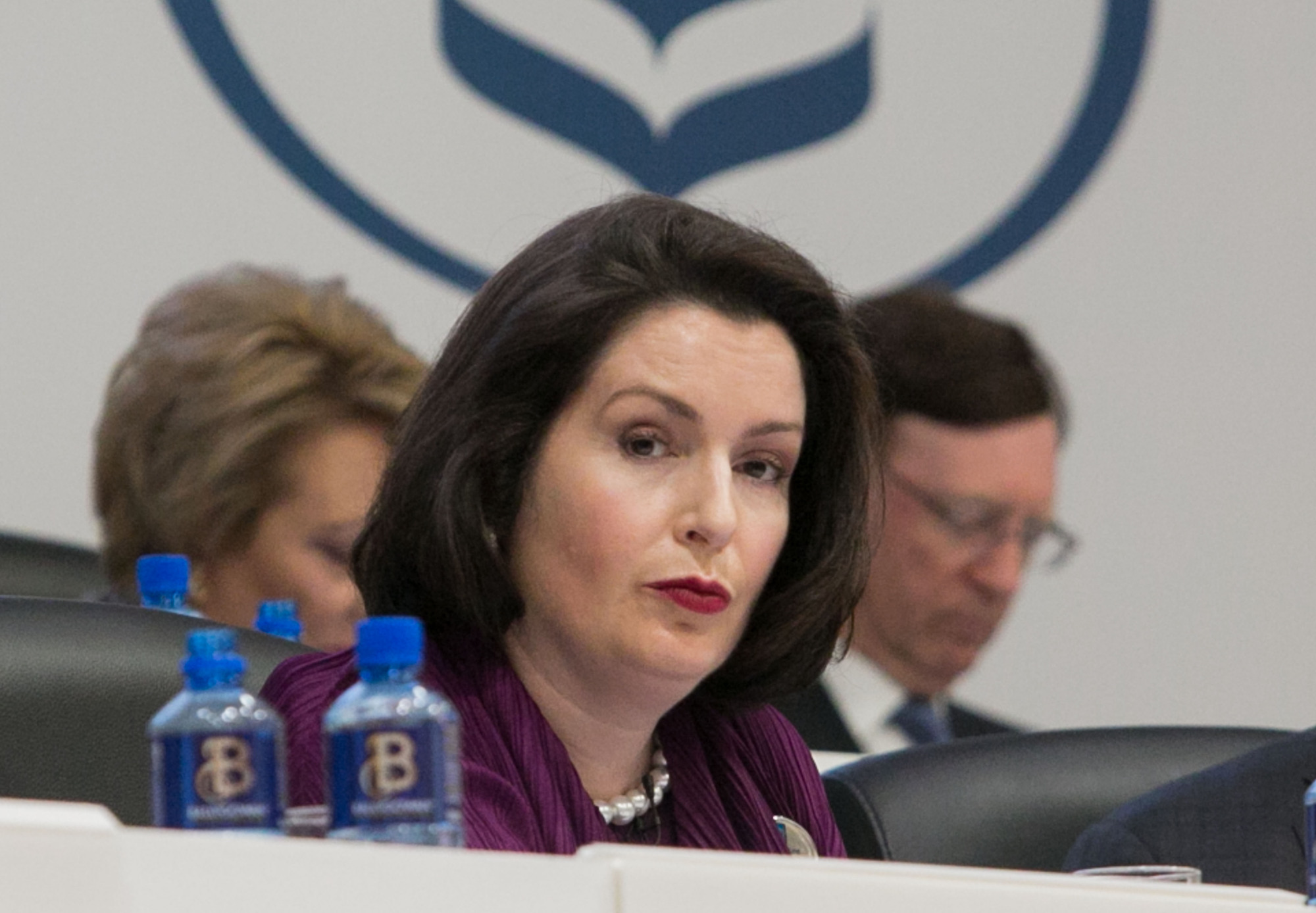
Francesca McDonagh, chief executive of the Bank of Ireland who along with the other bank bosses could do with their TV adverts showing more of the small print and less of the tear-jerking images. File photo: Gareth Chaney Collins

I’ve always been inclined to the view that banking hypocrisy ought to be illegal, at the very least an offence punishable by a large fine. Every time I see a banking advert on the telly, I want to put my foot through the screen because the hypocrisy is so palpable.
Here’s one that’s driving me mad at the moment. A young woman is on the screen, standing on a bridge on the Liffey, with Liberty Hall (good old Larkin and Connolly) in the background. A caption says she’s Anna O’Connor, a climate campaigner, and she’s telling us we have to do more for the environment.
The solution? An AIB Green Personal Loan.
Give me a very large break. Look up the Green Loan on their website and you’ll be told you can borrow up to €30,000 at an APR of 6.4%. There are loads of pictures on the website of young people doing green things, like plugging in their electric cars.
The bumph says you have to spend half the money on something green (or at least, you have to show them a quote for something green when you’re applying).
The tv screen, of course, has the usual tiny type — “lending criteria apply — over-18s only — subject to approval — security may be required”.
This ad isn’t just about encouraging young people to borrow. It’s also a pretty crass attempt to give AIB some green credentials — they’re aiming at a section of the population (their marketing people call that a demographic) for whom green credentials matter. It’s all a bit sick-making.
It wasn’t always like that. There was a time in my generation when your relationship with your bank manager was a more personal one. The manager would understand your circumstances and help you to arrange your finances around them.
If a new baby was arriving in the house, it was a good idea to talk to the bank manager. By the same token, if there was financial trouble on the horizon you could rely on the manager to be supportive, at least within reason.
Of course, it was always a “he” in my day. Until I was in my mid-twenties, if a woman went to work in a bank (or the public service), she had to leave her job the minute she got married. It was pretty well impossible for a woman to graduate up through the ranks to manager status or higher, principally because of the marriage bar.
The last time I had a personal encounter with a bank official in a bank was some years ago. I had an overdraft at the time and went in to ask for an increase to pay for some car repairs. He never looked at me, only at his computer screen. The computer said no.
When I asked why, the computer (speaking through the official) told me that my lifestyle was insupportable. What was it about my lifestyle that the computer found troublesome (apart from the existing overdraft) I wondered?
Now — and I have asked — I know absolutely nobody who has a personal relationship with their bank, or who could turn to a bank in times of trouble or need. Credit Unions yes, but the multi-billion euro banks turn a cold eye to anyone in trouble.
We need them, of course, and we continue to support them. The most recent figures from the Central Bank show, for instance, that “banks’ holdings of deposits from the Irish resident private sector continued to record strong inflows, with annual growth at 11.4% as at end-September 2021. Irish resident households remain the largest contributing sector to deposits on banks’ aggregate balance sheet.” And boy are those balance sheets healthy.
That wasn’t always thus, either. Few of us will ever forget that we had to mortgage the future of two generations to save our banks — because we were given no choice, because we couldn’t let them fail, because Europe told us to. We lived through a period of intense national embarrassment and shame because of the greed of the banks and their arrogant mismanagement.
Most of us went along with that, harbouring a kind of sullen resentment. Eventually, we took it out on the politicians who caused the crisis and punished, even more, the politicians who had to try to solve the crisis. We never punished the banks.
In our childlike way, we just longed for the day when the banks would say thank you to the people of Ireland. I suppose we’ve long since stopped holding our breath for that.
Instead, we’ve come to expect the sort of thing that happened a couple of months ago. The chief executive of the Bank of Ireland, Francesca McDonagh, (there’s a refreshing change at least — a woman at the top) at the same time as she was announcing pre-tax profits of nearly €500 million (for the first six months of the year), said she was hoping the government would agree to “regulated normalisation” in the bank.
However, I really do hope that the withholding of a large bonus doesn’t leave Ms McDonagh in a position where she has to move in with a family member when she arrives at old age. That might force her to watch the most nauseating of all the current crop of bank ads.
I have to be honest. One of the reasons it’s so nauseating is it’s because it’s so good. Not a dry eye in the house — that good.
You know the one. A lovely, distinguished, and heartbroken old lady is saying goodbye to her old sitting room. It’s battered and brown, but it has all her memories. She is resigned to moving in with her son and his family and their white sterile house. But when she arrives, her room has been magically transformed into a perfect replica of the room she’s had to leave. As she smiles, all the care gone from her face, her son murmurs “welcome home mum”.
And it’s all done because someone in Bank of Ireland said their magic word, begin. And supplied the mortgage to do it.
Once, of course, the son had fulfilled all the conditions, secured the deposit, entered into a 25-year agreement to pay it back, endured the entire process of negotiating a mortgage nowadays, including offering assurances that his pay wouldn’t be affected by Covid.
I guess banks have to advertise. But the truth is never in the pictures. It’s always in the small print. We lend money. If you qualify and can prove you can repay with interest, you can have some. If you don’t, you can’t. Get into trouble along the way, and we’ll come after you.
It’s too much to ask, I suppose, that we’d be shown more of that small print and less of the tear-jerking pictures.

CONNECT WITH US TODAY



Be the first to know the latest news and updates