Michael Moynihan: Cork still waiting for task force while our green spaces disappear
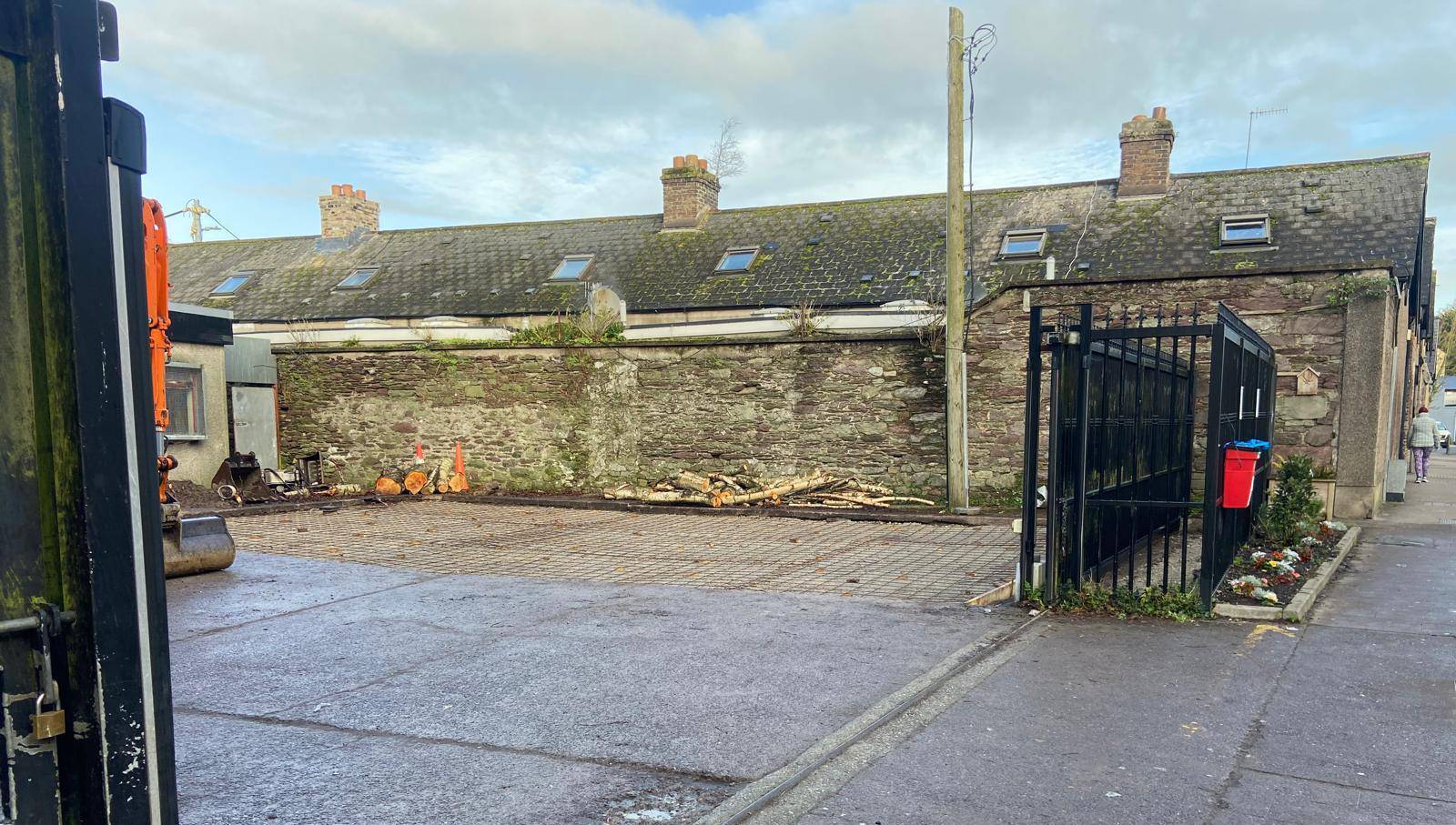
The old fire brigade substation in Blackpool where the yard has been concreted over. Photo: Michael Moynihan

You probably have enough of Bishop Lucey Park by now.
That’s understandable. It’s a lot to process (around €7 million apparently, yuk yuk) and probably does little for your blood pressure, but before we consign it to the memory bank ...
I note that a Cork City Council representative made a case for the park in a piece published in the Echo a few days back. The piece was long on hilarity, intentional or otherwise, offering plenty of choice cuts.
Personally I was torn between “The accelerated timeline was not about cutting corners — it was about delivering value when it mattered most,” where “mattered most” means opening an unfinished project to the public almost a year later than intended.
Or perhaps stating “The result is a park... proving that Cork can deliver ambitious projects under pressure,” a statement unmatched in its creativity when one considers the amount of contradictory evidence all around us.
Special mention in the forelock-tugging stakes goes to “ ...thanks to BAM which has agreed to allow the temporary use of the plaza,” a reference to the open space on South Main Street which the public accesses whenever Halley’s Comet returns, or something.
This was a timely communication in one sense, however, because it coincided with some movement on a long-heralded proposal: the task force for Cork. Last June, Tánaiste Simon Harris said the Government needed to establish a Cork City task force, promised in the programme for government, by the year’s end.
Now, an update under the ‘no surprise at all’ heading: last week Mr Harris conceded to the that the task force would not now happen in 2025. He did say he felt it had to happen next year.
This is disappointing when compared to the Dublin City task force, which was established in May 2024 and had reported by October of that year. This means Cork has been waiting for its task force to be established for about the same length of time that it took Dublin’s task force to establish itself, study the issues, and produce its report.
Urgency, wha’?
Search a little deeper and you may find some other interesting threads on which to pull. For instance, when Mr Harris was making noises about a task force in the summer, a couple of Government TDs were quite vocal about the idea. To be specific, about those they didn’t want involved in the task force.
As reported by the “Pádraig O’Sullivan, Fianna Fáil TD for Cork North Central, said the prevailing rumours in political circles suggested the task force would be 'largely populated by the local authority'.
“I would have concerns that the task force needs to be populated by the widest possible group of stakeholders to ensure that it can best provide for the future demands of Ireland’s second city,” Mr O’Sullivan said.
“Séamus McGrath, Fianna Fáil TD for Cork South Central, said the task force needed to be progressed as soon as possible, and needed to include a wide range of stakeholders. Obviously the city council will play a critical role in this, but I think it does require national support and funding also,” he said.
Nobody is doubting that the city of Cork can put together an esoteric assortment of people to sit around a table and, er, brainstorm. You need only look at the project development board for the Event Centre to see that.
Why the reticence about the city council “largely populating” such a task force, though? Why would anyone be dubious about the local authority’s vision for the future?
Come with me to sweet Blackpool if you want to see some justification for that reticence. Our journey takes us to the building which was formerly a substation of Cork Fire Brigade on Watercourse Road, next to Madden’s Buildings.
Yours truly knew it well, dropping in regularly to see my late father when he was stationed there. I met Fireman Dick Beecher at the front door one afternoon and a week later he died in a fire on Washington Street.
That is not today nor yesterday, but there was a time in living memory when the green space in front of the old substation, small as it was, could be used by kids in the neighbourhood to kick a ball. They could also climb on the few trees there — four in total, or am I imagining that?
Certainly if you log onto Google Street View, the image with a May 2024 date stamp shows at least one leafy tree and some grassy areas still surviving.
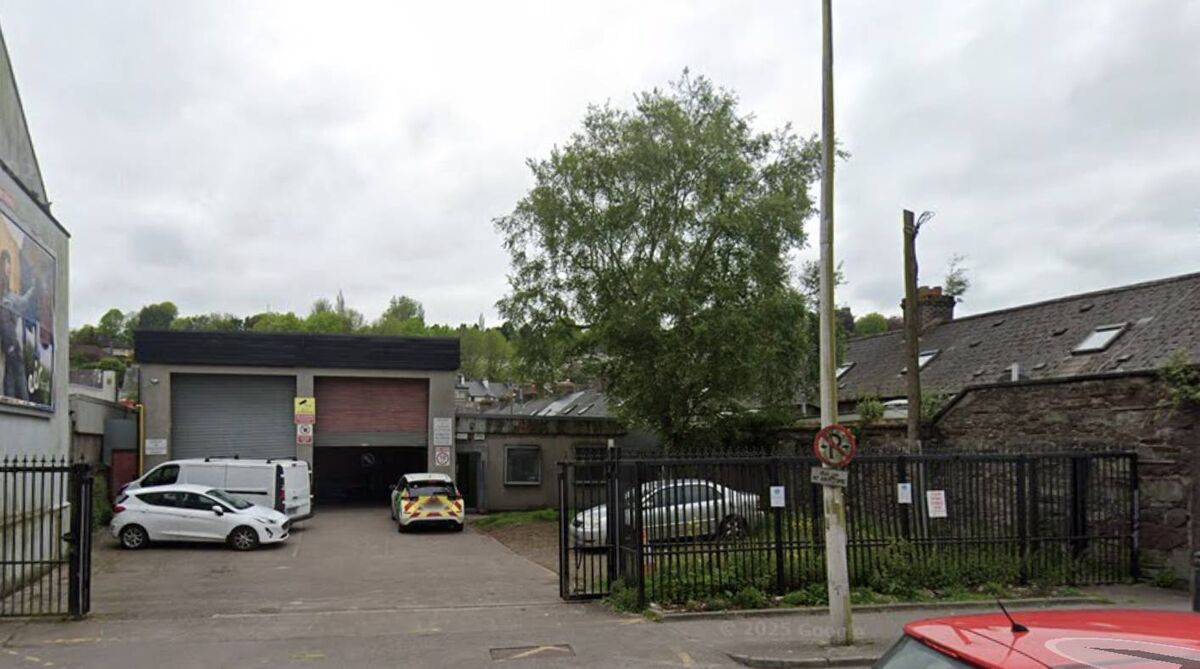
The signs in that snapshot are ominous: a car is parked underneath the tree and the greenery is becoming peripheral. It should come as no surprise, then, that this week the greenery has been removed.
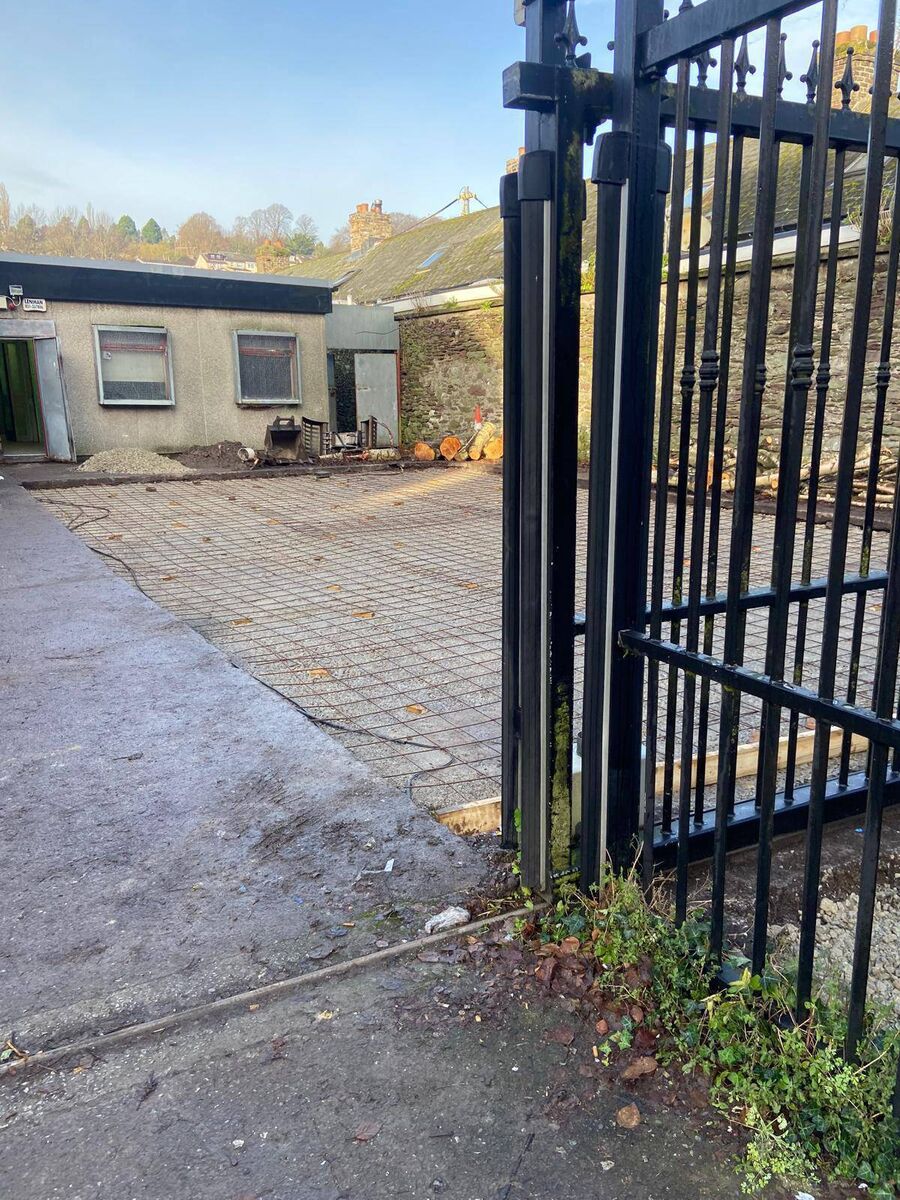
Tree, grass, soil — all of it is gone and concreted over. Yesterday I walked past and saw the last tree is now no more than a pile of logs against the wall.
Another corner of the city rendered grey. Why? To provide parking? To use up any concrete left over from Bishop Lucey Park? To get some timber for a wood-burning stove?
I want to thank the reader who got in touch to let me know this had happened, as their accompanying comment deserves to be reproduced here in full.
“This is absolute textbook gradual erosion of green space in the urban environment. First you allow a little parking on the grass; then you don't maintain the area properly; then a couple of trees get removed; then you put a fence up to privatise the public green space; then nobody asks questions when you chop down the last tree and concrete over the grass. The incremental demise of urban green space over a decade or more. Blink and you'll miss it.”
No argument here. When I dropped over yesterday to have a look, it was every bit as grim as you might think, from the high steel fence to the digger looming over the old driveway. Well done to Cork City Council on this one.
With Bishop Lucey Park the local authority told the : “Critics have overlooked the extensive, open and transparent public consultation process that informed this project. The design was made public, feedback from local businesses, residents, and community groups shaped the design, which was then voted upon by city councillors, in public, and approved.”
I have no doubt the exact same process was undertaken in relation to the old substation forecourt in Blackpool. Transparent public consultation, feedback from locals, voted upon by city councillors in public. (And approved).
Any local authority with a Climate Action Plan as part of “statutory climate-action requirements and our participation in the EU 100 Climate-Neutral and Smart Cities Mission” would certainly not decide to pancake a green area with concrete without full consultation.
A local authority which trumpeted its adoption of a first tree strategy last year wouldn’t just reduce a tree to a pile of logs, right?
On with the taskforce. Careful with the membership.


CONNECT WITH US TODAY



Be the first to know the latest news and updates