Huge change in four hard, dark years - St Patrick’s Day 2015
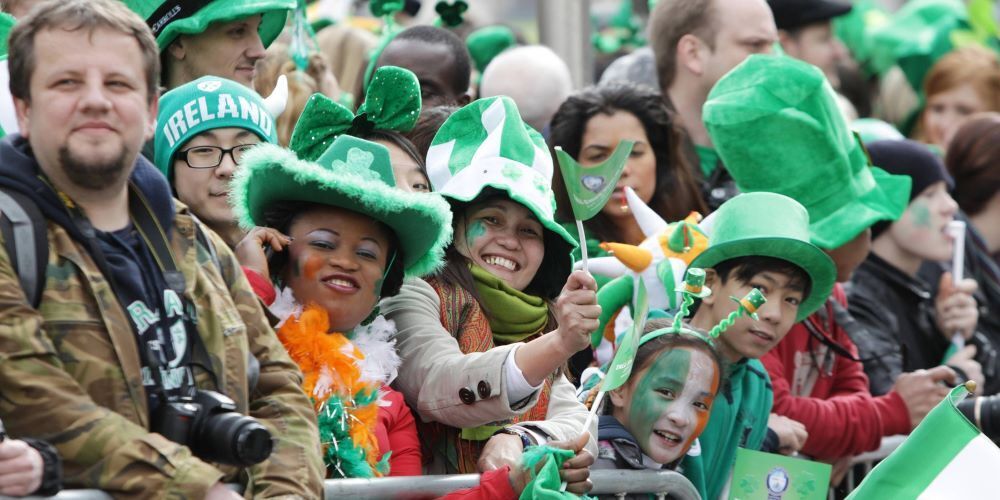
Irrespective of the ever-changing nature of St Patrick’s Day celebrations it may be worthwhile to take pause and consider how fares this Republic in March 2015 and what the coming months and years might hold.
We have emerged from the darkness of catastrophic economic, civil governance and political failures that still fester and may yet have a seismic impact on how this country is governed and by whom. Though nearly a threadbare lament by now, the abject failure of the regulatory, legislative and financial establishment was a gross betrayal that still holds the potential to inflict further damage on this society if a disenchanted electorate gives expression to their anger when the election is called. Traditional parties of power face this challenge with damaged credibility and questionable effectiveness and may struggle to be as convincing as they will need to be to avert unprecedented change.
However, the Government’s hand is not as hopeless as some would suggest, and even if too many electoral promises were broken and they presided over one of the greatest fiascos in Irish public life — the water charge disaster — there are still considerable achievements to be considered.
Just four years ago this society was far closer to implosion than it is comfortable to remember but over the intervening years unemployment levels have been cut from over 14% to 10% and continue to fall. Annual housekeeping borrowings have been cut from an insane €18bn to an almost comprehensible €6bn. The economy grew by 5% last year and that trajectory is expected to continue.
Whether those achievements are enough to counter the impact of new taxes, austerity measures designed to restore sanity to the public finances and the pantomime around water charges remains an open question. Whether we can, as the economy recovers, be as disciplined as we should be about restoring pre-crash pay levels is an open question too. However, should the Government choose not to regulate the banks with a far firmer hand and limit home repossessions to the very minimum that question will be far less open. How to better control the banks to protect consumers is one of the issues that this Government will have to resolve if it is to have any hope of being returned to power. Other criteria suggest though that some optimism is justified.
More young people than ever are in third-level education though how sustainable that situation is without a change in the funding model remains to be seen. This means that many of today’s young people, despite all of the suggestions to the contrary, are better equipped to make a place in the world for themselves than any previous generation. That is true even if they are forced to emigrate.
The end of milk quotas, if you accept Agriculture Minister Simon Coveney’s assurances, may be the catalyst for a longed for rural revival but it would be foolish to pretend that there are not huge risks involved for the farmers who choose to expand to avail of this great change. Milk price is the great unknown in this equation. There may be environmental consequences too, especially around our carbon footprint.
Our health service, like nearly every country’s, is far more chaotic than seems necessary and it struggles to match ever greater expectations from an ever greater number of people. We still smoke, and occasionally drink, to excess but social attitudes to these indulgences are changing quickly. Our suicide rate seems to be falling at last but we need to do far more to promote mental health right across society.
Though our currency aligns us with continental Europe our business interests remain focussed on Britain and America to a predominant degree. The fall in the euro’s value — it fell by 25% last year — must be a concern as economic growth is predicated on a degree of exchange rate stability.
The marriage equality referendum shows too that this society is changing. Even a decade ago it would have been impossible to imagine such an event. If the amendment is passed, and it is far from certain that it will be, this society will have declared itself a more tolerant place.
All in all it seems that Ireland on St Patrick’s Day 2015 is a far better place than Ireland on St Patrick’s Day 2010 was but it would be foolish to imagine that there are not huge challenges ahead. However, the record of the last few years — one of realism and great forbearance shows that we have nothing to fear and that we are more than capable of meeting what ever challenges the rest of this decade brings.
CONNECT WITH US TODAY



Be the first to know the latest news and updates