Powerlines- like electric fences in the sky
Vulnerable creatures are reluctant to cross firebreaks and forest tracks lest they be attacked by predators. A study in Britain showed that blue tits, living on opposite sides of sports fields, never met up; they were afraid to venture onto open ground.
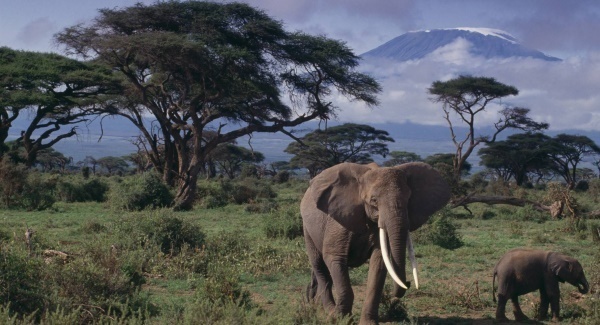
High voltage power lines, it seems, have a similar effect. Many mammals and birds avoid them. Migrating reindeer change direction if they encounter a transmission line. Elephants give pylons a wide berth in Africa. It’s as if the cables were electric fences in the sky. But why should animals fear passive objects which are no threat to them? That question has intrigued scientists.
Is the buzzing sound, emitted by high tension cables, responsible as was once thought? Wild creatures soon become accustomed to the din of road traffic and deer will graze close to busy motorways. Now, a team from Oslo University and University College London (UCL) claim to have solved the riddle; in a paper in Conservation Biology, they argue that it’s not what the animals hear that upsets them but what they see.
We humans experience a wide range of colours. Most other mammals have limited colour vision but their sight is superior to ours in other ways. Eyes respond to the wavelengths of the light entering them; colour depends on the length of a wave. The shortest waves we can see are those of violet light. Ultra-violet (UV) waves are shorter still. They don’t register with us but many mammals see them. Ants, butterflies, and nectar-seeking insects such as bees, see flowers in colours additional to the ones available to us. The eyes of cats, dogs, rodents, hedgehogs, cows, and hoofed animals generally, are UV sensitive.
A study of pigeons, in the 1970’s, showed that they too respond to UV light. Berries reflect UV rays, making it easier for seed-eating birds to find them while kestrels track rodents by UV reflections from their urine. The plumages of some male birds have a UV hue, the better to impress females.
The higher the voltage of a transmission line the more efficient it is. Some routes in Ireland operate at 400,000V. At such high tension, air molecules begin to break down; ionised gases build up around cables and the insulators on pylons. These can emit a UV glow like the ‘corona’ around the sun. Little discharges, resembling tiny lightning bolts, occur around insulators, producing flashes of UV light. Creatures with UV sensitivity see them. The sparks from static electricity produced when hair is brushed in the dark give an impression of what they may look like.
According to Professor Glen Jeffery of UCL, animals see ‘not just a few flashes but a line of flashes right across the horizon’. No wonder they avoid power lines.
The effects are particularly acute in sub-Arctic regions, where it’s dark for much of the year and snow acts as a reflector. To survive in such austere conditions, animals must use all the light available to them; being able to see in the UV part of the spectrum helps. Reindeer use UV to find pathways in the snow. They, like cats, have reflective ‘mirrors’ at the backs of their eyes, giving them increased light exposure.
The fear of power lines, it’s argued, keeps animal populations apart. The reindeer of Norway have become isolated into about two dozen separate populations, according to researchers. This fragmentation is due mainly to roads and human encroachment, but electricity cables may be a factor. Such isolated groups tend to become inbred, a threat to biodiversity.
Campaigners against transmission lines in Ireland have suggested that cables be buried, an expensive process. Running cables underground at strategic locations, to allow gaps free of UV emissions, may be necessary if fragmented groups of creatures such as reindeer are to get back together again and ensure a healthy population.