Jonathan Swift’s uncensored ‘Gulliver’s Travels’ goes on display
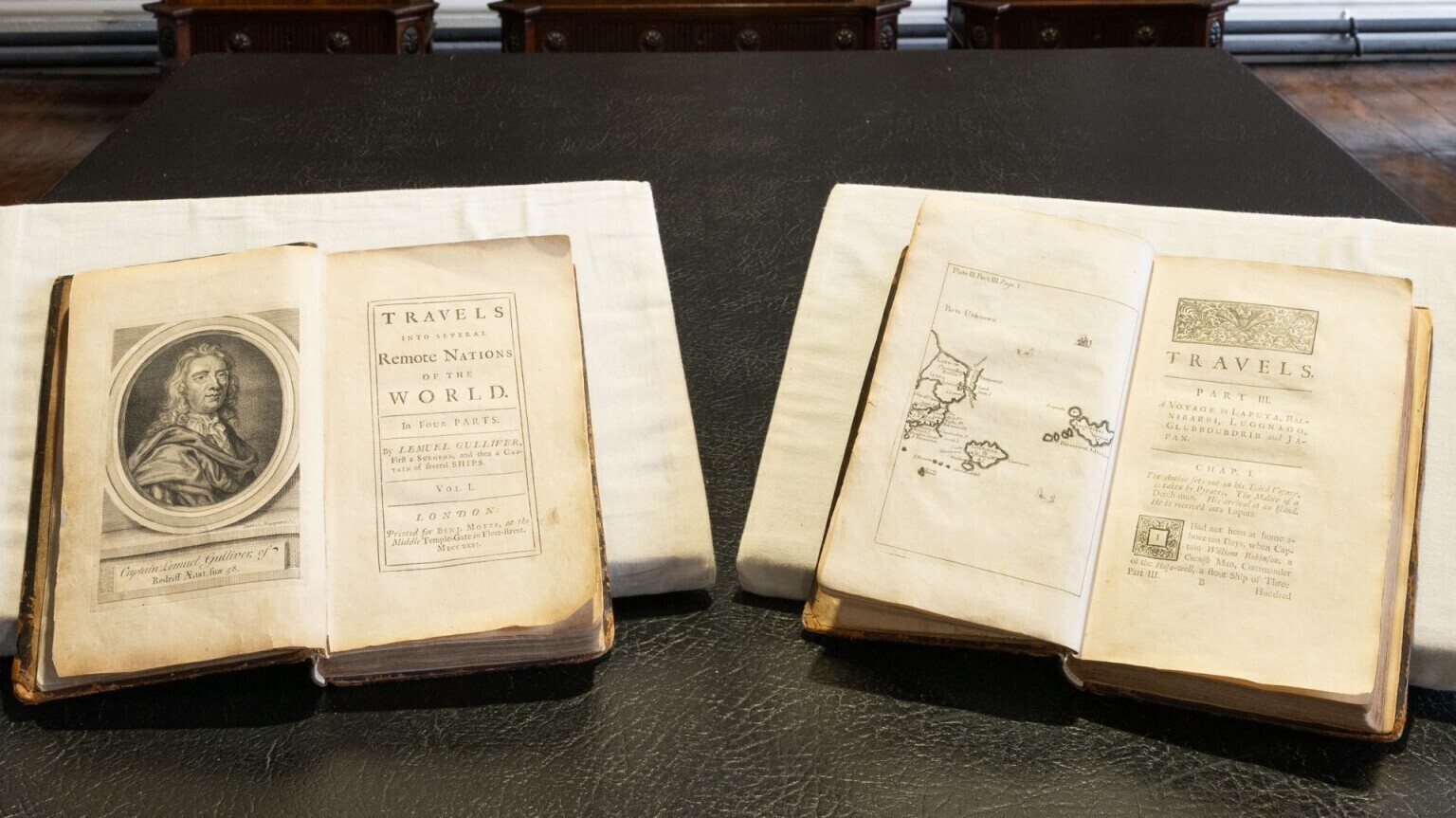
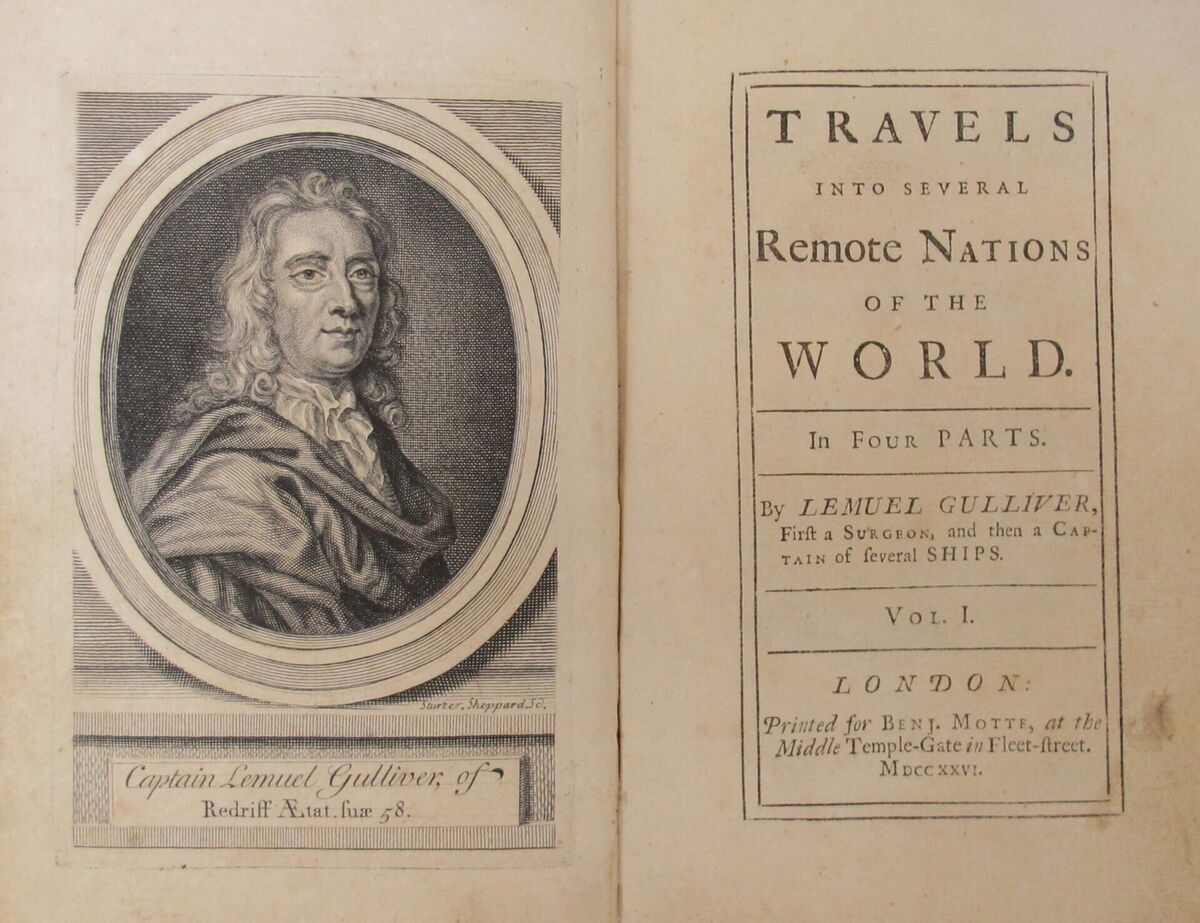
Jonathan Swift’s personal first edition copy of 'Gulliver’s Travels', including his personal notes amending changes made by his publisher to avoid defamation legal action. Picture: Armagh Robinson Library/PA
The “dangerous” version of is being celebrated in a Co Armagh library on the 300th anniversary of Jonathan Swift’s classic novel.
The first version of the satirical novel, which mocks 18th-century politics, science, and human nature, was altered by its original London publisher, Benjamin Motte, in 1726 to avoid prosecution for political libel.
However, the interference infuriated Dublin-born Swift, who handwrote his corrections into his own first-edition copy.
While centuries of readers are familiar with the approved text, Swift’s own version is treasured at the historic Armagh Robinson Library.
The distinctive Georgian building, which dates to 1771, is in the heart of Armagh City, where Swift spent some time and which may have inspired some of his writing.
HISTORY HUB
If you are interested in this article then no doubt you will enjoy exploring the various history collections and content in our history hub. Check it out HERE and happy reading
The original manuscript of has been lost, leaving Swift’s personal copy of the first edition offering one of the closest insights into the unfiltered mind of the author.
In its margins, Swift crossed out the publisher’s safe edits and handwrote his original, ‘dangerous’ words back in.
A spokesperson for Armagh Robinson Library said that Swift’s handwritten notes give a rare understanding of what he had intended to be published.
“We are fortunate to have one of the very first editions of 'Gulliver’s Travels' here in Armagh,” they said.
Read More
“There is something especially compelling about seeing an author’s handwritten correction in a book known around the world.
“His handwritten notes give us a rare insight in to his dissatisfaction with the version that first made its way to readers, and a glimpse in to the version he originally intended,” the spokesperson said.
“In the Georgian era of the 18th century, the unfiltered satire would have been one of a dangerous nature, taking direct target at the government, monarchy, and the legal profession, alongside various philosophical, intellectual, and social targets, hence its censored release.
“While the publisher changed the text to protect his own reputation, Swift’s intense frustration with that censorship is vividly alive right here on our pages in Armagh.”
The spokesperson for the library added: “This year, we are celebrating the 300th anniversary since that first edition was published, and, today, the story continues to influence readers worldwide.
“Yet, despite its global longevity and success, it is fascinating that even 300 years on, none of us may be reading exactly the book that was originally intended,” they said.

BLACK FRIDAY
Already a subscriber? Sign in

BOOKS & MORE
Check out our Books Hub where you will find the latest news, reviews, features, opinions and analysis on all things books from the Irish Examiner's team of specialist writers, columnists and contributors.
CONNECT WITH US TODAY



Be the first to know the latest news and updates