Gaza’s air and water dangerous to Palestinians for decades to come, report warns
Heavy metals, explosive residues, asbestos from destroyed buildings and biological contaminants 'threatening the environmental life support systems'
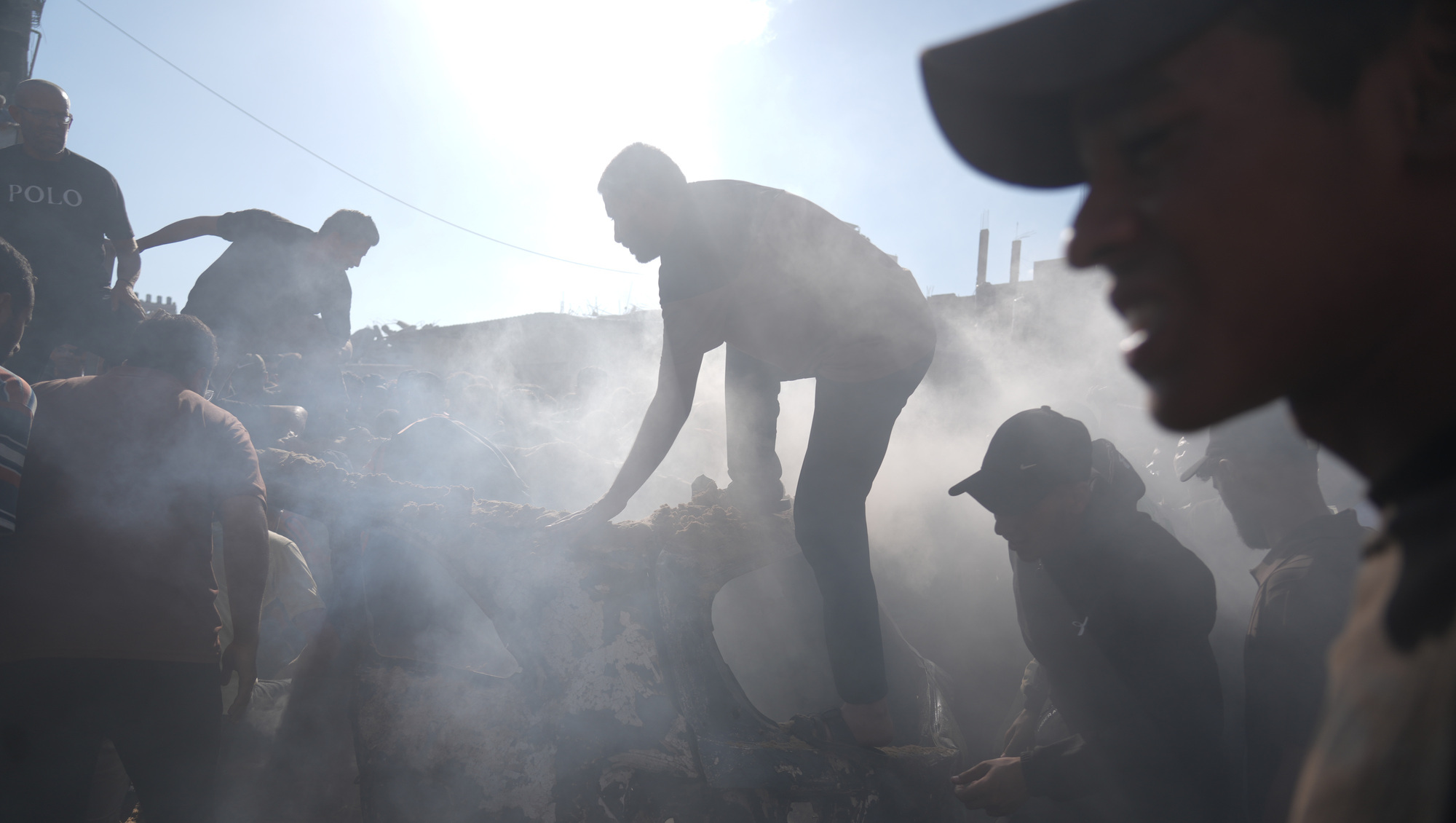
People operate on a destroyed vehicle following an Israeli airstrike in Gaza City. Picture: AP

People operate on a destroyed vehicle following an Israeli airstrike in Gaza City. Picture: AP

The extensive use of explosive and incendiary weapons has made Gaza’s air, soil and water dangerous to Palestinians now and for decades to come, a report has warned.

Analysis by Oxfam and the Conflict and Environment Observatory found that Israel’s military assault has created widespread contamination risks across Gaza. Heavy metals, explosive residues, asbestos from destroyed buildings, dioxins and biological contaminants are “threatening the environmental life support systems that people in Gaza depend upon for survival.” The report found that the Israeli military’s onslaught has affected approximately 78% of Gaza’s land area.

It identified indicators of potential contamination across more than 99% of the territory, highlighting the near-total geographical spread of pollution risks.

The UN Environment Programme estimates that Israel’s military operations have generated more than 61m tonnes of debris across the territory, turning destroyed homes, neighbourhoods and infrastructure into a vast reservoir of potentially hazardous materials.

The report found that faecal coliforms were detected at nearly ten times the rate reported in 2021. These organisms are used in water and food testing to indicate potential faecal contamination and the possible presence of disease-causing pathogens. Analysis of testing data found faecal coliforms in 19% of the 79 groundwater wells sampled across Gaza in July 2026.

Then only 19% of sewage pumping stations remain functional, leaving approximately 40m litres of raw sewage flowing into the Mediterranean Sea each day, the report found.

Contaminated water

The report also identified high risks of drinking water contamination in North Gaza, Gaza City and Deir al-Balah, where remaining operational wells and desalination facilities overlap with highly vulnerable groundwater systems and areas of heavy bombardment and debris accumulation.

It also found that pollutants generated by the intensive bombardment are “resuspended as contaminated dust into the air by wind, vehicle movement and debris clearance.” It warned that people in Gaza face “growing respiratory health risks from dust and pollution caused by the destruction of buildings and the burning of waste.” Oxfam Ireland warned that, as international attention increasingly turns to Gaza’s reconstruction, environmental recovery “must not be treated as an afterthought but as a vital undertaking in parallel.” Oxfam Ireland CEO, Jim Clarken, said the report’s findings “paint a devastating picture of the long-term environmental damage being inflicted on Gaza.” “Beyond the immediate loss of life and destruction during the ongoing genocide, we are seeing a breakdown of the very systems people depend on to survive,” he said.

“Water, soil and air are being contaminated on an enormous scale. Palestinians in Gaza are being exposed to serious environmental hazards that are completely inescapable,” he added.

Mr Clarken warned that without urgent action to assess, clean up and remediate the contamination, the consequences for public health and human wellbeing will be felt for generations. “The scale of the damage underlines the urgent need for accountability and for unrestricted access for humanitarian and environmental experts. Environmental war crimes should demand urgent justice,” he said.

“Reconstruction cannot simply mean replacing buildings and infrastructure. A thorough environmental assessment, led with Palestinian participation and expertise, must be an integral part of recovery efforts.

“Rebuilding without tackling these environmental risks would leave future generations to bear the costs of today’s destruction,” Mr Clarken added.

More in this section

Cookie Policy Privacy Policy Brand Safety FAQ Help Contact Us Terms and Conditions

© Examiner Echo Group Limited