Ukrainians counting the cost of war — with online register
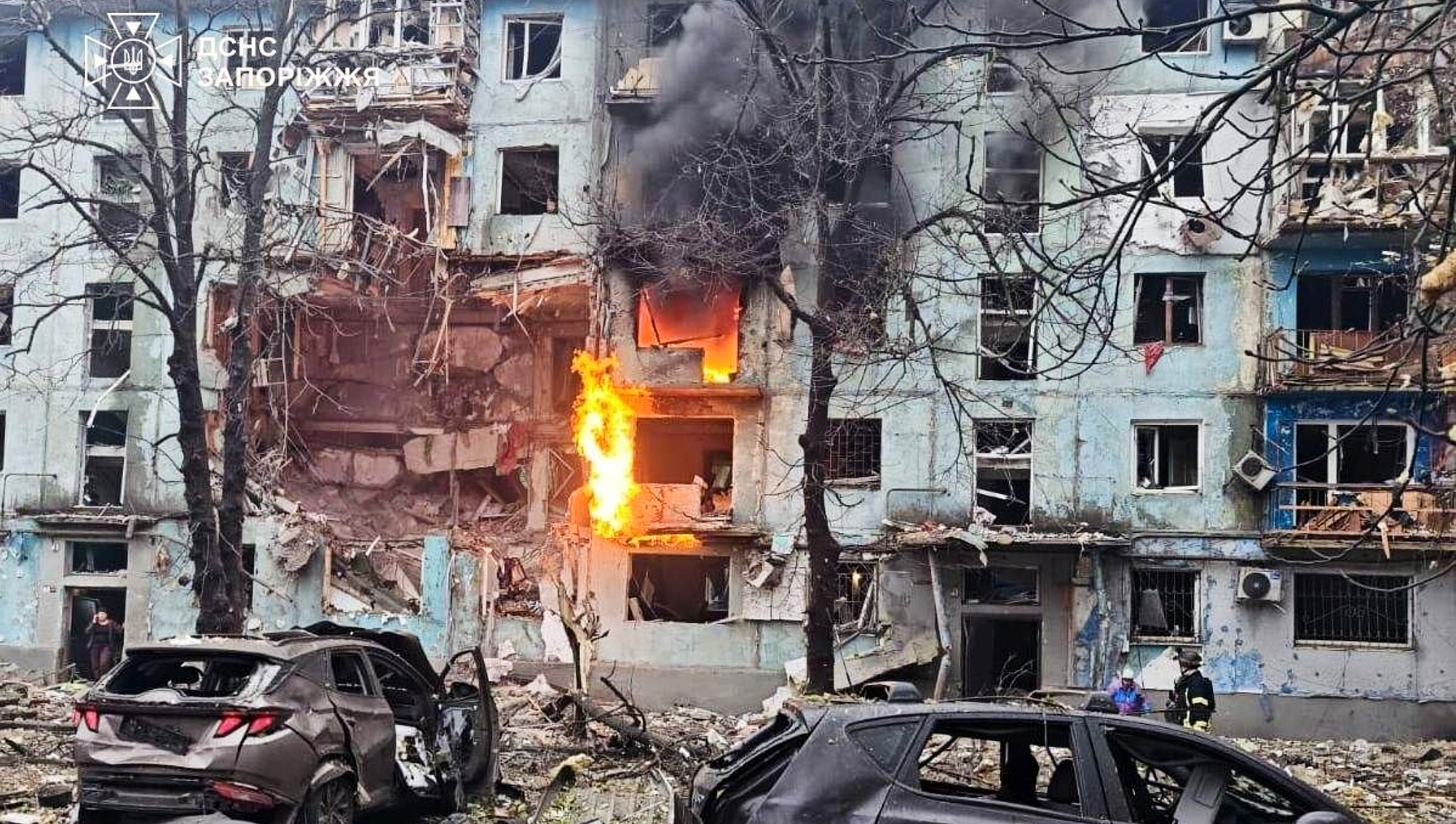
A residential building is seen damaged in a Russian strike on Zaporizhzhia, Ukraine, on Friday, November 13, 2026. Picture: Ukrainian Emergency Service via AP
Four years after Russia’s full-scale invasion, Ukraine is still standing.
Military supplies are dwindling, and major battlegrounds such as Kharkiv are slowly being rendered uninhabitable.
For many on the front lines, the battle is to remain strictly in the here and now.
The Register of Damage for Ukraine — an organisation that keeps a record of damage, loss, or injury caused by Russia's invasion — is planning ahead in the hopes of victory.
Under the programme, Ukrainian residents have been logging proof of war crimes and damages that they one day hope to see financial reparations for.
Since its foundation in 2022, when it was brought into being by a UN General Assembly Resolution, the damage register has seen 210,000 claims for damages across 44 different categories, including torture, forced labour, sexual violence, and property damage.
According to Markiyan Kliuchkovskyi, the executive director of the register, the 210,000 figure is only 3% of the total expected number when the conflict comes to an end.
Ultimately, they believe there will be $600bn worth of damages logged on the system.
Down the line, there are plans to go to the UN Compensation Commission, and then to establish a compensation fund for victims.
“We are simply collecting claims and serving as the first step,” Kliuchkovskyi explains.
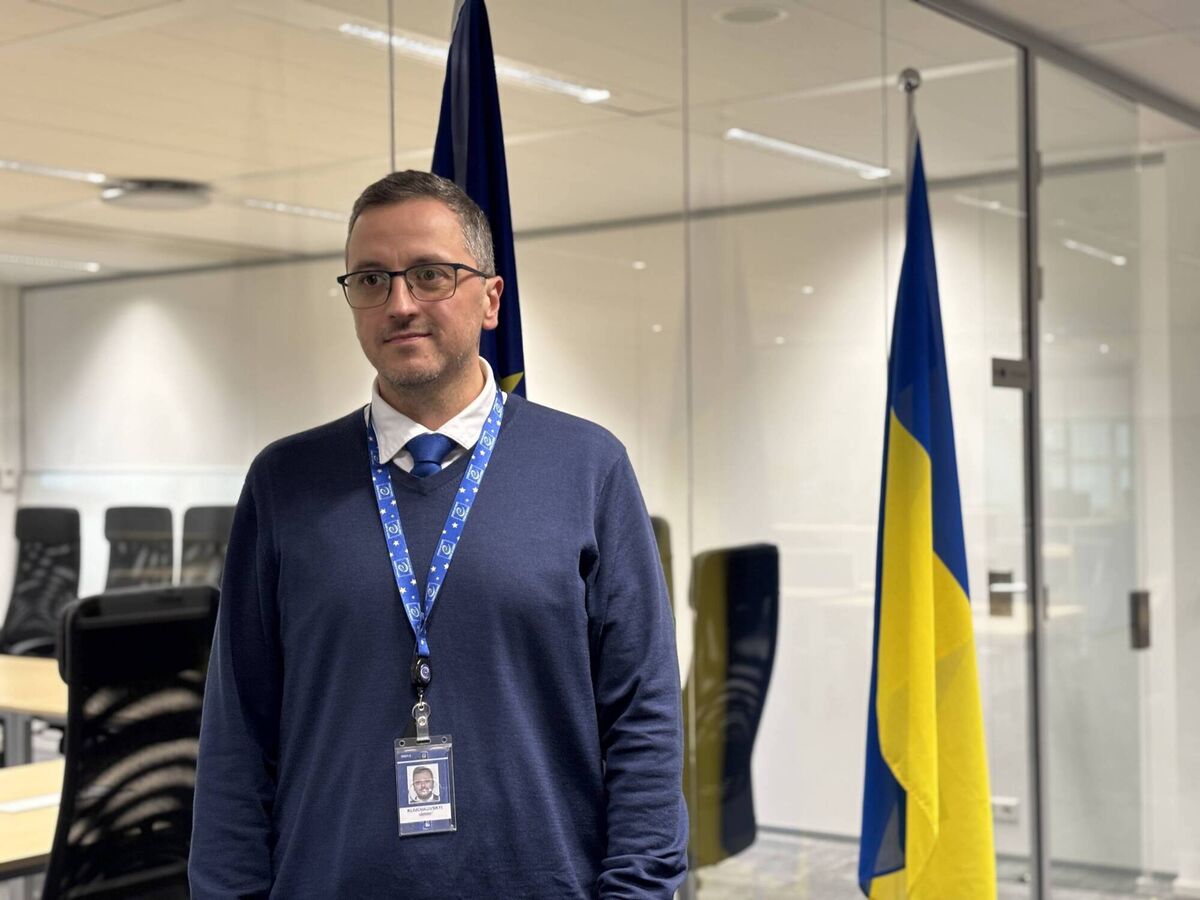
Claims are submitted via a portal that requires a digital Ukrainian ID. They include photos, documents, or any other digital material that supports claims made by users.
The team at the damage register has now built a bespoke AI model designed to sift through the thousands of claims made. Kliuchkovskyi explains that some pieces of evidence will be flagged as suspicious or requiring human inspection by the AI model.
“We cannot realistically expect every claimant to have the ability to collect a 100% bulletproof evidentiary package, like they would to go to a local court,” Kliuchkovskyi says.
“We know of people from Mariupol or other towns in eastern Ukraine, who were simply fleeing their houses in the first days or weeks of war, without having the time to collect documents or take photos of what's going on — they were just running for their lives.”
Claims can often be cross-verified via open-source information, such as satellite imagery to establish territorial destruction. Those technologies can also be used to verify widespread damage, like the drop-off in irrigated land following the destruction of the Kakhoka Dam in 2023.
The overarching figures collected by the team are damning. The youngest claimants of damages are less than a year old (filed by parents), while the oldest is 101.
The overwhelming majority of victims skew towards the male side, given their active role in the conflict. Even in cases like sexual violence, the claims are overwhelmingly male — UN reports have shown that roughly 97% of interviewed Ukrainian prisoners held in Russian captivity reported experiencing torture, with sexual violence a common factor.
Visualisations of the claim show where damage is most concentrated — largely alongside the eastern front and Kyiv, where air-raid sirens are a fixture of everyday life.
The database is entirely digital, which is framed as a huge administrative economiser — though there is a tacit acknowledgement that there are risks when clashing with a state renowned for its cyberattack capabilities.
“Ukraine was the victim of a cyberattack at the beginning of 2025, when a number of governmental registries were attacked,” Kliuchkovskyi says.
“It’s not something that was directed against us specifically, but the unavailability of these registers meant that people could not submit claims for about three weeks."
It is expected that under the UN convention, Russia will fund the money, but ultimately, the framework is still yet to be finalised.
“There's a lot of discourse about Russian frozen assets that must become the source of that funding…there is still work to be done in terms of understanding how that will happen.”

BLACK FRIDAY
Already a subscriber? Sign in

CONNECT WITH US TODAY



Be the first to know the latest news and updates