Why are young people in Europe unhappy — and are there protest movements stirring in Ireland?
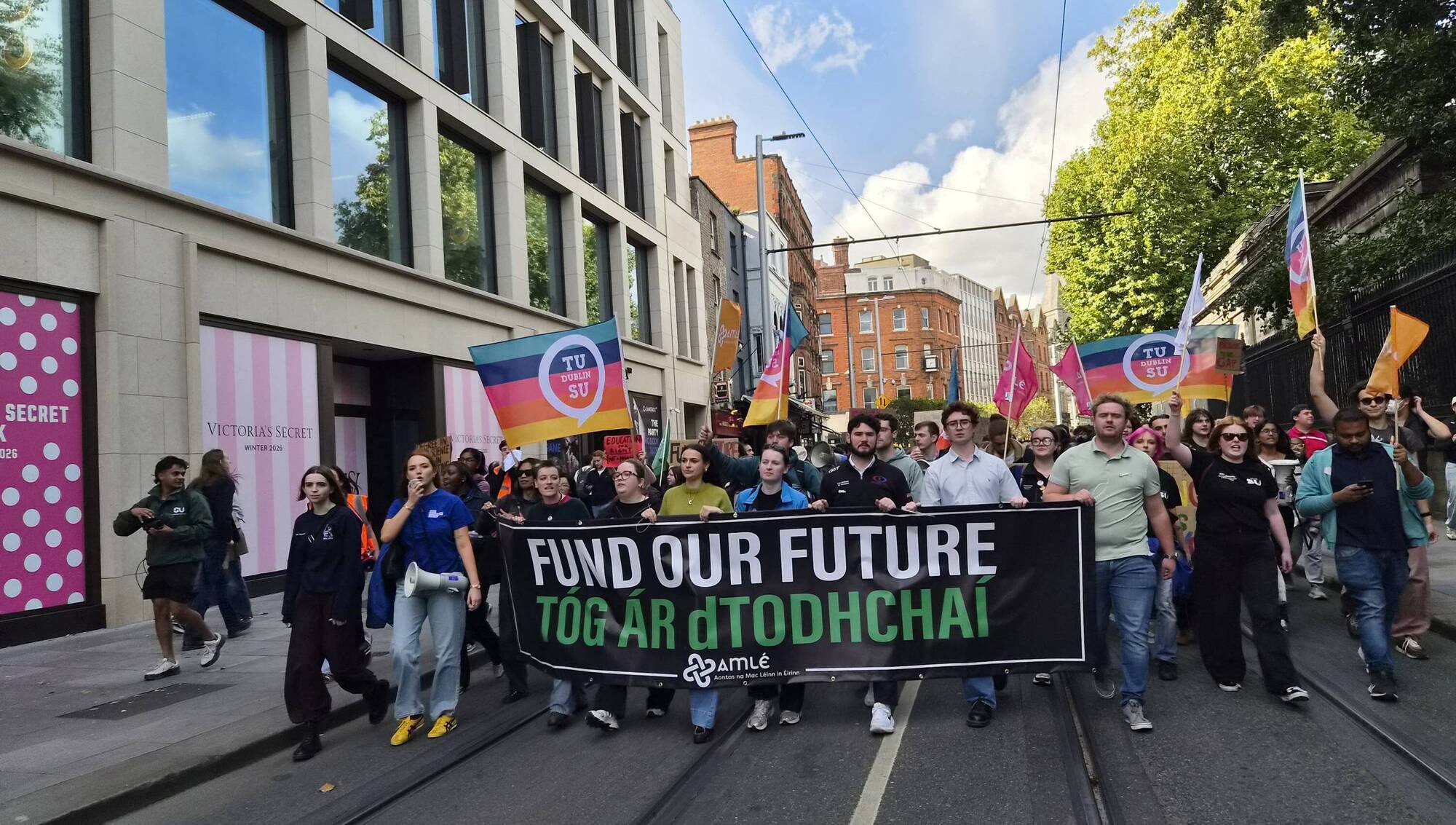
A Fund our Future protest was held in Dublin before the budget over student fees, and many young people are involved in pro-Palestine movements. File picture
Whisper it quietly, but a youthquake is shaking up political foundations across the world.
There have been stunning electoral upsets in Serbia and Brazil and protests across Europe all led by students and Gen Z — those born in the late ‘90s and early ‘00s.
Their causes fracture between countries, from the threat of compulsory military service in Germany to substandard educational facilities in France, and corruption and a deadly train station collapse in Serbia.
However, they are linked through timing and scale.
Gen Z was also a significant ripple in the blue tsunami; among the 18-29 age group of voters in the US midterms, there was a 34-point swing towards the Democrats compared to two years ago.
Gordon Brown, the former British prime minister and UN special envoy for global education, has said we are witnessing a youthquake, and the “biggest outbreak of student demonstrations for 60 years”.
Read More
So where does the Irish protest movement stand in the context of a global youth upheaval?
A Fund our Future protest was held in Dublin before the budget over student fees, and many young people are involved in pro- Palestine movements.
Are these rumblings of larger-scale youth demonstrations in Ireland?
“Ireland is not immune — our students have asked us to take part and we will,” said Emily Roberts-Smyth, vice president for citizenship and social liberation at AMLÉ, the representative body for third-level students.
“Young people are increasingly taking to the streets because collectively we feel that opportunities previous generations were promised are increasingly out of reach, increasingly inaccessible for our generation and the next.”
Ms Roberts-Smyth said that students are looking to demonstrations across Europe as they have “woke up the students again and reignited the passion”.
She said the students’ union umbrella group had taken inspiration from the public sector protests approach of holding “pocket” protests nationwide, rather than one major Dublin rally. The group has since strengthened relationships with trade unions.
“Students won’t stay silent anymore,” said Ms Roberts-Smyth, adding that ideas were coming to the student group from grassroots level rather than the organisation down.
Barriers to education and housing are among the issues that worry students; there have been reports of students who sleep in their cars because they can’t afford or find a place to rent near their college or university.
The cost-of-living crisis, the brewing storm of a heating planet, and the threat of artificial intelligence (AI) to graduate jobs are also causes for concern.
Polling by RED C on behalf of the National Youth Council of Ireland (NYCI) found that seven in ten adults believe AI will make it harder for young people to find secure employment over the next five years, while 83% support stronger government regulation of AI.
Less than one in five of 18-24-year-olds believe the Government is doing enough to support them through the cost-of-living crisis, with almost seven in ten considering moving abroad for a better quality of life.
Caillum Hedderman, 24, from Limerick and president of the European Youth Forum, told European Commission president Ursula von der Leyen that “the promise that each generation will live better than the last no longer holds” for many.
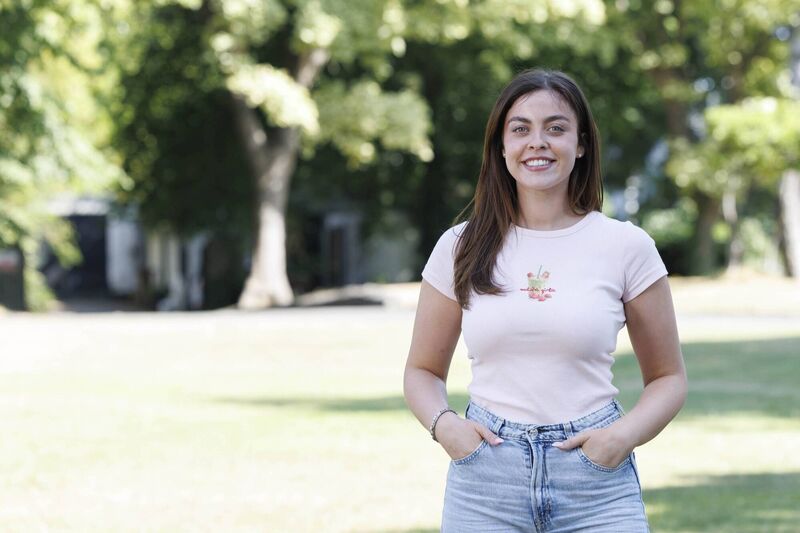
He said that many young people feel they had done “everything they were told” that they should do as young adults and are still struggling to find a place to rent or permanent, paid jobs.
Since 2010, house prices across Europe had increased by 60%, and rents had gone up by 25%.
“Young people are often told they’re delaying adulthood, as if that’s a choice. It isn’t — it’s the result of policies that didn’t have them in mind,” he told the .
“That’s the story our generation is facing.”
Ms Roberts-Smyth said the Government was changing the triple lock, focusing on AI, and “the destruction” of the environment instead of investing in education, transport, and housing.
She said what students were asking for was not “radical or woke”, but a call for public services to be adequately funded — something that would benefit all communities.
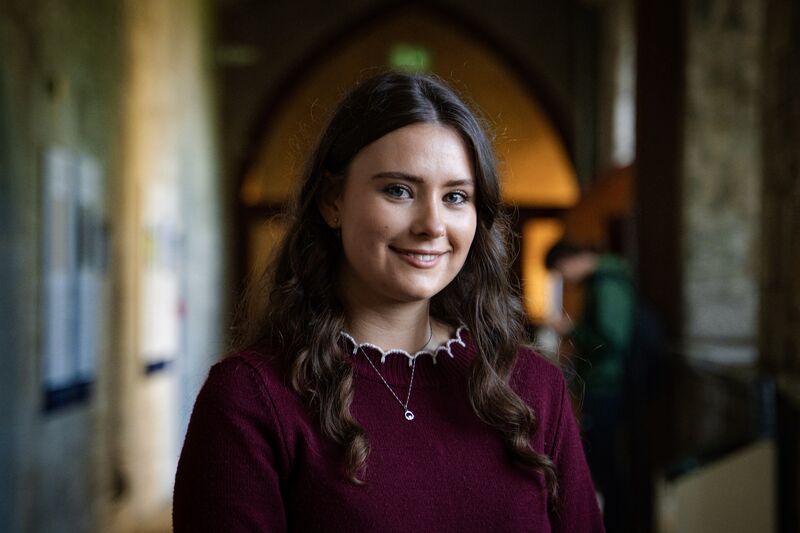
Orna O’Brien, 21, a student of international development at University College Cork, said she would “love to be able to afford to buy a house” in her home town of Drinagh, West Cork.
Despite working 27 hours a week on top of studying full-time she said, she doesn’t see herself being able to buy a house where she is from, as house prices in the region have skyrocketed.
She said she would like her peers to be more engaged in the political and democratic process, but understands it can be difficult to become engaged on every issue.
Over half of the world’s population is aged under 30, but young voices are rarely represented in the corridors of power — significantly affecting how long-term issues such as climate change are discussed.
Just 2% of TDs, or three people, were aged in their 20s in the 33rd Dáil; a referendum to lower the minimum age for presidential candidates from 35 to 21 was emphatically rejected in 2015.
An inaugural global study on youth participation in political, economic, and civic life ranked Ireland 18th out of 140 countries, but lower on engagement in national elections.
The Global Youth Participation Index, which defines young people as aged 15-30, praised Ireland’s programmes for skills development and organisations such as Comhairle na nÓg, but said there was limited access to the pathways to political power.
While a lot is made of how young people are less likely to vote, there are indications that they are more issues-motivated, and more likely to engage in other ways, such as volunteering.
They also may not be exactly sure how to vote; research by the Electoral Commission suggested 18-34-year-olds were the most likely age group to find the ballot paper layout difficult to follow and more likely to get questions about the election process wrong.
They also reported the lowest likability of the two leaders of the Coalition Government: Taoiseach MIcheal Martin (18% likeability) and Tánaiste Simon Harris (15%).
“Most young people aren’t voting, they don’t know you can change your vote to your college, so there is space there for increased engagement,” said Ms O’Brien.
“The protests for Palestine are an indicator that people are quite passionate.
“It’s difficult to be up to date and accurate on these topics, and those who aren’t feel too far removed to get in on it; they think you have to be all or nothing when it comes to activism.”
Ms O'Brien urged young people to engage in the political process and to vote, arguing that protests across Serbia and the US midterm results had shown that they can shift tides.
“It’s really inspiring to see young people engaging and being so passionate about these things. All of it creates a lot of pressure — this is your task and cross to carry.
“It encourages a chain reaction and encourages young people across the world to believe that protesting can be effective.
“I am hopeful for the future, definitely. Now that Texas is blue, anything is possible.”

BLACK FRIDAY
Already a subscriber? Sign in

CLIMATE & SUSTAINABILITY HUB
CONNECT WITH US TODAY



Be the first to know the latest news and updates