'Substantial' decline in younger teachers over past decade
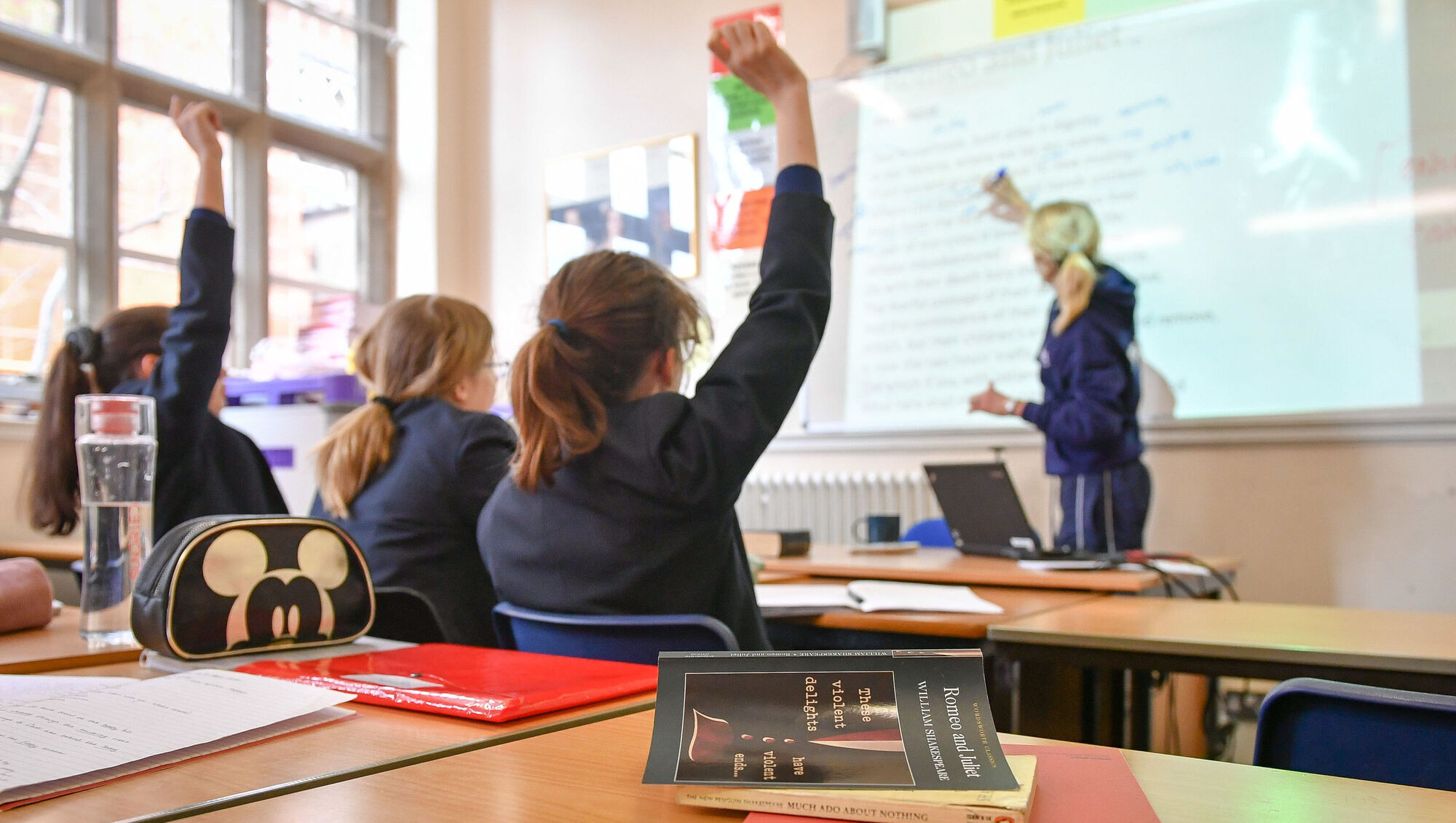
Ireland is among several countries to record a notable decrease in their share of younger teachers between 2015 and 2024. File picture: Ben Birchall/PA Wire
Ireland experienced a "substantial" decline in its share of younger teachers over the past decade, suggesting "increasing difficulties renewing the profession", data compiled by the OECD has found.
Ireland is among several countries, including Luxembourg and Poland, to record a notable decrease in their share of younger teachers between 2015 and 2024, according to the OECD's for 2026.
Across OECD countries, the teaching workforce has aged over the past decade, the report published on Tuesday said.
"In primary and secondary education, the share of teachers aged under 35 in public and private institutions declined slightly from 23% in 2015 to 22% in 2024, while the share aged 55 and over increased from 20% to 23%."
In Ireland, this figure for under 35s stood at 28% in both primary and secondary in 2024, and at 11% in both primary and secondary for over 55s.
In 2015, 35% of teachers at both primary and secondary were under the age of 35, while 14% of teachers in both primary and secondary schools were over the age of 55.
Read More
However, Ireland also had lower teacher turnover, the report found.
In Ireland, 2.1% of fully qualified teachers in primary and secondary education left the profession through retirement or resignation in 2024/25, compared with an OECD average of 6.4%.
Government expenditure on education per student from primary to tertiary education was also lower in Ireland than the OECD average, the report found.
The OECD average expenditure per student from primary to tertiary education was $13,601 in 2023, (€11,992) while in Ireland it was $13,113.
This varies across each level of education, with the report noting how Ireland is one of "the few" countries in the OECD to spend less on the lower levels of second-level education than on primary level.
The number of children between the age of 5-14 is also projected to decrease by 17% by 2033, the report notes, pointing to lower demand for teachers if other policies remain unchanged.
However, demographic trends are only one factor shaping teacher workforce needs, it added, and effects can vary depending on how population change is distributed across regions.
"Teacher workforce needs also depend on policy decisions related to class sizes, teacher attrition and funding," it added.
The publication confirms that second-level schools in Ireland continue to be under-resourced, according to ASTI president Richie Bell.
"How does this manifest in our schools? Too large classes, insufficient staffing, inadequate buildings and equipment are just some of the consequences.”
Ireland’s spend at second level is "once again at the foot of the table", trailing unacceptably behind the OECD average, according to TUI president Anthony Quinn.
At third level, the spend also "trails way behind the OECD average", he added.
"Students from disadvantaged backgrounds suffer the most as a result of inadequate education resourcing, so the failure to invest will ultimately worsen inequality in Irish society."

CONNECT WITH US TODAY



Be the first to know the latest news and updates