Increasing defence spending a 'rational' decision for Europe
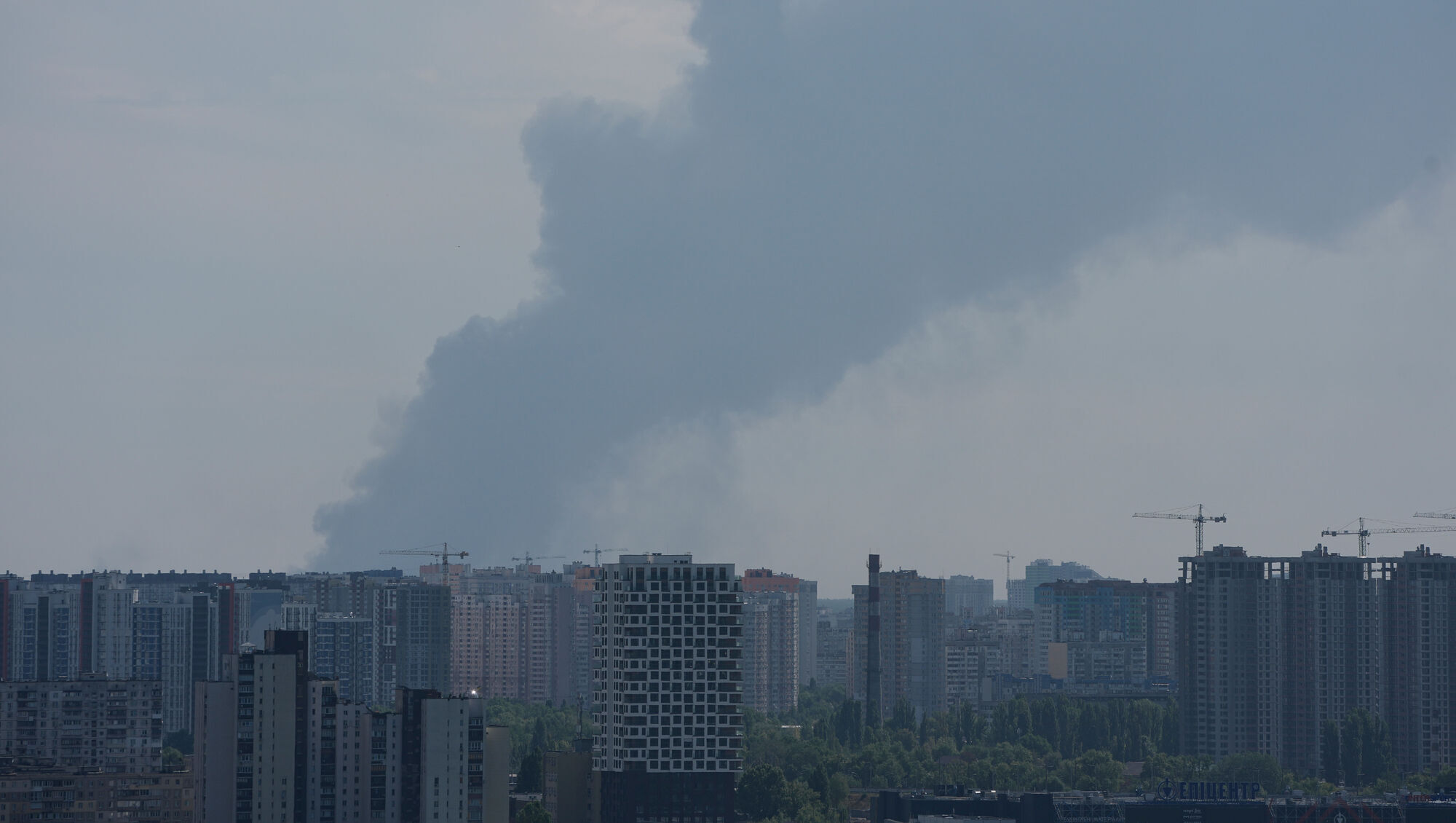
Smoke rises over Kiev city centre after a Russian attack last Thursday. Picture: AP/Efrem Lukatsky
European countries are behaving in a “rational” way by increasing their spending on defence as a response to Russia’s war in Ukraine and its increasing hybrid attacks across Europe, a Nato leader has said in Dublin.
Radmila Shekerinska, deputy secretary general of the military alliance, is in Ireland to attend the meeting of EU defence ministers in Co Wicklow on Tuesday.
The meeting comes as civilians in Kyiv, the Ukrainian capital, sustained a fifth day of intense bombings and Russia warned of "massive strikes" on Ukraine's energy infrastructure.
Ms Shekerinska, from Moldova, which neighbours Ukraine, said a number of issues would be discussed at the meeting, including how to continue to support Ukraine.
The EU’s diplomatic chief, Kaja Kallas, who is speaking at the meeting, said on Monday “actions against [Russia’s] shadow fleet will be among the topics”.
Addressing the Institute for International and European Affairs, Ms Shekerinska said every democratic country wanted to spend more on areas other than defence.
But she said European countries also “see the price of undermining security”, with war returning to Europe because of a “very aggressive” Russia.
Read More
She said 32 democratic countries agreed in 2025 to increase, within 10 years, defence spending to 3.5% of GDP, with a further 1.5% on related infrastructure — a combined 5% — and many were already near 4%.
Ireland is bottom of the EU table, with about 0.3% of GNI (more accurate for Ireland) spent on defence.
Ms Shekerinska said: “Europe has shown that when it is confronted with a completely changed security environment it will do what is rational, will rise up to the challenge, and increase security and sustain support for Ukraine.”
In addition to five years of war in Ukraine, Russia is increasing hybrid actions across Europe — from air space violations, including drones and jets, arson and sabotage, and even assassination attempts.
Ms Shekerinska praised the relationship between Ireland and Nato, and said Ireland had been a partner since 1999 and cooperated on various areas, including recently on maritime security.
She pointed out 75% of trans-Atlantic cables passed through Irish waters — and the security of these was "of interest for you and us”.
The Nato leader said the Russian shadow fleet was not only breaking sanctions by carrying Russia oil, they are also suspected of causing damage to, or even breaking, energy and data cables in the Baltic Sea.

CONNECT WITH US TODAY



Be the first to know the latest news and updates