Ireland 'languishing' at bottom of EU defence spending table as budget stuck at 0.2% of GDP
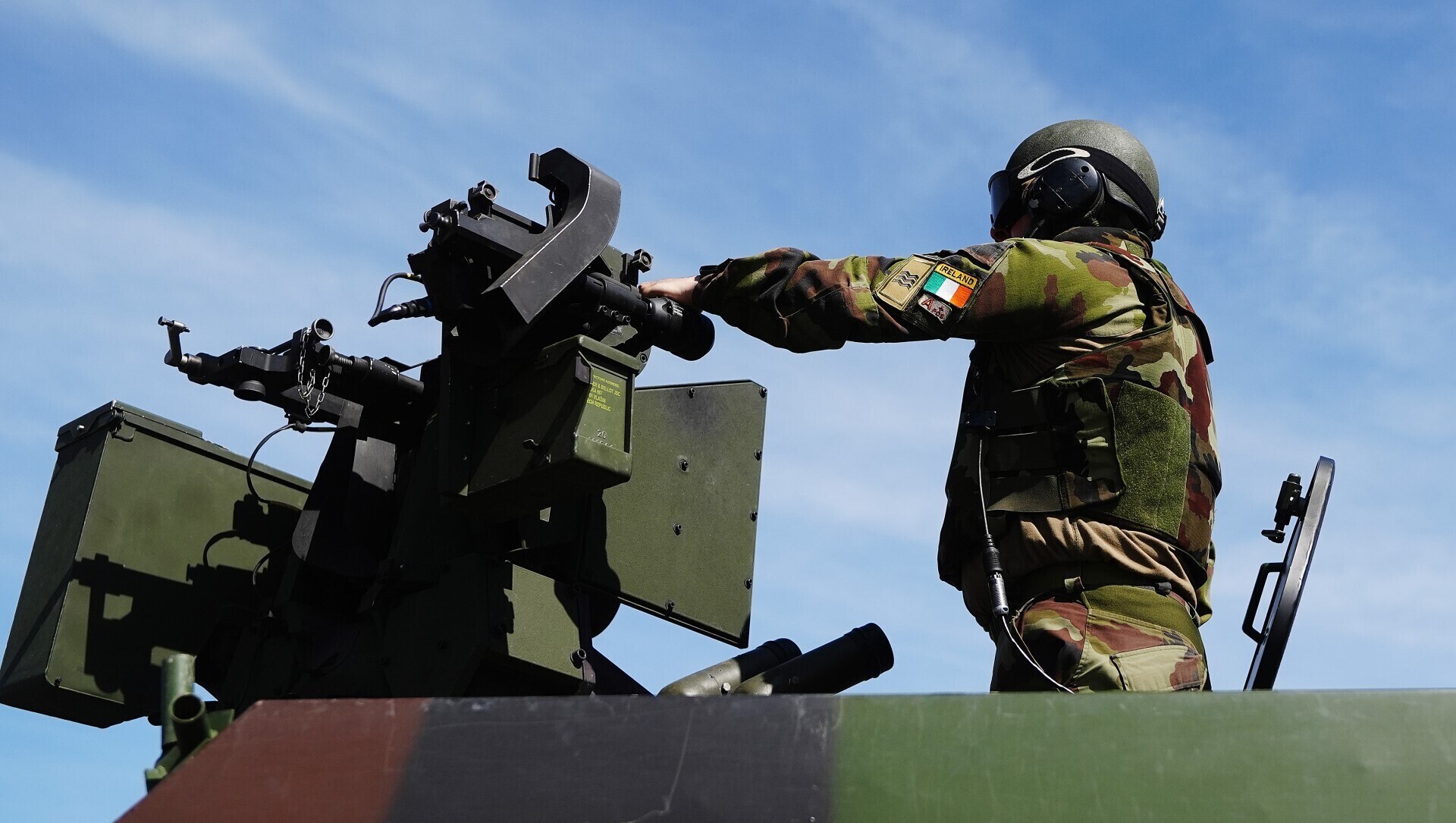
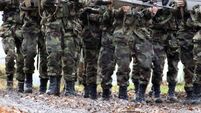
Members of the Defence Forces during the 128th Infantry Battalion UNIFIL Mission Readiness Exercise (MRE) at Glen of Imaal, Co Wicklow. Picture: Brian Lawless/PA
Ireland continues to “languish” at the bottom of the EU table for defence expenditure, despite much-heralded increases in budgets by the last two governments.
New figures for 2025 show that Ireland’s defence budget remains “stuck” at 0.2% of GDP, or 0.3% of GNP, which removes the distorting effect of multinational profits.
Those rates have not changed since 2021, despite the publication of the Commission on Defence Forces report of February 2022 and the decision by the government that summer to accept the second of third investment levels (LOA2) set out by that expert body.
Read More
The then government promised to increase the defence budget from €1.1bn in 2022 to €1.5bn by 2028 (in 2022 prices).
Based on provisional economic data supplied by the Central Statistics Office for last year, the Department of Defence said provisional estimates show that defence expenditure was 0.2% of GDP and 0.3% of GNP in 2025.
The CSO said GNP is very similar to GNI, which is another estimate regularly used by Ireland and also excludes foreign profits of multinationals sent to Ireland.
Regardless of what estimates are used, Ireland remains at the bottom of the table for the EU’s 27 member states. The average spend in the EU in 2025 is 2.1% of GDP.
Ireland is behind the three other neutral states in the EU: Malta (0.3%), Austria (1.1%) and Cyprus (1.6%).
The bulk of EU states have significantly increased their defence budgets following Russia’s full-scale invasion of Ukraine in February 2022.
The 23 EU countries that are members of Nato have committed to bringing defence expenditure to 3.5% of GDP, with a further 1.5% on defence-related infrastructure, by 2035.
“Nobody should be in the slightest surprised that Ireland's defence spend — as a percentage of GDP — remains stuck at 0.2%, the lowest within the EU,” David Dignam, retired Brigadier-General of the Defence Forces.
“Ireland remains, by a margin, the outlier in relation to defence spending within the EU. As our EU partners continue to prepare for war with Russia in a 2030 timeframe, Ireland continues to ignore — as best it can — the realities facing our EU partners.
Last August, it emerged that then defence minister, Tánaiste Simon Harris, sought capital funding of €3.4bn between 2026 and 2030 (average €680m per year) to implement LOA2.
But the Department of Public Expenditure refused and offered at most €230m per year (€1.7bn) — half the amount, said Lieutenant Colonel Conor King, general secretary of officer representative body RACO.
“Ireland continues to languish at the foot of the table across the EU when it comes to defence investment, whether we use GDP, GNP, or GNI," he said.
“It is all the more concerning when we have a commission report that lays bare the deficiencies in defence and security, and clearly identifies the capabilities and associated budget required to bring Ireland's defence and security up to scratch.
“This, coupled with a concerningly slow pace of implementation which is characterised by multiple unexplained delays, suggests that Ireland has a long way to go to effect the necessary cultural and mindset shift to ensure the adequate defence and security of the State.”
Professor Andrew Cottey of the Department of Government and Politics at UCC said: “Even if it makes sense to use GNI or GNP because of particular features of the Irish economy, however, this cannot obscure the fact that Irish defence spending remains extremely low compared to other EU member states, notwithstanding budget increases in the last few years.
“Given the still very low level of Irish defence expenditure and the slow pace of increases in that expenditure, one wonders whether the Government is addressing the issue with the necessary urgency.”
CONNECT WITH US TODAY



Be the first to know the latest news and updates