Clock ticking for Farrell to find the muscle Ireland will need at World Cup
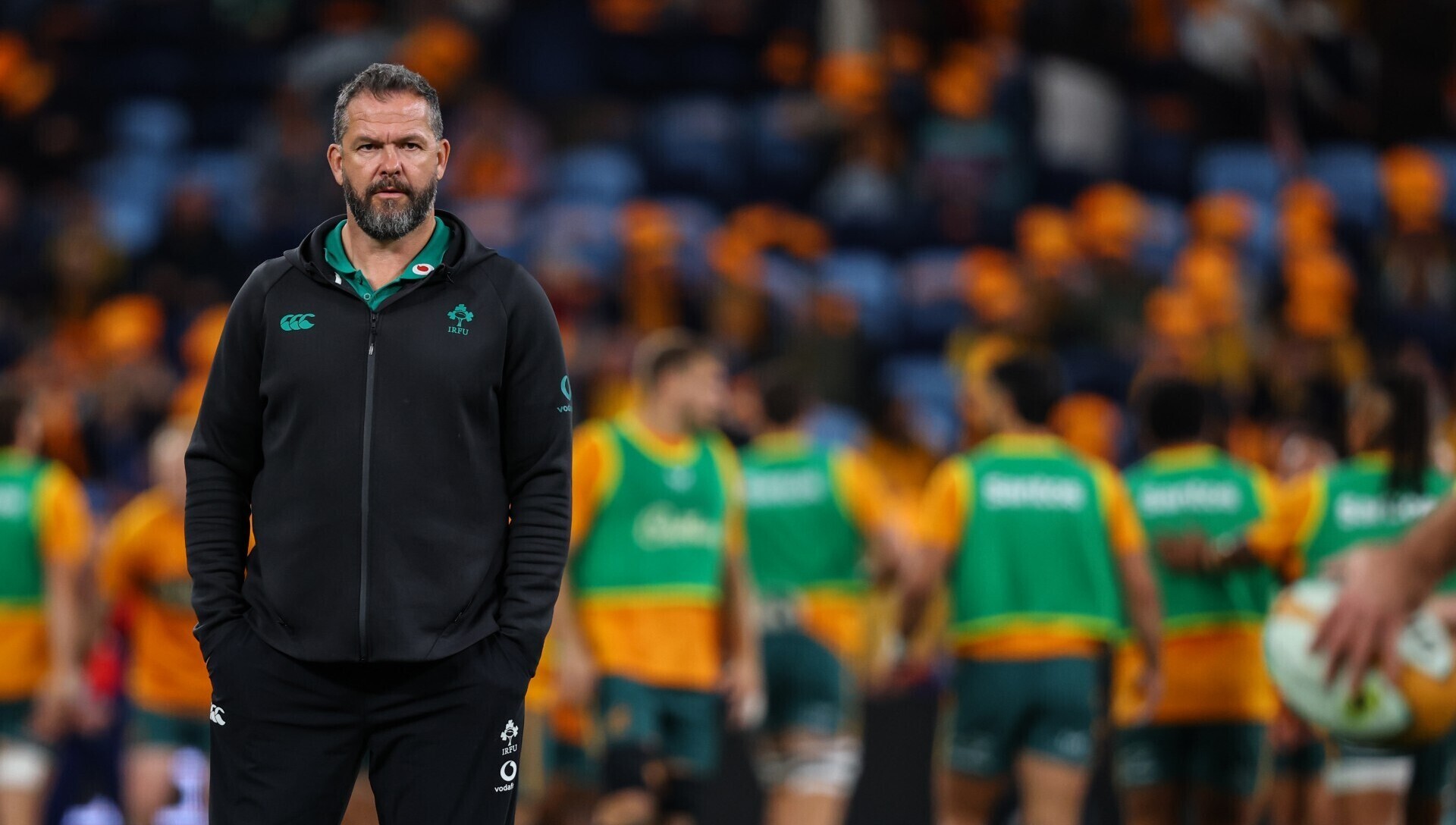
Andy Farrell before kick off. Picture: INPHO/Ben Brady
All last week, Andy Farrell marvelled at the Wallabies’ “unbelievable athletes” and refused to write off Joe Schmidt’s side despite World Rugby’s rankings suggesting Saturday should have been a walk in the park.
Instead, the men in green were bashed, bruised and outplayed yet somehow found it within them to find a result.
That’s the sign of a well-drilled team.
But success was only achieved after the Wallabies’ replacement playmaker Ben Donaldson hung his post-siren penalty out to the right.
Farrell was naturally delighted by the character his men showed.
After all, overturning a 24-12 deficit on the stroke of half-time was no small feat.
The courage, skill and accuracy, with a bit of help from World Rugby’s officials who gave the green light to Jack Conan’s oh-so flat pass for Jamison Gibson-Park, showed that Ireland’s men have ice running through their veins.
Cian Prendergast went so far as to saying that his younger brother Sam had “some set of stones” on him after nailing a 78th minute penalty that sealed Ireland’s match-winning lead.
However, courage and character will only get them so far.
Read More
Andy Farrell has 15 months to find and fine-tune some more athletes because the world-class coach got another reminder in Sydney that soldiers, regardless of how disciplined they are, can only achieve so much without some serious ammunition.
Sure, Ireland were missing some of their best.
Caelan Doris’ absence was clear, as was Andrew Porter’s. Paddy McCarthy is a rising prospect, too.
But from Allan Alaalatoa to Rob Valetini, Len Ikitau to Joseph-Aukuso Suaalii, the Wallabies beat Ireland up physically. Lukhan Salakaia-Loto isn’t even in the squad, and that’s with Will Skelton injured.
Even Miles Amatosero, a 24-year-old with a bright future but still learning the ropes, enjoyed himself last year against the Irish-heavy British and Irish Lions 12 months ago.
The Wallabies also had Ireland’s scrum on toast, with Taniela Tupou making a difference off the bench, beat them at the lineout despite their inexperienced second-row pair, and smashed them in defence between the 22s and carved them up on the fringes.
Only a lack of accuracy and some last-ditch Hugo Keenan defence kept Ireland in the contest.
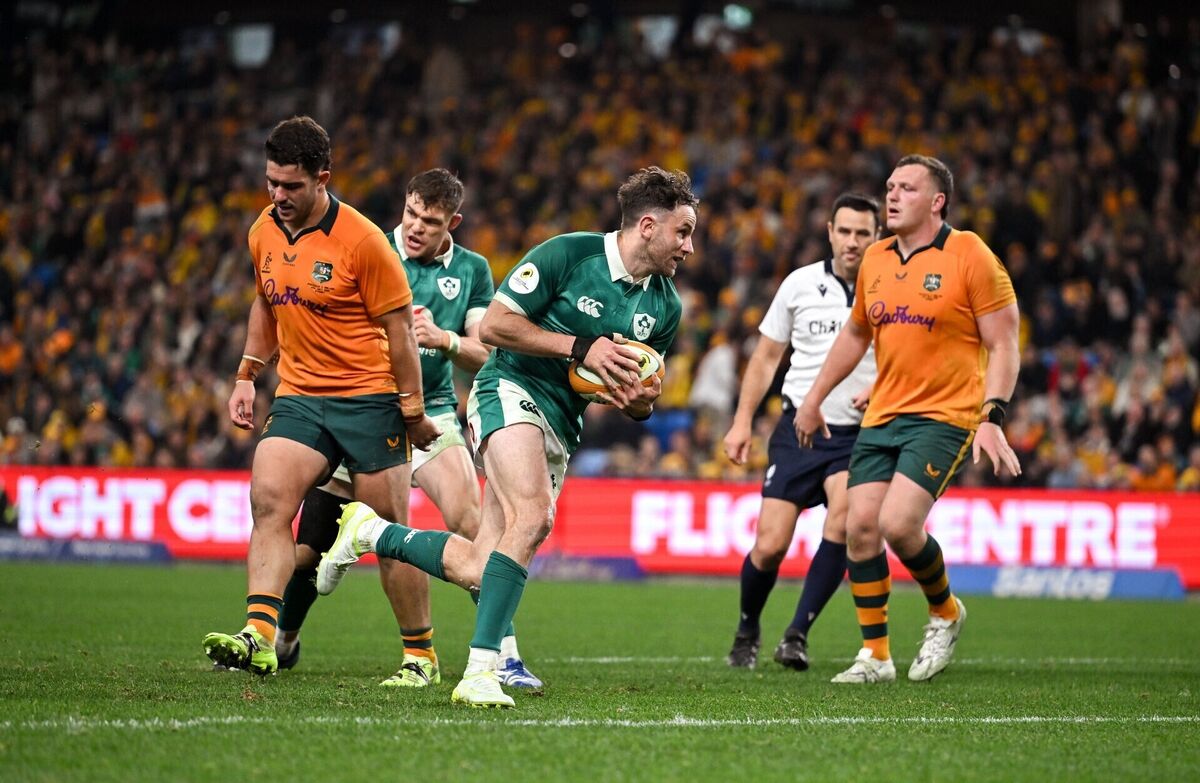
But had Suaalii recycled the ball rather than attempting an audacious pass off the ground in the 37th minute after splitting Tadhg Furlong and Garry Ringrose, before being brilliantly tackled from behind by Keenan, it would have been goodnight, Ireland.
Ireland, of course, lived to fight another day, but the same mistakes made by the Wallabies won’t be repeated by the top-tier nations like the All Blacks, Les Bleus and Springboks.
They have physicality, brutality, and the skill to finish it off.
That much was clear over the weekend as Dave Rennie’s All Blacks prevailed in a 34-32 classic under the roof in Christchurch, New Zealand.
But back to the Wallabies, Valetini led the way for the Wallabies.
The blindside flanker made an eye-popping 69 post-contact metres from his 19 carries, which also included two linebreaks and six tackle busts.
One of those was on Sam Prendergast when he lay down the rising playmaker late in the first half.
Valetini won’t be the last to do that, but well beyond running directly at the out-half, the bruising back-rower set the tone for the Wallabies’ performance in an individual effort that should have been enough to see the home side home.
Of course it wasn’t enough, but it also showed what Ireland is missing out on without the ability to lean on the Polynesian players that make up almost half of the numbers in Australia and New Zealand at present.
That’s nothing new, but Ireland need to broaden the base and widen the scope to discover just which diamonds in the rough they can discover over the next 12 months to progress deep into the World Cup and beyond the quarterfinals.
Otherwise Ireland, who remain one of the best nations in the world, will once again suffer a premature exit on the stage they most want to succeed on: the World Cup.


CONNECT WITH US TODAY



Be the first to know the latest news and updates