'Fear is very important because it keeps you safe': Irish storm chaser on life in tornado alley

Met Éireann meteorologist Noel Fitzpatrick swaps forecasting for front-row views of extreme weather, travelling to the US each summer to chase storms and capture their beauty
'Fear is very important because it keeps you safe': Irish storm chaser on life in tornado alley

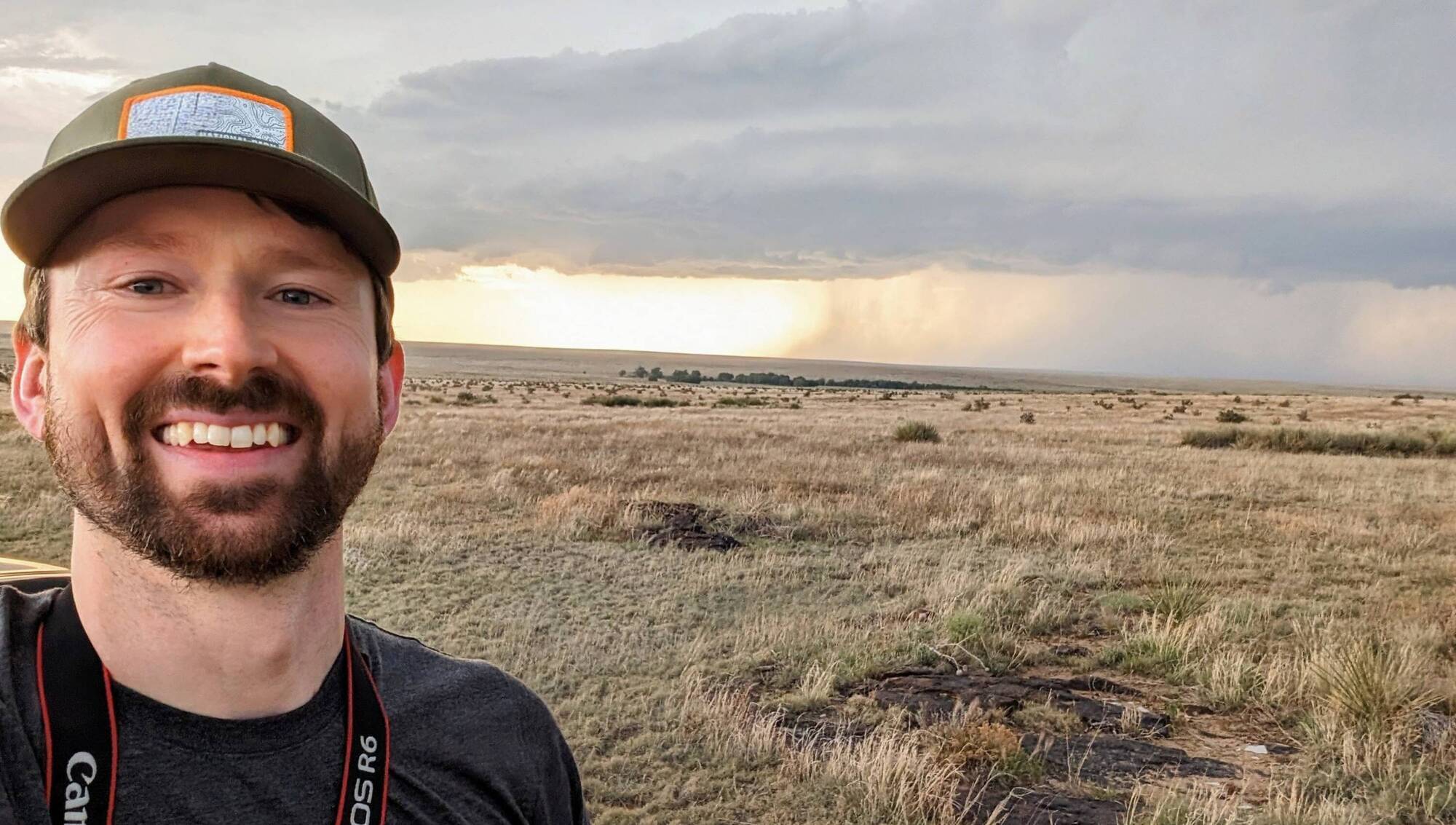
Storm chaser Noel Fitzpatrick, who studies extreme weather and documents his experiences seeking out tornados and thunderstorms through his photographs, says: ‘Tornadoes normally come from really severe thunderstorms, which also have big hail in them, so there is a definite risk.’

While Noel Fitzpatrick could never be accused of chasing rainbows, twisters are fair game as the meteorologist often risks his life in the pursuit of phenomenal weather events.

This summer is no different for the storm chaser from Sligo, who is preparing for another road trip through the infamous “tornado alley” in the US — a stretch of the southern plains known for its high frequency of tornadoes.

These violent storms are most common in spring, and sometimes late autumn, typically affecting areas from central Texas to northern Iowa, and from Kansas and Nebraska eastwards to western Ohio.

While his day job as a Met Éireann meteorologist is relatively tame, the same could not be said for his perilous hobby.

A talented photographer, Noel reveals he is just as fascinated by the beauty of storms as the science behind them.

“I’m very much split in terms of my personality, because I’m analytical and creative in equal measures,” he tells the Irish Examiner.

“The beauty of weather is definitely something that drew me in to study it as a science. Taking pictures is a big interest, and I love it very much. They are a really good way to grab people’s attention so you can have a more in-depth discussion about the science behind weather as well.”

His images are set to feature in Síon: Sounds from a Stormy Day, an immersive experience of original music and imagery inspired by the natural world, as part of the Cáirde Sligo Arts Festival in Ballymote, Sligo.

The event on Saturday, July 4, will see musicians perform against a backdrop of photographs highlighting the beauty of rarely seen weather activity.

Noel has always enjoyed sharing his experiences with the rest of the world. All the while, his main priority is to stay safe and unfazed by the dangers surrounding him.

“In addition to the hair standing up on my arms and neck, some of the metal — like the zip on my jacket or my belt buckle — has actually started to buzz because there was so much static electricity in the air,” he says.

A talented photographer, Noel reveals he is just as fascinated by the beauty of storms as the science behind them.

“I found that very unusual. You get really strong winds that blow into a storm. They’re basically feeding the storm, and they can happen quite a distance away. This can really take you by surprise when you suddenly feel it pulling at your car.

“It’s important not to allow yourself to get too close to a storm or become distracted. You might be looking at one incredible storm in front of you while failing to notice the other storm coming up from behind and cutting off the road that you were planning to drive on. It’s all about keeping that awareness.”

The meteorologist says he would not describe himself as a thrill seeker.

“There are quite a few popular online storm chasers with live video streams and things like that. In some cases, they get very close to these storms — much closer than I would be comfortable with,” he adds.

“For me, the risk is not worth it because there’s no reason for me to be that close. As a matter of fact, these storms usually aren’t as photogenic when you’re right up underneath them. You always have the people who take the risks, but they don’t necessarily have the meteorological knowledge and that can be a danger.

“There is always that thrill-seeking element. I guess it’s become more popular with the movies coming out and online content. You get people who just kind of go out and follow other storm chasers, which can be quite dangerous.”

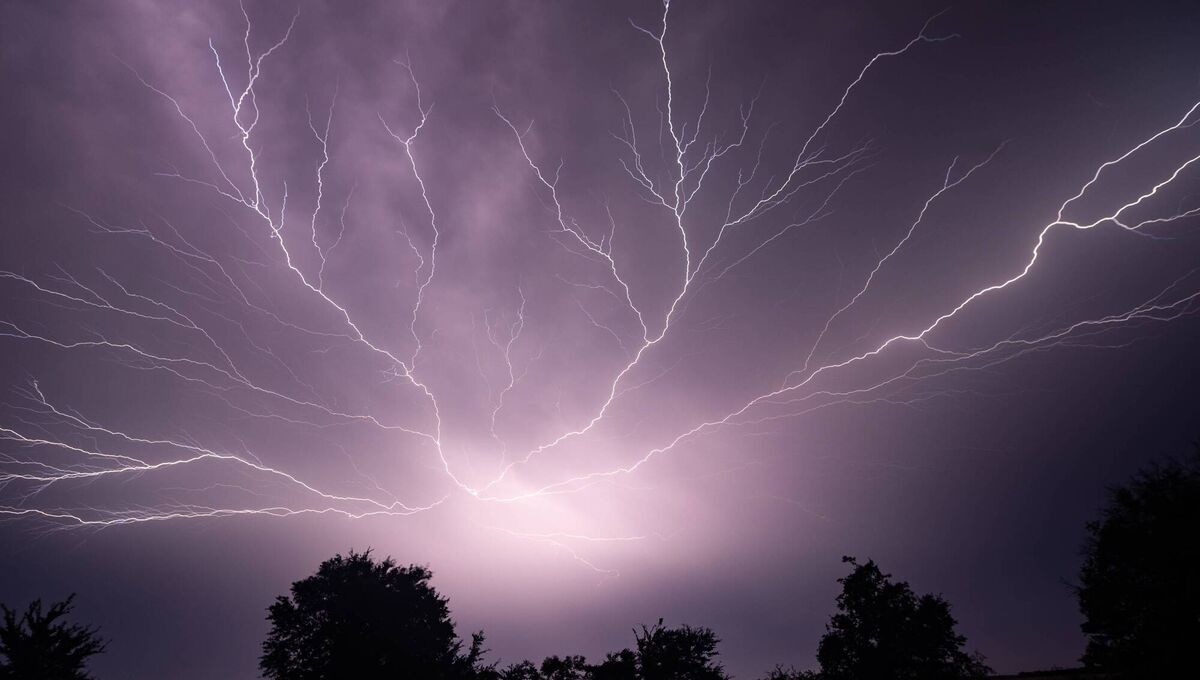
An image of a 'crawler' captured by storm chaser Noel Fitzpatrick. The phenomenon refers to an unusual type of lightning that travels horizontally across the sky.

Noel emphasises the importance of preparation.

“I have a tablet set up where I have radar data coming in. They have a really good network of weather radar data in the US, and I am basically getting regular updates from that network into my tablet in the car,” he says.

“That way I have a map showing me where I am and where the storm is relative to me. I can read lots of information from that data, so I know where the storm is moving and how strong it is.

“I can also get a sense of what the dangers are and if it’s likely to produce a tornado. Those are the main tools I avail of.”

Noel lists some of the close calls he has faced during his years storm chasing.

“I came across a tornado last year that was over a mile wide. It was enormous and developed quite quickly from a very narrow, little tornado that turned into this huge tornado,” he says.

“In this instance, I had to be a bit careful because, even though I could tell the direction the storm was moving in and I was still a safe distance away, the storm was growing and widening quite quickly.

“I had to be quite careful and keep moving back away from the storm to make sure I was in a safe place. It’s not just the tornados that are the big hazard.

“Hail from these storms also presents significant risks. I’ve been near storms that have hailstones that are 10cm wide, that look like these huge chunks of ice coming out of the sky. I try to avoid these areas. You can see on the weather radar where that hail is and get a sense of it.

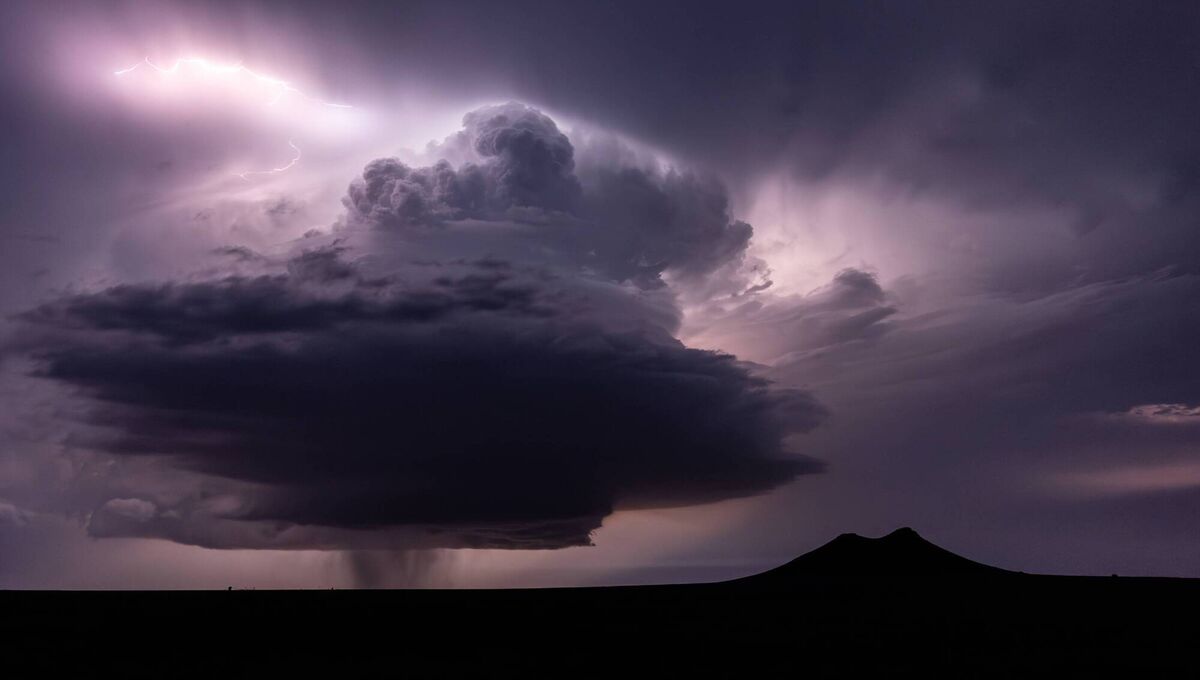
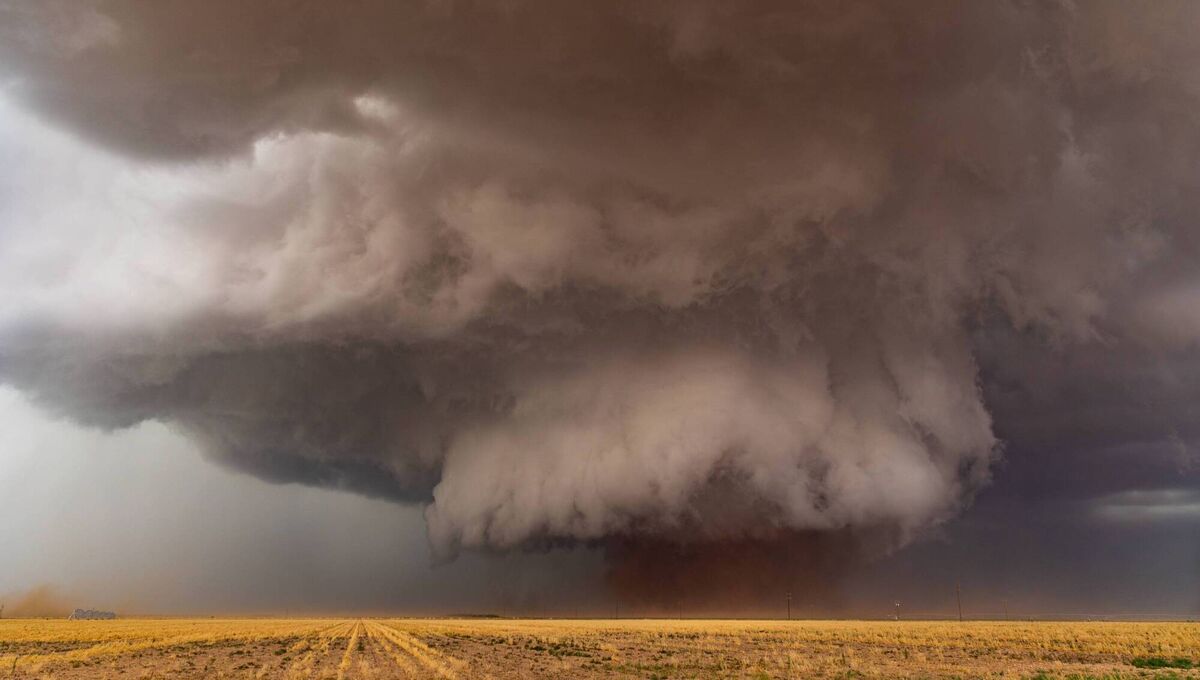
A supercell which was captured on camera by storm chaser Noel Fitzpatrick. The weather phenomenon is responsible for the vast majority of dangerous weather such as violent tornadoes, giant hail, and destructive winds.

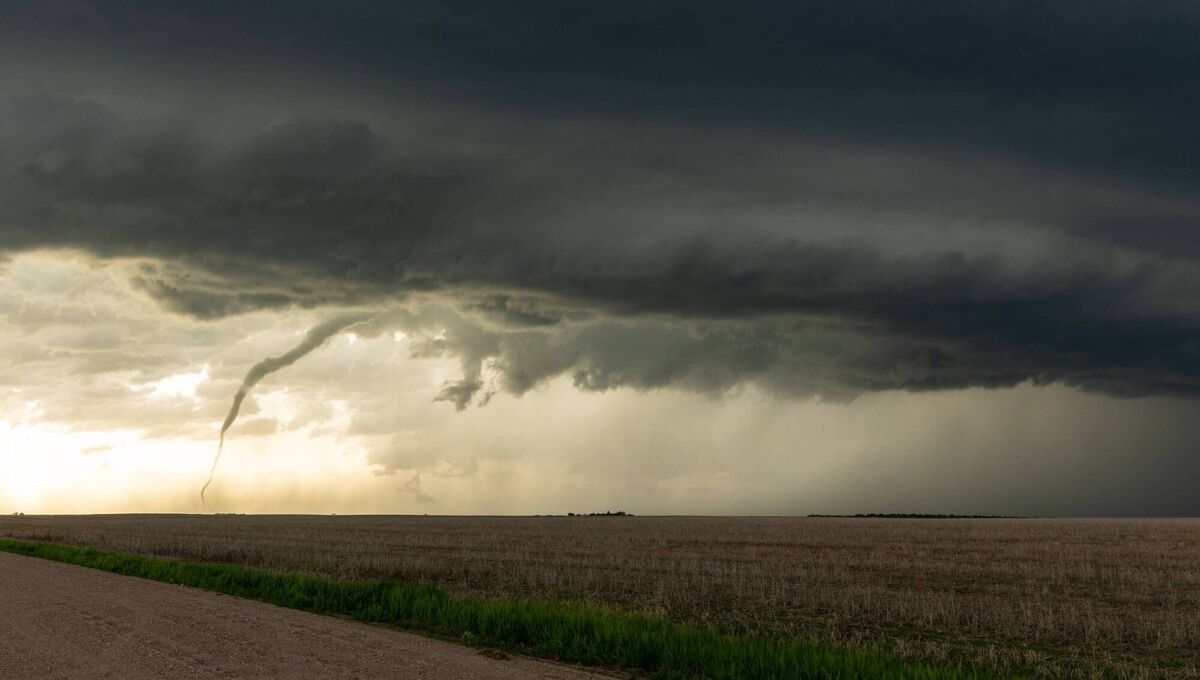
“Tornadoes normally come from really severe thunderstorms, which also have big hail in them, so there is a definite risk. The hail is probably what does the most damage each year because even if a big thunderstorm doesn’t produce a tornado, it will often produce large hail resulting in lots of damage to cars, houses, crops, among other things.

“The other hazard is obviously the lightning coming from these storms.

“I have been out under some storms where I felt all the hair on my arms and the back of my neck start to rise up. This can result in an increase in static electricity in the area which can hint to a lightning strike close to where you are. When I felt that, I’ve just gotten straight back into my car.

“Some might assume that getting struck by lightning is impossible but it does happen from time to time. There is a huge amount of power in these storms.”

He described fear during storm hunting as a very necessary emotion.

“Fear is important because it keeps you safe,” he tells the Irish Examiner.

“I have a very definite comfort zone when it comes to how close I really want to get. I don’t go over as an adrenaline junkie.

“You might be in a small town where there is a severe storm coming when you hear the tornado siren going off. You see the dark sky, lighting, and it’s a scary environment. That’s why I’m careful to stick to my safety limits.”

Need to stay calm

Noel reiterates the importance of a calm temperament.

“If you start panicking, it’s not going to do you any good because you need to be able to make quick decisions. You have to look at the data that’s around you and what the sky is doing in order to make clear-headed decisions,” he adds.

“I try to stay as calm as possible so I can make the right decisions in the moment.

“Usually, the storms don’t start kicking off until later in the afternoon. The reason for that is because all the heat from the sun and the energy throughout the day is building up before it reaches a critical point late in the afternoon or early evening.

“When you start to see the first few storms develop, it’s really just a game of constant repositioning. You’re trying to stay ahead of a storm in a safe area, yet staying close enough to see if a tornado develops.

“In addition to monitoring the weather, I’m constantly looking at the road network. I want to make sure that I have options so I can drive away pretty much in any direction if I need to.

“If a storm changes direction, I need to be able to back out of the way safely. This is probably the most important thing to do in order to stay safe.

“My main focus is getting photographs and nice video of these storms. I’ll have lots of camp equipment in the car with me so it’s just a matter of trying to find good spots alongside the storm where I can get nice clear images.”

Image of the Morton Wedge captured by storm chaser Noel Fitzpatrick. The exceptionally wide tornado can frequently be spotted near the town of Morton, Texas.

The meteorologist is often invited to speak at universities and schools.

“There is a real fascination among the younger age groups about what happens if you get sucked into a tornado. I have been asked that many times, and it’s obviously a question that you want to take seriously without being too grim about it all,” he says.

“Tornadoes are very dangerous, and people do die as a result of these storms. There is a grim fascination, particularly with primary school kids. I try to be honest about it, really, just in terms of explaining how dangerous these storms are and the forces that are taking place. There is never going to be a good outcome for a person or animal who gets sucked into a tornado.

“What surprises me most is the children with a specific interest. You can tell from their questions that this isn’t something they are hearing about for the first time.

“It’s obvious they have been doing their own research to come up with such good questions.”

Unpredictable weather conditions make planning ahead difficult.

“It can be frustrating because I don’t live over there, so the planning can be quite an undertaking. I have to pick my leave days, book my flights, car, and all that kind of stuff,” he adds.

“I might be doing that for weeks, but there is always the possibility that the conditions won’t align. The beauty is when it happens and you get yourself in the right place at the right time.

“That, for me, is probably the most rewarding part.”

Check out the Irish Examiner's WEATHER CENTRE for regularly updated short and long range forecasts wherever you are.

More in this section

Lunchtime News

Newsletter

Get a lunch briefing straight to your inbox at noon daily. Also be the first to know with our occasional Breaking News emails.

Cookie Policy Privacy Policy Brand Safety FAQ Help Contact Us Terms and Conditions

© Examiner Echo Group Limited