Feed reserves and animal welfare concerns raised as drought conditions continue
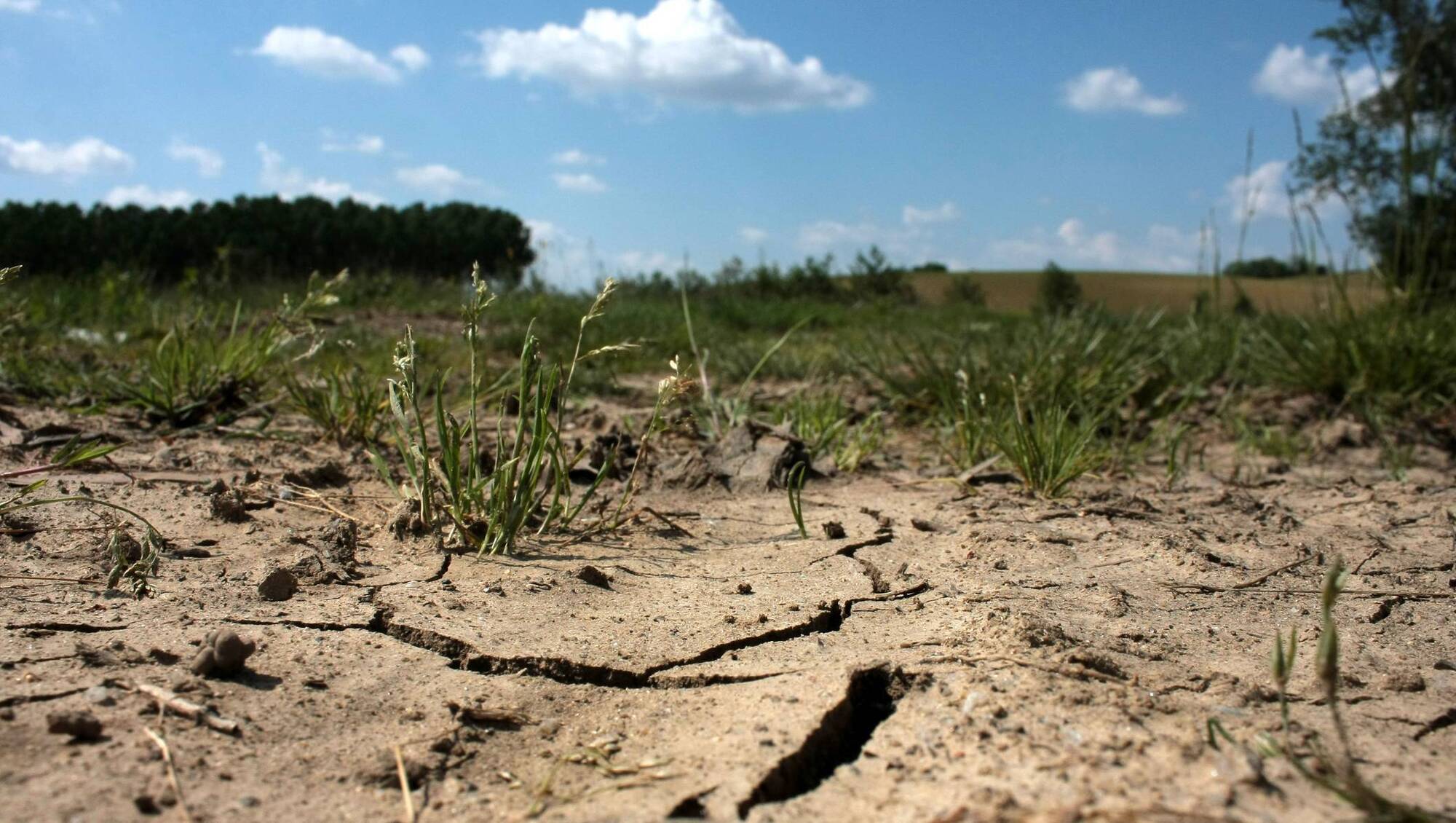
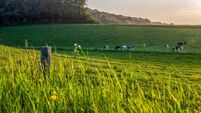
Grass growth could take up to three weeks to recover once there is sufficient rain.
With drought conditions continuing, farmers have begun feeding winter feed reserves, with some farmers reporting cows losing embryos due to the stressful conditions.
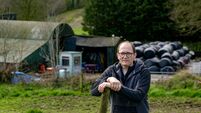
Discussing the drought conditions, the president of Irish Creamery Milk Suppliers Association (ICMSA), Denis Drennan, said it was “glaringly obvious” what the immediate problem was: “There’s no rain and certainly around me in the broader South-East area, we are looking at 100mm of soil moisture deficit.
"All over Ireland we are seeing farmers having to feed next winter’s silage and large amounts of concentrates, which is effectively doubling or trebling the costs of producing milk per litre at a time when the price we are receiving was already stuck below the costs of production.”
Mr Drennen said farmers needed “somewhere between 70mm or 80mm of rain to correct this situation and get grass back growing,” which he admits is unlikely at this time of year.
Read More
“It’s a hugely stressful time on farms and one of the biggest fears among farmers is when they go to check their stock, and there’s no water in the troughs,” he said.
The ICMSA president is requesting Uisce Éireann to stop the practice of turning off the water at night, with cattle expected to go through the nights and early morning without water being piped to troughs.
"The point here is that even if it rained at the end of this week — which there’s no sign of it doing — it will be at least three to four weeks before we get the kind of grass growth that will alleviate a problem that’s already there and, God forbid, might well get worse,” concluded Mr Drennan.
Also mirroring Mr Drennan's concern for the breeding season during this drought period is Irish Farmers’ Association (IFA) Cork Central chair Matthew Hurley, who explained some of his own cows who should have been in calf for a couple of months had begun returning to heat cycles.
"I would even say that over the past three weeks there has probably already been a lot of embryonic loss due to heat stress rather than water stress.
"In my own situation, I've seen cows that would be supposed to be in-calf for up to two months, maybe a little bit more, suddenly returning, which would be a sure sign of embryonic death," Mr Hurley said.
He believes ongoing drought conditions will become a major factor of water stress for animals, as farms supplied by private wells begin to feel the pressure heading into autumn.
"I hadn't heard of any problems with the water yet anyway, but generally speaking, private wells, and most wells, start to come under serious pressure during the month of September, especially after such a long dry summer. It will probably be next month before water will be a major problem.
"Even if it did rain tomorrow, grass isn't magically growing. It's going to be at least three weeks,” Mr Hurley told the , saying many farmers had already begun dipping into silage bales to offset low to no grass growth on farms.
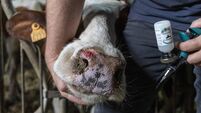
IFA animal health chair David Hall has also issued a reminder to farmers to remain vigilant for mastitis, particularly in heifers, and to keep on top of insect control, especially blowfly strike in sheep.
Although the Monaghan-Cavan area, where Mr Hall is based, hasn’t been put under too much pressure in these drought conditions, many farmers have implemented counter methods after the 2018 dry period.
"I see a lot of farmers would have, over the last number of years, increased the size of the drinkers and just have a bit more volume there when the cows go to drink."
"Once the temperature goes above 25C, the volume they require just goes up dramatically… The main advice is to make sure all animals have sufficient water," Mr Hall advised.
Advice for farmers is to avoid paddocks with little shade and poor water flow during the day; these are usually the paddocks higher up or on hills on a farm. These paddocks may be better suited to grazing overnight when there is no harsh sun and the temperature is cooler, reducing water need.
According to the most recent Pasturebase grass growth report, which was on July 30, counties such as Carlow are seeing the lowest dry matter per hectare per day (DM/ha/day) at 13kg. Other East and South-East counties such as Kildare, Kilkenny, Laois and Wexford are seeing 14kg DM/ha/day, 15kg DM/ha/day, and 16kg DM/ha/day respectively.
Other Leinster counties range from 19kg DM/ha/day to 38kg DM/ha/day.
In Munster, Waterford has the reported lowest grass growth at 18kg DM/ha/day, with Cork and Tipperary reporting 20kg DM/ha/day, Limerick at 21kg DM/ha/day, and Clare and Kerry reporting 29 kg DM/ha/day.
Counties in the West and North remain in the 30s or 40s for grass growth in kilos of dry matter per hectare per day, with Leitrim being the only outlier, reporting 53kg DM/ha/day.
Teagasc advises, if possible, to avoid long walks to paddocks for animals, more than 1km away, in hot weather and in particular for older or lame cows.
Young stock and maiden heifers may also require access to higher-quality supplementary forage or concentrate, and if fodder and silage are given to livestock, a farmer should complete an early fodder budget to allow for quick action if there is a risk of feed shortages later in the year.

Check out the Irish Examiner's WEATHER CENTRE for regularly updated short and long range forecasts wherever you are.