Cork City social housing: A history of building homes on Leeside
In the first of a three-part series, Donal O’Keeffe looks the history of council housing in the State’s second city
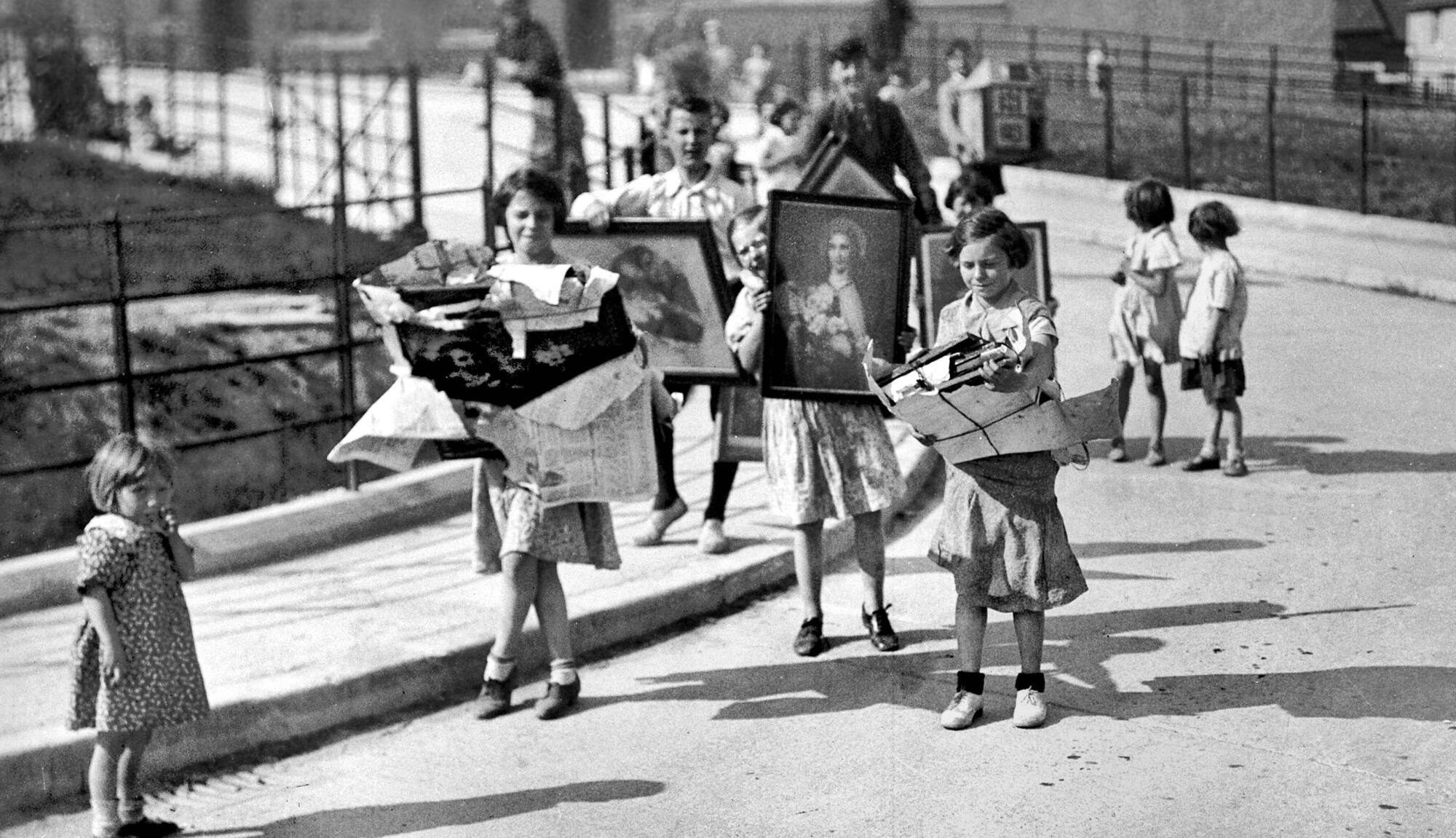
Children from the Marsh area of Cork city moving family possessions to their new homes in the Gurranabraher housing scheme in 1934. Picture: Irish Examiner Archive

Children from the Marsh area of Cork city moving family possessions to their new homes in the Gurranabraher housing scheme in 1934. Picture: Irish Examiner Archive

A meeting of the council of Cork Corporation, held in the then City Hall on the evening of Friday, November 8, 1912, heard a proposal that the city’s very first social housing development be sold off to private landlords.

Noting that there was “a great want of suitable rooms in central positions for the poor working women of the city”, alderman JJ Goggin moved that the 76 homes at Madden’s Buildings in Blackpool be sold off “in lots to suit purchasers”.

The proceeds of the sales, he proposed, would then “be laid out in acquiring suitable property (on equitable terms) from present owners”. The corporation, he said, would then do up the properties and re-let them “mostly to these poor women, at rents suitable to their slender means”.

The next day’s Cork Examiner recorded that “Councillor Goggin said everyone knew there was a great demand for rooms to be let at ninepence or 1s 6d a week”.

A landlord himself, Goggin then endured heckling from the gallery about his own rents and an insinuation from the lord mayor, Henry O’Shea, that Goggin seemed to have a particular house in mind — perhaps one of his own — that the corporation might buy.

Goggin indignantly replied that he would “undertake never to handle a penny of the public money” and added that such schemes had been tried in London, Liverpool, and Bradford and had proven successful, and, in the case of London, even profitable.

An intervention from the city solicitor, Barry C Galvin, put paid to the proposal. Madden’s Buildings, he explained, were built in 1886 “to meet a demand that then existed for cheap homes for respectable working men”. They served that purpose, he said, brought a profit for the city, and if they were sold the new owners “would undoubtedly increase the rents”.
Besides, they were built “on a loan from the Board of Works and were held by the Board of Works as surety for that loan”. Galvin did not know what Goggin proposed to do with the debt on Madden’s Buildings, but he imagined the commissioners of the Board of Works might not easily part with the security on them.

Perhaps calling Goggin’s bluff, the solicitor said he was sure that every member would agree to the desirability of supplying accommodation to very poor people, and if the council were to formulate a scheme, he could promise that the credit of the city stood “so high at the moment there would be no difficulty in financing it”.

Independent councillor and former lord mayor Kieran McCarthy was first elected to Cork City Council for the south-east ward in 2009. A keen historian. he has written multiple books about his native city.

“It’s fascinating to see how the construction of Madden’s Buildings was financed, and of course also to see the issue of council ownership of housing being an issue that early on,” he said.

There is little evidence, he said, of any form of social housing in Cork in earlier centuries.

“The first major interest that there is in terms of provision of corporation housing is some time after the Famine, when I think there was a realisation that the slum conditions in the city were just atrocious, and that something would have to be done about them.

“We have lots of surveys from 1850s, 1860s, some of which have survived in the archives in Blackpool, some in the city library, lots and lots of newspaper articles in the Cork Examiner and the Cork Constitution at the time, and they’re very much saying that a quarter of the city’s population needs to be rehoused.”

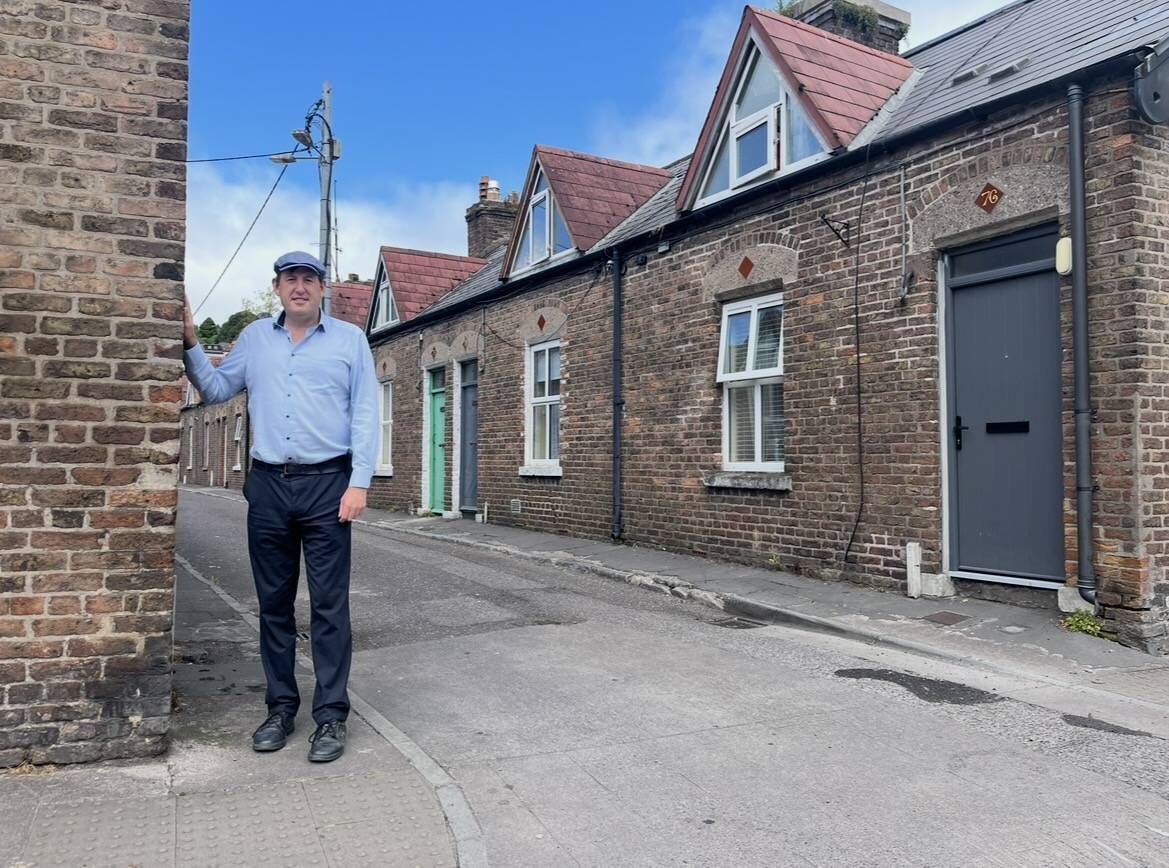
Councillor Kieran McCarthy at Madden's Buildings, which were built in 1886 Picture: Donal O'Keeffe

Those reports speak of huge concentrations of poverty on Barrack St and the Bandon Rd, in Blackpool, and in the Shandon area, and a demand that the problems be addressed.

With the corporation needing large-scale funding to address the infrastructure and capital issues in the city, local members of parliament were lobbied. Westminster was receiving similar representations from larger cities like Dublin, Manchester, and Birmingham.

Mr McCarthy noted that in the 1870s, laws were put into place that public health should be targeted.

“Lo and behold, in 1886, Madden’s Buildings were opened, 76 units built on the site of a cattle market, which went down well. It was a sign of change, and people could go down and see modern buildings,” said Mr McCarthy.

“They’re quite sturdy, and you could try to compare them to what would have gone before, falling-down one-storey thatched roof cottages, open sewers, no public toilets, no toilets within.

“Even now Madden’s Buildings stand out as something solid, even though they come in our time with lots of issues around conservation and maintenance.”

Around the same time as Madden’s Buildings were opened, a group of businesses began to construct housing schemes for their own employees, around the Barrack St area.

“Roll on the clock then and by first decade of the 1900s you have Sutton’s Buildings, Barrett’s Buildings, and Kelleher’s Buildings all come into being.”

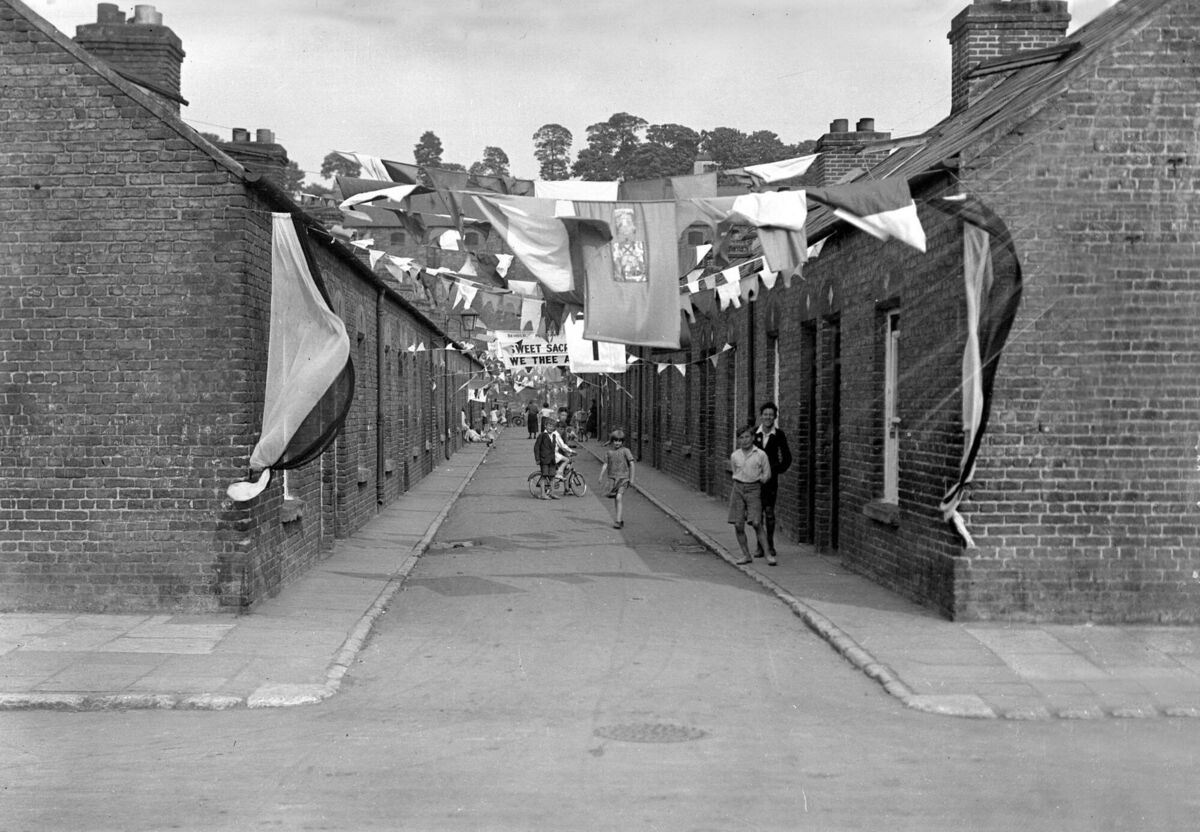
Madden's Buildings, Blackpool, Cork decorated for the International Eucharistic Congress being held in Dubln in 1932. Picture: Irish Examiner Archive

Despite these dozens of homes being built, surveys from the early 20th century indicated that fully a quarter of the city’s population still needed to be moved to better housing, Mr McCarthy said.

“After the War of Independence, even during the Irish Civil War, MacCurtain Villas were opened in 1922, and they were about 76 houses.

“All of a sudden, the housing numbers began to grow a little bit in terms of corporation housing, developments of 30 houses, 40 houses, and then, by the middle of the 1920s, Capwell Rd, 126 houses — that was known as Turner’s Cross phase one — and then Turner’s Cross phase two, that was something like 250 houses, and O’Connell Avenue.

“Then you have this jump to 500 houses in Gurranabraher in 1934, which came with the clearance of 20 acres of slums,” Mr McCarthy said.

“The graph begins to go up, and there’s funding being put into place by the Irish Free State government, and also by Philip Monahan, city manager at the time.

“Some of those would have inspired some of the private housing developments, such as in the 1930s, the Bradley brothers began to build Ballinlough, and by The Lough, the Hartland family was responsible for developing houses, with a knock-on effect of raising people’s expectations of decent housing, a decent standard of living, and a decent standard of hygiene.”

In 1938, a sizeable development was built at Greenmount, and after the Second World War, 500 homes in Ballyphehane, up to the 1960s and Churchfield, and in the 1970s Farranree and Togher, and Ballyvolane in the 1980s.

“You had Hollyhill and Knocknaheeny in the 1970s and 1980s, and social housing in places like Grattan St, and on up until today, with the social housing stock now heading towards the 12,000-mark, with the city council dealing with a mixture of housing from Madden’s Buildings all the way to what was constructed last year,” said Mr McCarthy.

“With such a diversity in the ages and types of builds, the council certainly has major challenges around the issue of maintenance of its properties.”

By way of a footnote to the 1912 meeting mentioned earlier, JJ Goggin would again be quoted in the Cork Examiner five years later, in 1917, when he opposed a pay increase for corporation staff, saying that those unhappy were free to seek work elsewhere. And the lord mayor in 1912, Henry O’Shea, a baker on South Main St, would give his name, six decades later, to Sir Henry’s nightclub.

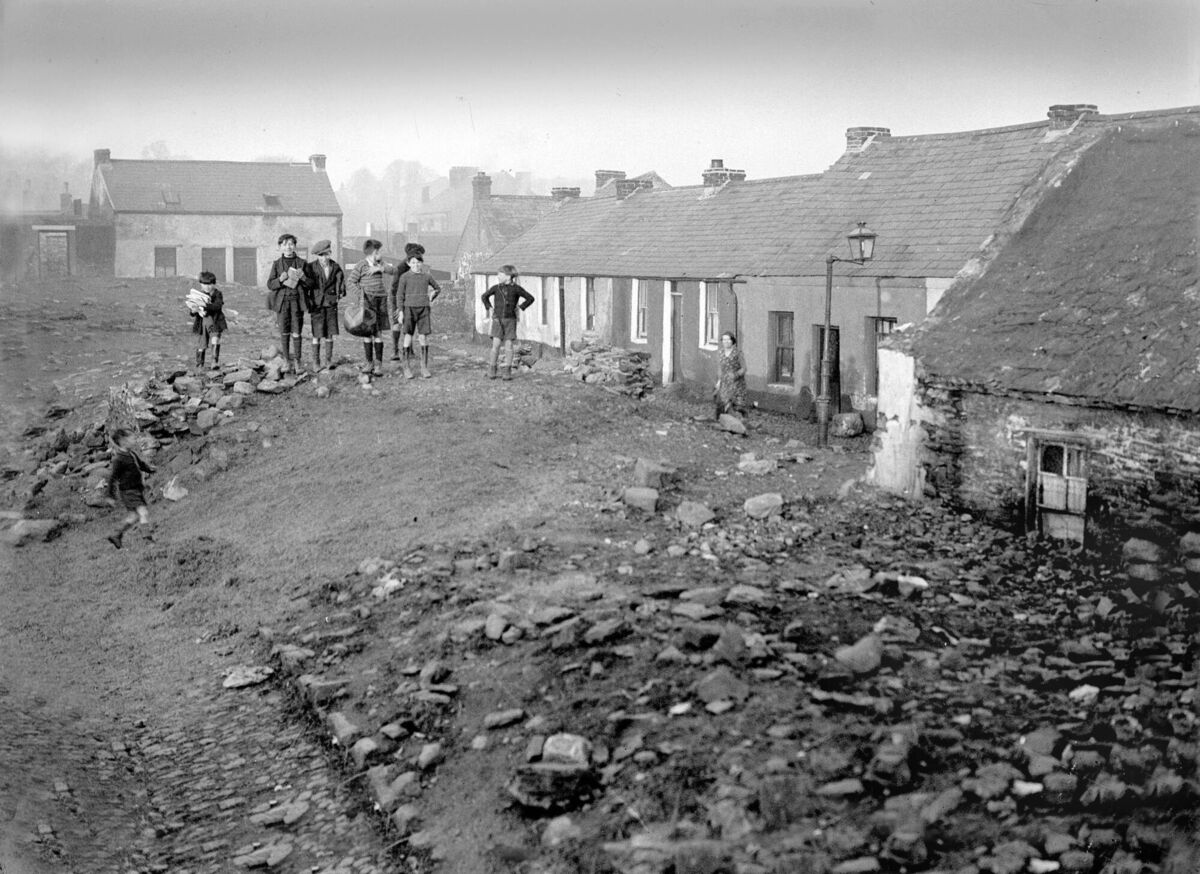
Houses in North West Ward, Cork City (Cattle Market Avenue area) before being demolished in 1934. Picture: Irish Examiner Archive

Social housing by the numbers 

With almost 12,000 social housing units managed by Cork City Council, last year saw just over €147m allocated in the housing and building service division in the council’s 2026 budget.

By comparison, Dublin has approximately 60,000 directly-managed social housing units across its four local authorities, but with the Department of Housing not collating exact figures, it is difficult to directly compare the Dublin and Cork overall budgets.

According to a spokesperson for Cork City Council, its annual €147m-plus housing budget includes €21m spent on maintenance – the council will receive and address 11,000 repair requests by direct labour in 2026.

Maintenance is an issue of some controversy. Sinn Féin’s housing spokesperson, Eoin Ó Broin, has said that due to successive governments underfunding local authorities, maintenance of ageing social housing stock is beyond the financial capability of many councils.

Over the past five years, Cork City Council received 480 tenant complaints regarding rodent infestations; 21,700 complaints regarding difficulties in heating council homes; 4,920 complaints regarding damp and mould; and 340 complaints regarding structural issues in council properties.

Almost a third of Cork City Council’s housing budget - €54m - will be spent on the rental allowance scheme, €1.3m on house loans, €6.6m on disabled person grants, and €45m on homeless services. Climate action, asset management, asset inspection will account for some of the council’s remaining spend.

Cork City Council currently owns and manages 11,021 homes as well as managing 370 homes provided under various social leasing schemes. The council also owns 504 properties which are managed by approved housing bodies. The total figure is 11,895 properties.

Of that total 11,895 properties, 9,678 are houses, 2,189 are apartments and 16 are described as “other types of units”.

Excluding the homes managed by approved housing bodies - occupancy information on these is only updated periodically — there are currently 10,837 occupied properties. The council currently has 526 vacant units, including 94 which have been “decanted” — a phrase beloved of housing officials and meaning people have been moved out — as part of planned regeneration projects.

The spokesperson said the city council intends to deliver 3,000 new social housing homes over the next five years, which will be delivered by both the city council and approved housing bodies.

The council has 10,837 active tenancies, of which 4,145 are held in joint tenancies — meaning two tenants — and the remainder are held in sole tenancies.

There are 14 housing officers working across the council’s three area offices, with five housing officers in the north-west area office, four in the north-east area office, and five in the south area.

On average, each housing officer handles 814 properties, with the highest number of properties, 1,031, in the south area district one, and the lowest, 644, in the north-east area district four.

Of Cork City Council’s total current active tenancies, 3,273 are occupied by single adults with no children in occupation, 2,217 are occupied by two adults with no children in occupation, a figure that includes adult children residing with a parent as well as couples.

The remainder, 5,347, are occupied by what the council refers to “households with a larger composition”, presumably meaning families with children. There are 7,269 children registered as occupants in active council tenancies.

Asked how many of its tenants are over 65 years of age, the council said: “We do not systematically collate data on the age of tenants as there is no business requirement to do so”.

Cork City Council operates a differential rents scheme, which was introduced by Philip Monahan, the country’s first local authority manager, a century ago.

This means that rent payable is calculated on the household income and will reduce or increase based on fluctuations in income when notified to the council.

The average weekly council rent is €80.56 per week.

Certain properties, which the council described as being under special lettings for community use, pay a reduced fixed rent of €10 per week. The current highest weekly council rent is €366.60 per week.

When asked how many of its properties are more than 50 years old, the council said it does not collate such information.

  • This special report was funded by the Local Democracy Reporting Scheme.

More in this section

Lunchtime News

Newsletter

Get a lunch briefing straight to your inbox at noon daily. Also be the first to know with our occasional Breaking News emails.

Cookie Policy Privacy Policy Brand Safety FAQ Help Contact Us Terms and Conditions

© Examiner Echo Group Limited