'Don't end up with your house falling into the sea like me'
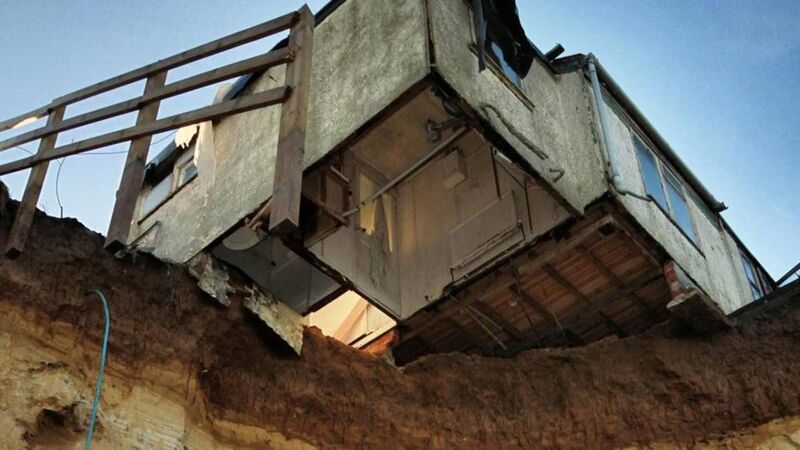
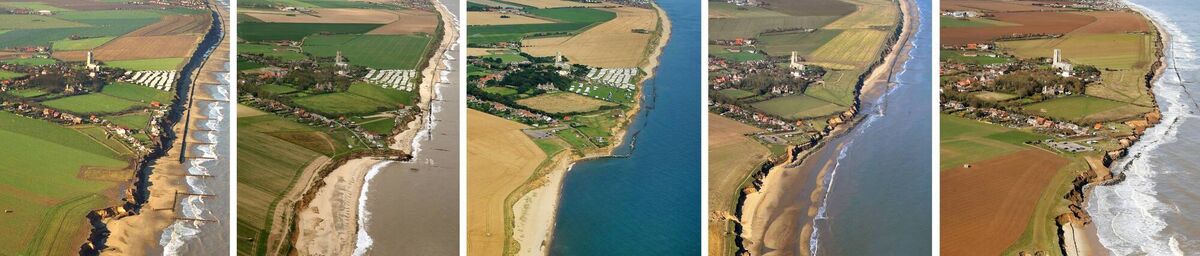
Bryony Nierop-Reading's bungalow fell into the sea during a 2013 storm. Picture: Martin Barber/BBC
To say the fact Bryony Nierop-Reading has no idea when she will have to leave her home in Norfolk is a constant worry would be an understatement.
The 79-year-old has been told when the sea is just 5m from her house she will have to go, and so will her next door neighbour.
This is because the coastal village of Happisburgh they live in is literally falling into the sea, due to a combination of reasons.
These include climate change, more ferocious storms, and a failure to properly protect the coast that dates back decades.
While Bryony knew coastal erosion was a thing back in 2009 when she bought land and properties in the village on what is now Norfolk’s rapidly collapsing coastline, she never expected it to erode so fast.
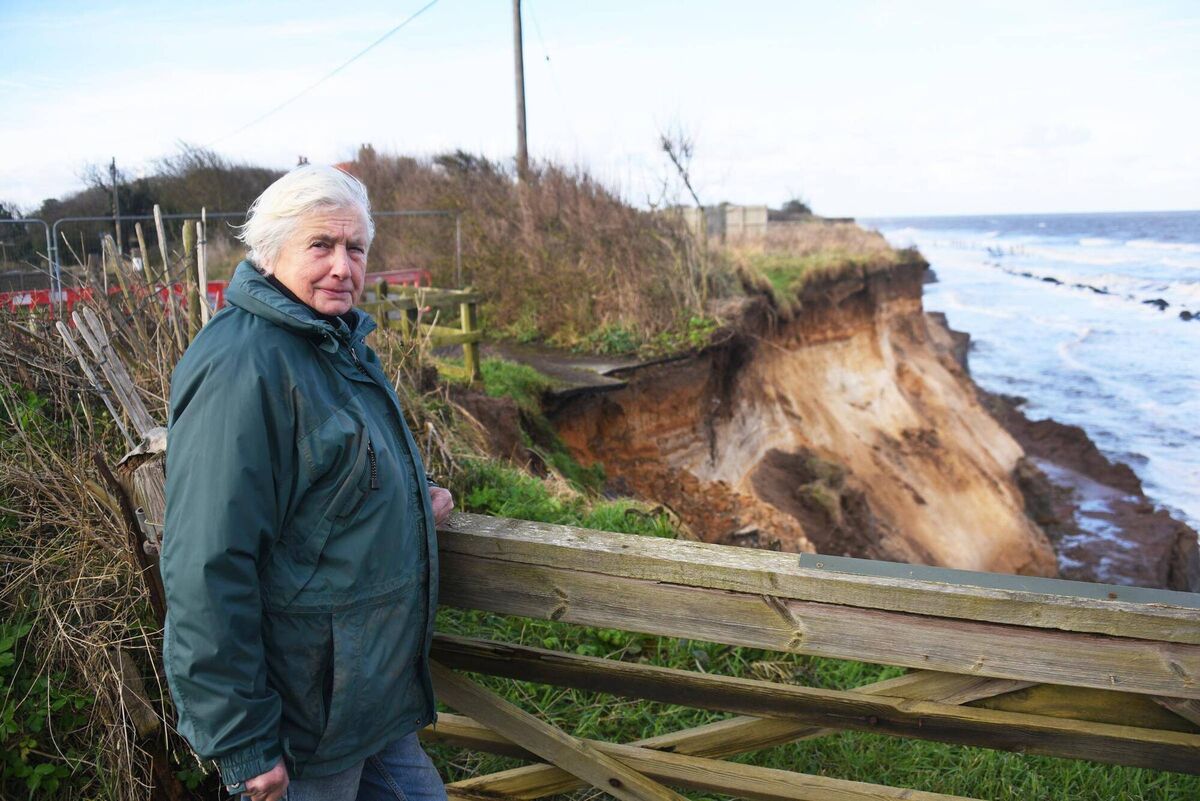
Sadly, the rate of erosion — which is now anywhere between 5m and 10m a year — came on so fast she has since seen her world crumble apart... literally.
She has spoken about this before with the English media but she wants to pass on some words of wisdom to anybody in a coastal community in Ireland who might be even remotely worried about coastal erosion.
“Probably the best thing I can say is do not end up like me and others like me,” she said.
“Make sure your local authority or government can be held accountable and do not take for granted any promises anybody gives about sea defences.
“I have lost one home to the sea, and I am about to lose another. I do have a plan.”
When she references losing one home already, she means it literally fell into the sea.
Bought in 2009 — a year before she sold a tractor restoration company she owned — with a 40ft garden backing onto the compact clay cliff below her, she thought she had arrived in her own coastal nirvana.
The sea stretched out into the horizon and she had coastal views to rival the best.
But the view now holds some bittersweet memories because she should be looking at it from a vantage point about a quarter of a mile from where she lives now.
“I knew there was coastal erosion, but at the time it was about 1ft a year,” she says.
“I reckoned I'd have 25 years. I had a 40ft garden at that time, but it didn’t happen that way.
“I ended up watching in horror as the sea took bigger and bigger chunks of the cliff — and my garden — every year.
The problems she is having now date back to the mid-1960s but the fact the weather has got so much worse has compounded everything that has gone wrong since.
A long stretch of sea defences — called revetments — were erected along the beach below the cliff between 1959 and 1960.
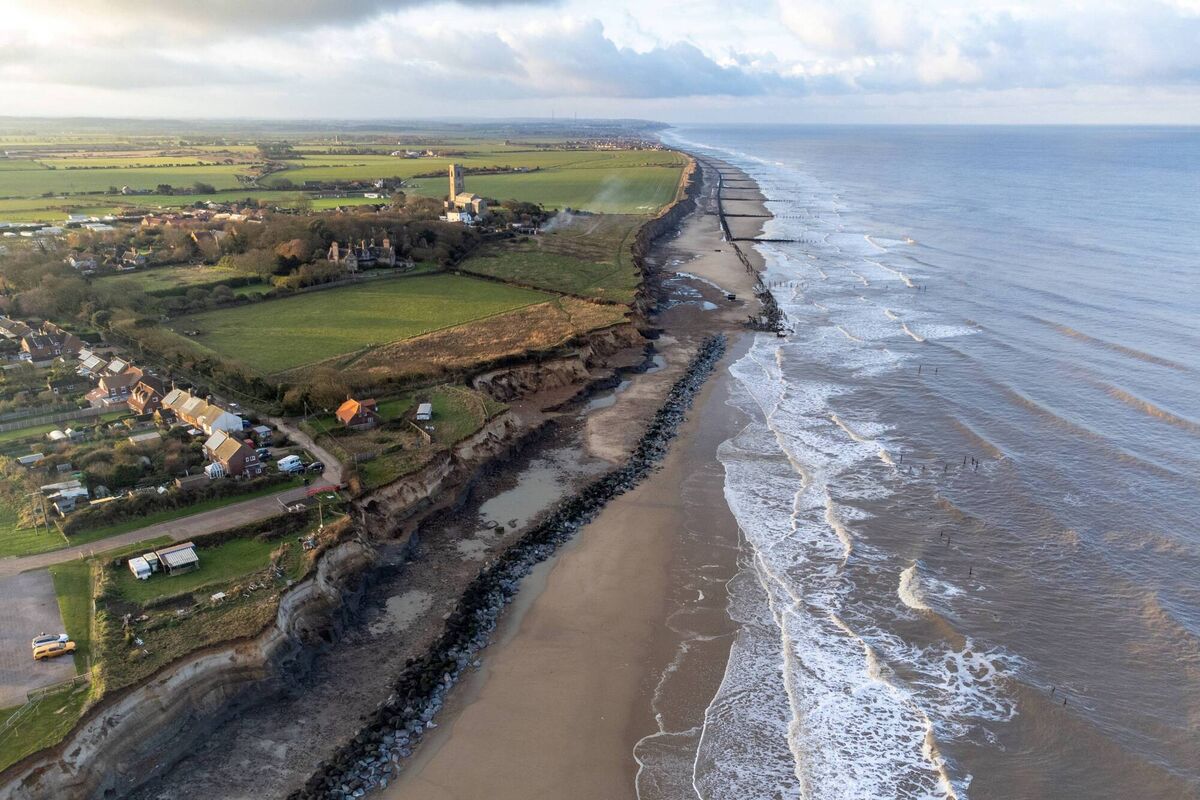
Slanted towards the sea, the timber revetments were designed to capture sand and silt as the waves crashed towards the shore below the cliffs and then hold it there and build up a natural bank against the sea, to slow down the force of the waves.
They worked, and were consistently maintained by the local council throughout the 1960s, 1970s and 1980s.
But in the 1990s, sections got damaged in storms and planning objections or a lack of finances led to the necessary repairs not being made and eventually most of the revetments ended up being demolished.
By the time Bryony bought her house in 2009, little was left of them.
Today, all you can see of it is a narrow swathe of weather-worn chunks of wood sticking up out of the sand.
They look about as useful a barrier against erosion as a row of over sized tooth picks.
The coastline collapsed by another 10m last year, and Bryony has no idea what will happen this year or the next.
“I am living in a classic case of how not to manage coastal erosion,” she said.
“Things started getting serious when the council took away the old revetments off the beach. They cleared the stretch of beach and took away some concrete-filled metal pipes, which were also acting as a deterrent.
“So, instead of my new garden in 2009 going in feet, maybe one a year,, it started going in metres instead.
“At the time, I had three lots of sea defences in front of my bungalow.
“I had rocks, I had the revetments, which, although ruined, were still breaking the force of the waves and there were these concrete filled metal pipe.
“I agree they were very unsightly, but they were keeping the erosion under control.
“The council, however, decided to make it aesthetically pleasing and using government money, they took the whole lot away.
“It was at that point, my garden started disappearing very fast and approaching my house. By 2013, my bathroom was about a foot away from the edge of the cliff.
“At the end of that year, we had the tidal surge that swept away the cliff from underneath my bungalow, and that was the end of that.”
She added: “People who are not as severely affected by coastal erosion as myself and other residents in Happisburgh will probably find it hard to grasp what has happened here.
“Ours is a very extreme example of coastal erosion, but if you think about it, it is just a matter of time before something really serious starts happening to sections of the Irish coast.
“Coastal erosion is happening, and it’s happening faster in some places.
“You need to lean on your government to have a 150-year plan that is practical, and deals with the reality that sea levels are rising and weather is changing.
“Sea is going to really start encroaching into coastal areas and it needs a proper, long term plan to deal with it.”
Private pilot Mike Page isn’t a huge fan of the idea the erosion in Happisburgh is down to climate change.
Instead, he puts it down to changing weather patterns, the effects of which have been compounded by a lack of resources being spent on sea defences.
Fascinated by coasts since a child, he noticed the erosion of big sections of the Suffolk coast when he was growing up in the 1940s and 50s.
Combining his interest in flying and his passion for photography, he later started documenting what he could see of the coast below him on his regular coastal flights.
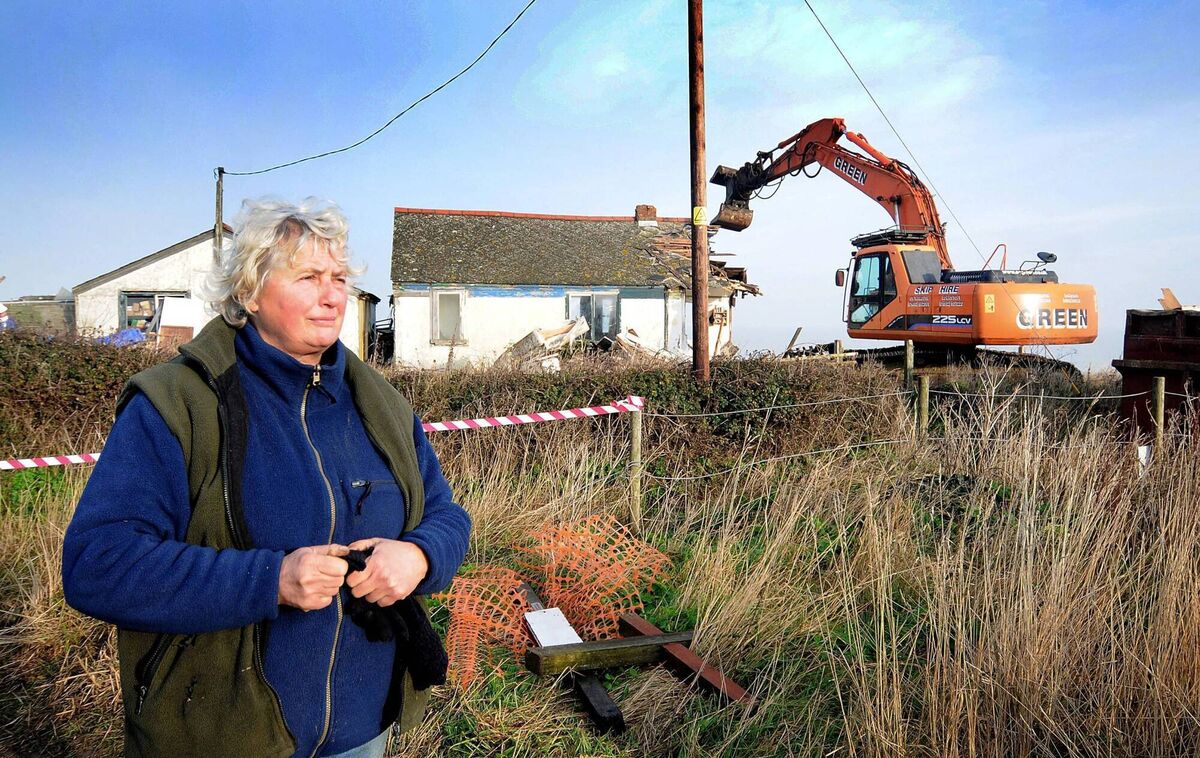
He has since amassed more than 130,000 images which catalogue coastal erosion.
The 85-year-old has an almost encyclopedic knowledge of the subject of coastal erosion and has appeared in a number of documentaries about the subject.
While he has noticed a big change in weather patterns around Norfolk, he is in no doubt that had the sea defences in places like Happisburgh been properly maintained, none of the homes would have fallen into the sea.
He said: “I love coastal erosion. I just love watching it and observing the changes.
“All the sand cliffs erode, and that's what they do.
“Wind and weather and waves just take it away, and consequently, you're getting erosion.”
He started paying closer attention to Happisburgh in the 1990s when he heard about a number of houses in the village falling into the sea.
Then he went back every one or two years, flying over and photographing what he could see.
Over time, he has produced a step-by-step portrayal of the steady erosion of the coast around Happisburgh, as well as other places in East Anglia.
“I think the place is a massive warning call as far as changing weather is concerned,” he said.
“Weather patterns change, and I think that's causing a lot more now than it did years ago, because we're getting fierce areas of wind and then high waves and things like that.
“Climate change is not the full picture. You've got to look further. You've got to look back in history, look at weather patterns.
“We haven't had snow here for three years now and the winters are changing.
“You also have to look at the issue around the revetments. They protected the coast.
“But they rotted out in about 1991,1992 and started to break up, and they weren't repaired. Had they been repaired, the coast would have still been protected.
“I can guarantee that 100% myself: if they'd have been repaired, that coast would still be there.”
He bases his firm belief in this view on his aerial photographic proof of the erosion that takes place in areas where revetments rot or break up and are not repaired.
“All that needed to happen was the council at the time started to maintain them,” he said.
He added: “I would advise anybody in Ireland to go and find out what their council's policy is and make sure they are maintaining what they have, and not just letting it erode.
“What has happened here should be a stark wake up call to anyone in Ireland with a sandy coast.”
Bryony and her next door neighbour are not the only people who are having to face the grim prospect of their homes being demolished.
There have been so many homes demolished in the village that a fund set up to help affray the costs has almost run out.
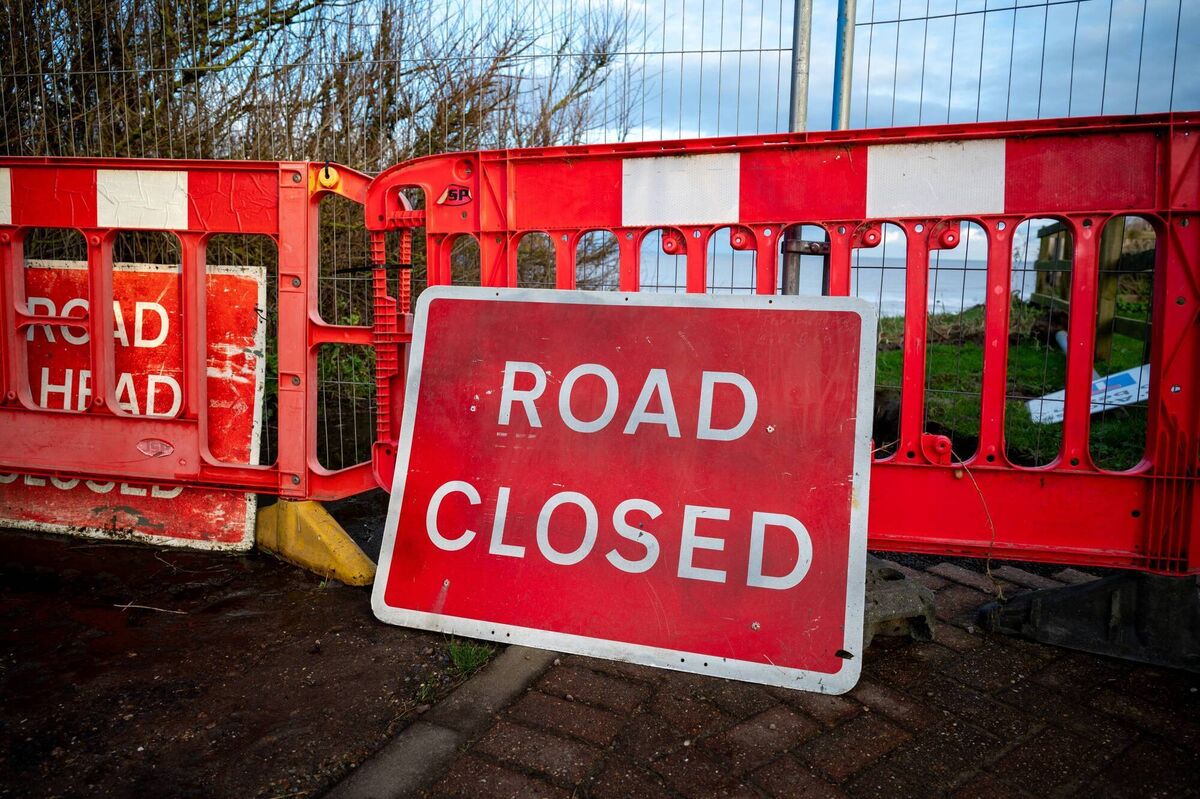
Earlier this year, North Norfolk District Council was involved in the demolition of a cliff-top property about 15km up the coast, at Trimingham, following a “significant cliff slip” which occurred prior to the Easter weekend.
It had resulted in part of the property’s external façade being left “suspended in the air”, according to the council.
At the time, it also vowed it would continue to support those living along (its) coast in the face of “the challenges we are experiencing and will continue to experience with the effects of global warming”.
There are currently no UK government compensation schemes for properties lost to coastal change, and coastal erosion is also not covered by buildings insurance.
A council spokesperson said that “ultimately property owners are responsible for their own properties”.
In answer to the question why more sea defences could not be built at other threatened places like Happisburgh, the council said: “In most cases, coastal risk management structures are difficult to design and build, can have negative environmental impacts on local areas and communities, and will need large amounts of local funding.
“It is unrealistic and unsustainable to continue to protect large parts of the North Norfolk coast.”
They added: “Stopping erosion everywhere is environmentally unrealistic, as valuable sediment would no longer enter the coastal system.
“The North Norfolk Coast has been changing for thousands of years and will continue to change into the future.
That, says Bryony, is all the more reason why people should get onto their local councils and make sure they have a legal obligation to do something about coastal erosion.
“Don’t wait for the moment your local council issues a statement like that and gets away with it,” she urged.
In the meantime, she is making plans for the future.
Sadly for her, the amount of money she could get from the council is not enough to buy a house, or even land on which to build one.
She is now back making a decision that relies on her successfully measuring her life in terms of a predicted rate of coastal erosion.
Bells ring in this reporter's head as she says what her plan is, as it sounds a lot like the one she made in 2009.
"I am planning to do is move into a double mobile unit at the top of my garden, which will probably give me another eight years,” she said.
It must be weird to live like that.
“One lives on two levels,” Bryony says as she let out a weary sigh.
“You know, you get on with your daily life, you plant your seeds and grow vegetables.
“But at the same time, if you look at it in an overall way, you can end up suffering — like I do — from almost permanent depression.
“Sometimes I feel very desperate, but I just try to keep it under control.
“I do that by basically not looking too far ahead.”


CLIMATE & SUSTAINABILITY HUB
CONNECT WITH US TODAY



Be the first to know the latest news and updates