Grateful but facing an uncertain future: Ukrainians adapt to life in Ireland
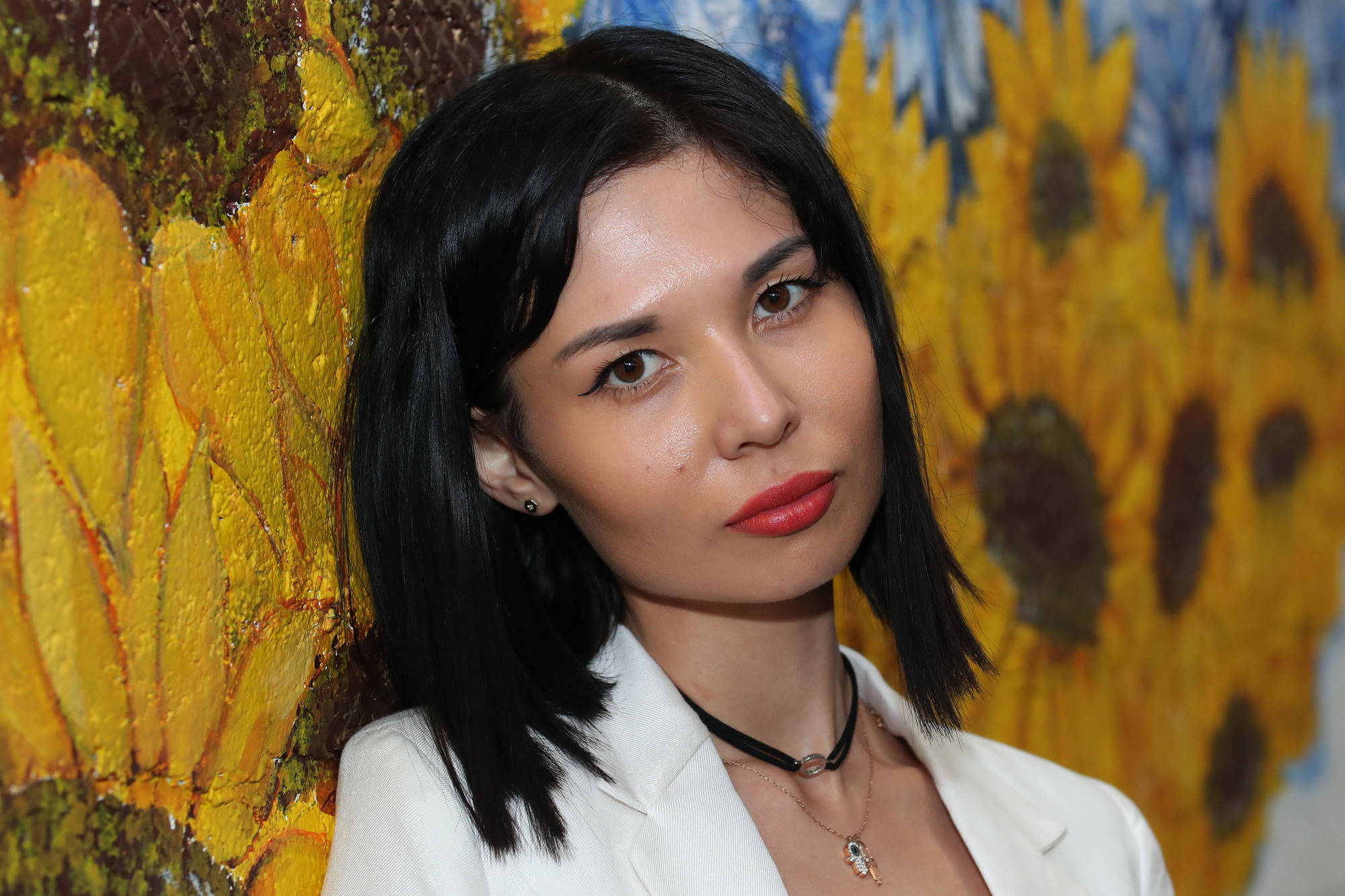
Ukrainian ballerina Maya Tsuprenko arrived in Ireland the day before Russia invaded her country on February 24. Photo: Conor Ó Mearáin / Collins Photos
Professional ballerina Maya Tsuprenko had just arrived in Ireland to dance with a Russian ballet company on a sold-out tour when bombs were first dropped on the streets around her home town.
She watched the carnage on TV from a hotel room in Dublin, trapped in a foreign country and unable to return to Kharkiv.
Just last week, her mother, 58, and grandmother, 82, who was recovering from major surgery after a broken back, slept on the floor in Dublin Airport’s old terminal as they waited to be taken to be processed at Citywest hotel and transit centre after an already gruelling journey.
Maya, 27, said that her grandmother was angry she was made to leave her homeland and said that she would prefer to have died in a bomb attack at home than face the arduous journey and physical and emotional wrenches of moving to a foreign country, leaving all she loved behind.
“But my mother loves Ireland. She thinks Ireland is the kindest country in the world,” Maya said.
“They arrived on Wednesday night into Dublin Airport. There was no place in Citywest [hotel where they were to go to be processed] so they had to go back to the airport. In the old terminal, there were office rooms. Some people slept on chairs, some on tables, some on the floor.
“Some people were there for days but I collected them the next day from Citywest. I think they made it faster for them because my grandmother was so old and she recently had an operation on her back so it was hard for her to sit."
Maya comes from Kharkiv, a city of 1.4 million people in northeast Ukraine. While her home has survived, most of the city centre is destroyed and there have been Russian soldiers on the street. She says her family was afraid and had no choice but to leave.
The three women now live in Dublin City University’s Larkfield student accommodation. Their initial deadline to leave of August 6 has been extended to August 22 to give the refugees a little more time to find another home during a housing crisis.
Maya has been offered work teaching in a ballet school in Dublin in September so hopes that she can remain within commuting distance of that. “I’m scared they will say ‘we’ll bring you to Galway.’ They’re trying to do their best but what can they do?"
Regardless of where they go, Maya is thankful that they are now safe unlike other members of her family. Her other grandmother is trapped behind enemy lines near Donetsk in eastern Ukraine, and her father is now an army officer in Kharkiv.
“My father’s getting grey hairs, more by more each day.
“His mother is in a place near Donetsk now under Russian occupation.
“The banks are not working, Russia has bombed everything, so I can’t send money to her. My father is thinking how he can pick her up from that horrible place but it’s very difficult. He’s so upset, he’s getting older every day.
“My father’s flat is also saved. But when there was bombing in his district it was so close it broke his window.”
Maya arrived in Ireland the day before Russia invaded her country on February 24. As she watched the horror unfold from Ireland, her Russian colleagues in the ballet company believed Putin’s propaganda, calling him ‘Ukraine’s great saviour’ and telling Maya that her country had to be saved from genocidal fascists.

“I came here on a ballet contract for a two-week tour of Ireland with the Moscow Royal Ballet. The shows were sold out. But the first performance was on February 24. Just three dancers were Ukrainian and the manager.
“At that first performance, an old man and woman stood up with a banner saying ‘Putin, get your hands off Ukraine.’ I cried on the stage. That support meant so much. They didn’t even know we were Ukrainian.
“Most were Russian in that company. It was hard to work with those people after February 24.
“The propaganda affects so much of the war. So many people I danced with who are dancing right now in Russia believe it. They were our Soviet brothers. Now they will kill us in the streets."
The concerts were cancelled and the dancers were offered flights to wherever they wanted. Maya had nowhere to go so stayed in Ireland. For three months, she lived in a hotel.
Things have started to improve now since she moved to the student flat in DCU and began volunteering with Ukraine Action, teaching dance and gymnastics to children and adults at the Ukraine Centre by Vicar St in Dublin.
“I’m teaching children age four or five years old and they are amazing. I’m teaching them good stretches and gymnastics. I teach K-Pop dance to teenagers. And adults, 18+ women really love contemporary dance.
"They feel really happy to spend time with me. When you dance you put all your soul into it. I hope they’re thinking only about the dance, not about the war, and that makes me happy.”
On her arrival, Maya’s English was slow and stilted, she said. But she took language classes with a “wonderful” Italian woman called Rose at Travelling Languages in Dublin and her speech is now fluid and confident.
She is hugely grateful to everyone who has helped her survive alone in a foreign country at a horribly traumatic time.
"I can’t calculate the future. We’ll never know until the end. But when I see new tanks, airplanes in my country I see the news look a bit better.
“A lot of people have died under bombs in my city. But Russia is not moving in more.
“In 2014, I worked in the Donetsk Ballet Theatre. It was the coolest theatre in Ukraine. The first bomb fell near my flat. I saw how people kill other people on the street. I saw Russians put on Ukrainian soldiers’ uniforms to kill people. There was propaganda everywhere.
“So when this war started I called my family, I told them to stay calm, prepare stuff and go underground."

Maya said that although she is nervous about where she may be moved next month, she is grateful that her family are alive and her mother and grandmother are now with her.
“After this horrible invasion I don’t care where I live I only care about my mother and grandmother,” she said.
A spokesperson from the Ukraine Civil Society Forum said that thousands of Ukrainian refugees; women, children and vulnerable people are facing uncertainty in the next few weeks about where they are going to live, as student accommodation comes to an end.
“We need a cross-government department response to this impending crisis. We are calling on the DoH and other government departments, with the support of an implementing body such as the Housing Agency, to lead on medium- and long-term housing,” they said.