Which European values will Ireland defend in 2026 EU presidency?
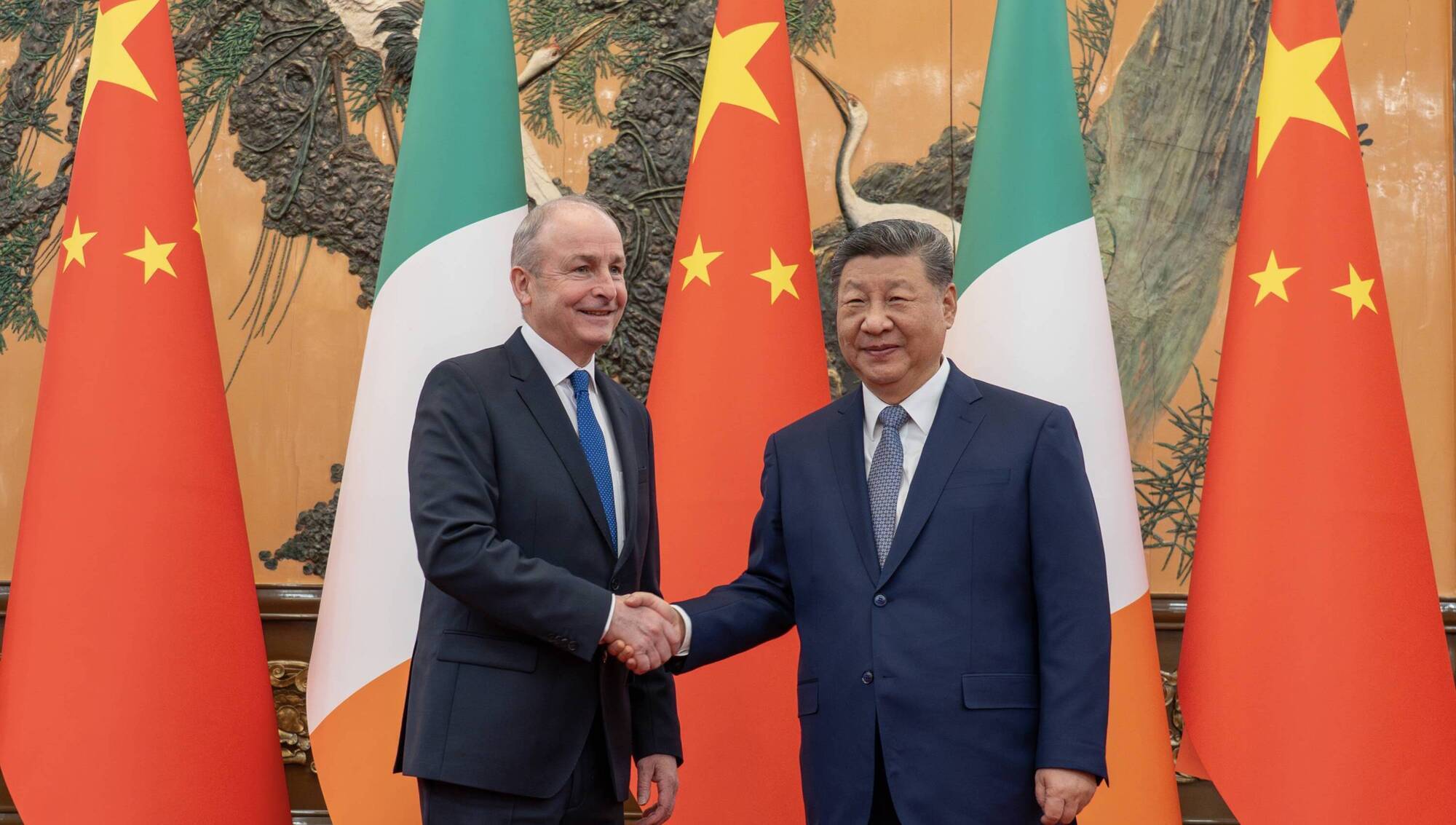
Taoiseach Micheál Martin meeting with Chinese president Xi Jinping in Beijing on Monday. Discussions about human rights are becoming more difficult as we approach the country's EU presidency.
Ireland prides itself in being a small but deeply committed European nation, militarily neutral, with an open economy and a reputation for being a key values-based influencer in international affairs. And rightly so.
Successive governments have cultivated and capitalised upon this reputation through peacekeeping, humanitarian action and robust political leadership when faced with horrific breaches of international law such as in Ukraine, Gaza, Myanmar and Sudan.
None of this is cost-neutral to Ireland, though it is certainly easier to defend the rules-based order when at least one of the superpowers still more or less subscribes to it.
The abduction of Nicolás Maduro and Cilia Flores at the weekend, in flagrant violation of the UN Charter and the Charter of the Organization of American States, has confirmed the America-first doctrine, but has it also hinted at some limits to Ireland’s commitment to values?
The Government knows the operation was totally illegal and sets a disastrous precedent but at the moment is being tactically equivocal about it. Remember, nearly 20% of Irish jobs and a third of tax receipts depend on US investment.
The relocation of multinational companies, tariffs, threats of deportation of undocumented Irish are but the tip of the Trumpian iceberg that could head towards Ireland if we offend his sensibilities.
This is an expression of the chilling effect of power politics on small countries. We are seeing the link between political positions and practical consequences in other areas too.
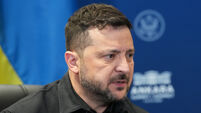
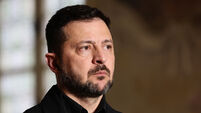
Ireland has found itself under intense diplomatic pressure in relation to Gaza and the presence of military-style drones over the Irish Sea during the recent visit of president Zelensky again exposed our defence vulnerabilities. Yet the Government, to its great credit, has largely tried to be resolute in its defence of European values.
But the year ahead will test Ireland’s commitment to these values like never before.
Ireland takes over the six-month presidency of the Council of the European Union (EU) for the eighth time on July 1. This is a unique opportunity for Ireland to shape the European agenda at a critical time when defence vulnerability, trade uncertainty, and the politics of chauvinism continue to loom large.
Ireland will also find itself at the heart of EU engagement in Ukraine at a moment of historic importance for the security and prosperity of the entire continent. The consistency of our words and our actions matter more than ever, at home and abroad. We cannot afford to fudge our position.
Our EU presidency priorities are currently being finalised but must align with the EU’s Strategic Agenda for 2024-29 which places European values at the heart of the European project.
These values include what many of us would consider to be the basic features of a civilised modern state, “respect for human dignity, freedom, democracy, equality, the rule of law and respect for human rights … which remain the cornerstone of [the European] Union”.
It is difficult then to understand how in the same breath Ireland has aligned itself with a parallel club seeking to fundamentally weaken Europe’s human rights architecture in Strasbourg and to divide the population into those who have rights and those who have not.
Yet, on international human rights day (December 10), 27 states including Ireland, made clear their intention to target the European Convention on Human Rights (ECHR) to loosen rights protections for migrants in particular, and sent a strong message that they want a freer hand in a raft of areas including to deport foreign criminals, despite the fact that states are already doing just that.
The argument seems to be that “migrants” have too many rights protections; an incredibly dangerous fallacy which plays into the hands of the radical right and fans the flames of intolerance.
Worse still, it could set a troubling precedent such that future European governments of a different political persuasion could crack down on any other area of fundamental rights such as media freedom, civil society, trade unions, LGBTQ+ rights, or access to justice.
Whether accidental or deliberate, this process strikes at the heart of the rule-of-law based order. Today’s policy shortcut will become tomorrow’s vulnerability.
Ireland’s dramatic values U-turn regarding the ECHR is all the more puzzling as our diplomats work tirelessly to secure a seat for Ireland on the UN Human Rights Council (HRC) for the 2027 to 2029 term.
In a healthy democracy, we mustn’t avoid difficult public policy discussions about human rights (or health, housing, neutrality or any other matter), but we must consider facts and consequences instead of drifting into the shallow waters of ideological convenience.

When it comes to reconciling lofty ideals with gritty public policy, consistency is enormously challenging. As Ireland makes the final preparations for its ascension to council president, it must reflect on what it gains by eroding human rights in Europe, when the entire world order based on the rule-of-law is under threat.
Consistency is indeed challenging, but for a nation that prides itself on being a values-based influencer, it is the only currency that truly matters.
- Dr Andrew Forde is assistant professor of European Human Rights Law at Dublin City University (DCU) and commissioner on the Irish Human Rights and Equality Commission (IHREC) since 2023.

CONNECT WITH US TODAY



Be the first to know the latest news and updates