Ireland did not take part in talks with Taliban — justice minister
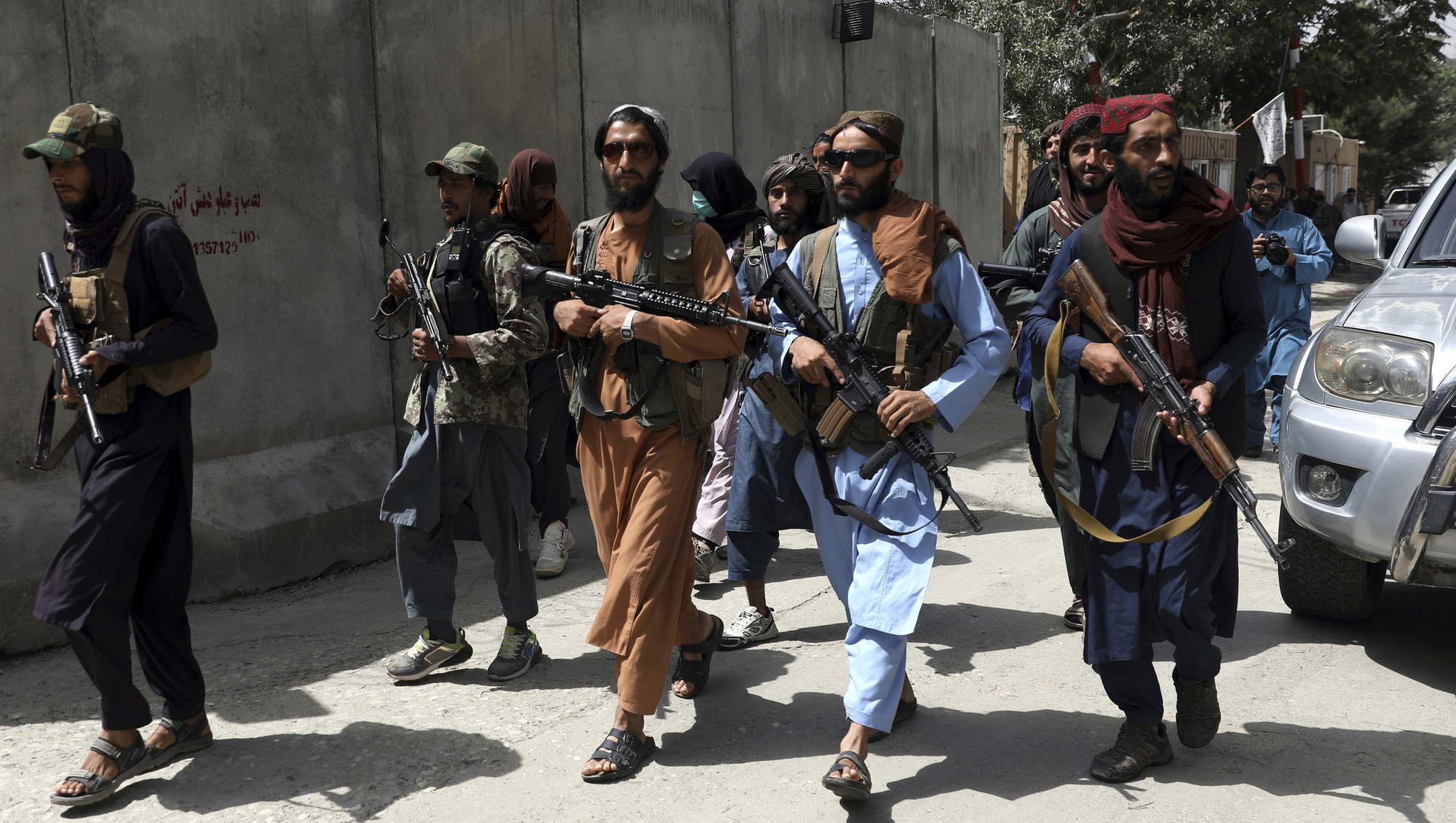
Taliban fighters taking control of the Wazir Akbar Khan neighborhood in Kabul, Afghanistan, on August 18, 2021. File picture: Rahmat Gul/AP
Justice minister Jim O’Callaghan has confirmed that the Government did not attend a controversial EU meeting with the Taliban, amid accusations that those present risked normalising a brutal regime.
The meeting sparked fierce backlash, with campaigners warning that the June talks between EU officials and a Taliban delegation in Brussels sent the wrong message to a regime that has banned girls from school beyond the sixth grade and sought to erase women from public life, while its ranks include two leaders accused of crimes against humanity.

The talks, to discuss how to scale up the deportation of Afghan migrants, were met with widespread outrage.
Read More
The EU and its members have not recognised the Taliban government since the militant group returned to power five years ago, after 20 years of war against a government backed by a US-led Nato force.
The meeting, which took place on June 22 and 23, was to focus on “the return and readmission of Afghan nationals without a right to stay in the EU”.

In a parliamentary question, Fianna Fáil TD John Lahart had asked Jim O’Callaghan “if any Irish officials attended the meeting; if the Government had been informed, who attended on behalf of the European Commission and the Member States; if women were present, the safeguards that were discussed and if the Government requested that the European Commission publish the attendee list, agenda and meeting record in the interests of transparency”.
In response, Mr O’Callaghan said that the meeting was held during the Cyprus presidency of the Council of the EU, and while his department was aware of the meeting, “there was no representative from Ireland in attendance, and documentation, including the agenda, location of the meeting, or the list of attendees, was not shared with Ireland”.
He added: “Ireland’s position on returns in a broader sense is well articulated at European Union level.
"Ireland is supportive of utilising voluntary returns provided that return is voluntary, safe, dignified, and durable.
“Ireland is open to consideration of all options regarding enforced returns, provided that any proposed option is practical, represents value for money, and would be carried out in full compliance with respect for fundamental rights, including the principle of non-refoulement.”
The UN has criticised a recent “cascade” of Taliban edicts and laws banning women from universities and most employment, denied teenage girls education, and imposed strict dress codes. In March, the UN said the country was a “graveyard for human rights”.

Between April and June 2026, UN human rights monitors recorded arrests over hairstyles, public floggings for broken fasts, and the 296th consecutive day that Afghan women have been barred from UN premises simply for being women.
Between June 6 and 8, at least 30 women were arrested in Herat for wearing “improper hijab”. Days later, the de facto ministry of Hajj and religious affairs announced that “observing hijab” would be the topic of the sermon on June 19.
- Paul Hosford, Deputy Political Editor