Councillors urge Government to give proceeds from derelict properties tax to local authorities
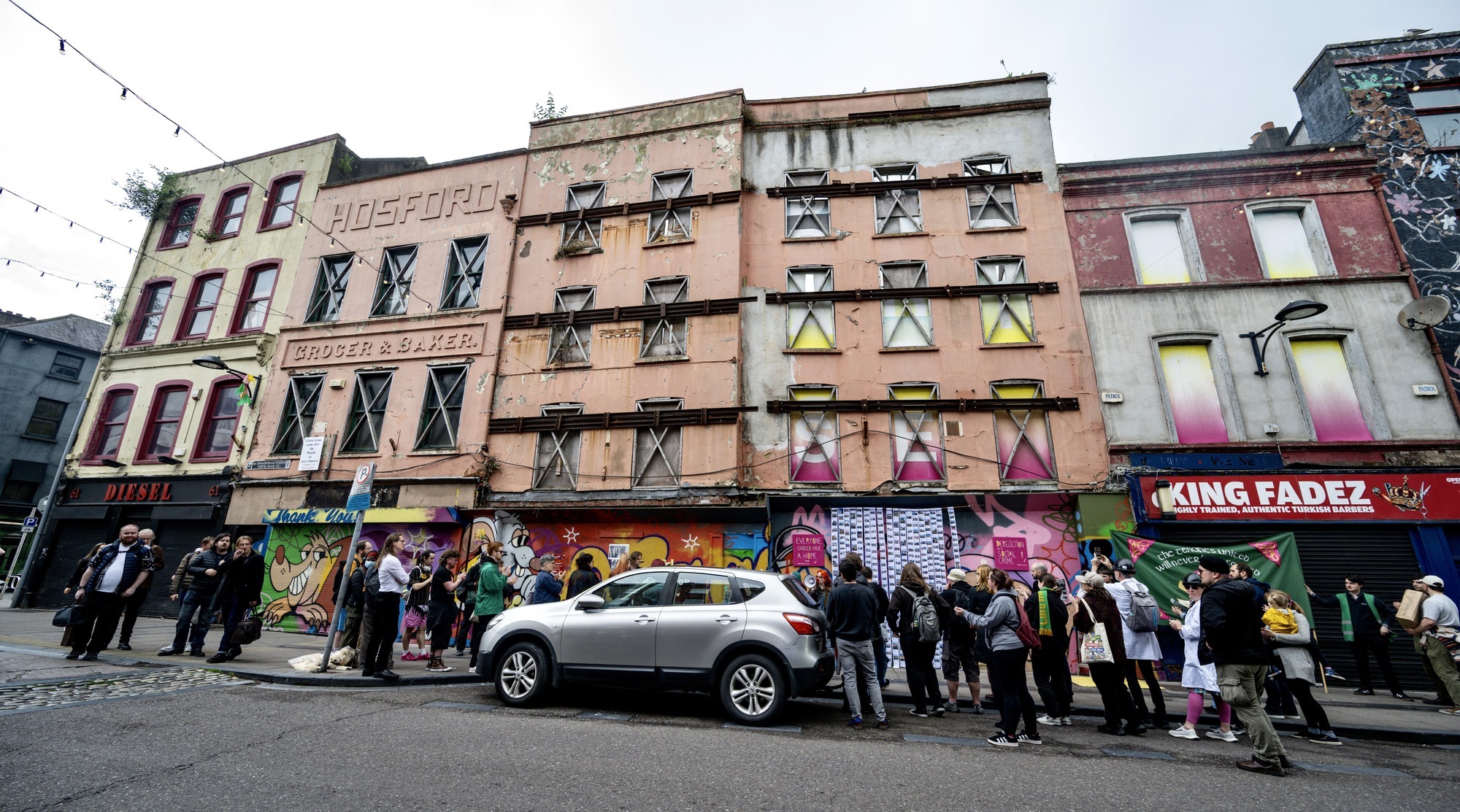
Protesters outside a derelict building on North Main Street in Cork City during an anti-dereliction demonstration last year. Picture: Chani Anderson
The Government has been urged to ensure any funds collected through a tax on derelict properties should go back to the local authorities, instead of central funds.
The call was made ahead of Tánaiste, Simon Harris, briefing the Cabinet on Tuesday about plans to introduce the new tax in the upcoming Finance Bill. He made the announcement about the new tax on Sunday.
It will initially apply to properties in urban areas with populations of 4,000 or more before being rolled out to towns with populations of 2,000 or more. It will replace the current derelict sites levy.
Kerry-based Fine Gael councillor John Sheahan told the : “It would be another revenue source taken from the council, as was the household charge and we had the residential property tax taken as well.
"What we really need is to give teeth to the councils to actually instruct their chief executives to chase up this tax — we don’t have the power of Revenue and that is where the difference lies.”
Mr Sheahan added that instead of hitting out at the councils, the government should “enhance the powers at local level and if that’s not working, then by all means go to Revenue”.
Read More
Cork City Fianna Fáil councillor Terry Shannon raised similar concerns.
“The issue for us is that is revenue lost from the local authority. Is central government then going to take over the responsibility for dereliction?”
Meanwhile, the Labour chair of the Councillors Executive, Dublin City councillor Dermot Lacey, said it is “extraordinary that the Tánaiste was seeking to point the finger at councils after more than a decade of housing shortages, town centre decline, and underinvestment in local government."
Irish Planning Institute president Gavin Lawlor said the system in this country requires urgent change. He said Waterford has carried out “Herculean work” in setting up its own special purpose vehicle and bringing back derelict or vacant sites in the town centre.
“It's made quite a significant difference to certain parts of the city," he told Newstalk. "What's the definition of derelict? Is it vacant for 20 years? Does that constitute derelict? Does it have to have a roof?”
He warned that new legislation will have to tightly define what is defined as dereliction.
Mr Lawlor believes that the new tax could benefit young people who will choose to buy a “doer upper” in the town centre rather than having to purchase an expensive brand new house in a housing estate.
2,140 sites were registered as derelict last year. However, it is understood that the real figure could be as high as 19,000.
On Sunday, Simon Harris told reporters that the move to introduce a tax has been driven by “frustration” and “some bit of anger” that thousands of properties with housing potential remain idle in the midst of a housing crisis.
CONNECT WITH US TODAY



Be the first to know the latest news and updates