'Frustrated' Simon Harris announces new derelict sites tax to be administered by Revenue

Tánaiste and finance minister Simon Harris said on Sunday that the move was being taken out of both frustration and anger that councils had allowed dereliction to go untaxed. Picture: Collins
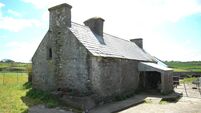
The Government is "angry and frustrated" at local councils for "badly failing" on dereliction, prompting a new tax to be introduced to tackle the scourge that will be administered instead by the Revenue Commissioners.
Tánaiste and finance minister Simon Harris was scathing in his criticism of local authorities as he revealed the new tax. He will brief Cabinet on Tuesday on plans to introduce the tax as part of the upcoming Finance Bill.
He said on Sunday that the move was being taken out of both frustration and anger that councils had allowed dereliction to go untaxed.
"This is quite a novel approach that the Irish Government has taken," Mr Harris said.
"We're taking it out of frustration, we're taking it out of some bit of anger, quite frankly, that the scourge of dereliction is in our communities, that local authorities have not done enough to rectify it."
Read More
Mr Harris said that councils have had the power to collect a derelict sites levy, but that "if you were to look at the derelict sites register, you'd swear to God dereliction was only in a couple of counties".
"We've given them extra staff, we've given them extra funding, and they haven't done enough on dereliction.
We're going to have to take this over, because we can't leave it to the local authorities, because they failed in their job to administer the derelict sites. They've badly failed, with a few notable exceptions, by the way.
"And so we're now going to legislate in this year's budget to bring in a derelict sites tax and to have Revenue collect it, and that will focus the minds around dereliction."
Mr Harris said that property owners would be faced with a "choice" on what to do with their holdings. Latest estimates indicate there were about 19,438 residential derelict properties across the State at the end of 2025.
In the first phase of its introduction, the tax will apply to properties in areas with populations of 4,000 or more, which will make it applicable in 107 cities and towns across the country.
A second phase will extend the measure to a further 64 towns with populations of 2,000 or more, bringing the total number of locations covered to 171.
The Tánaiste said the primary objective of the measure was not to collect tax but to "encourage behavioural change and support the revitalisation of communities by bringing long-term derelict buildings back into productive use".
The new tax will be administered by Revenue, while local authorities will maintain derelict property registers and identify properties that meet the relevant criteria.
Officials are continuing to develop the detailed design of the scheme, including exemptions, appeals mechanisms and ownership verification arrangements, ahead of legislation later this year.
Mr Harris also aimed at councils over what he said was a failure to zone adequate land for building.
"I've sat in front of far too many chief executives of far too many councils...and they eyeball us and say they've done enough, and they haven't. They're letting young people down," Mr Harris said.
- Paul Hosford is Deputy Political Editor.

CONNECT WITH US TODAY



Be the first to know the latest news and updates