Bridging the Gap: Parents build a case for a new special needs school in East Cork
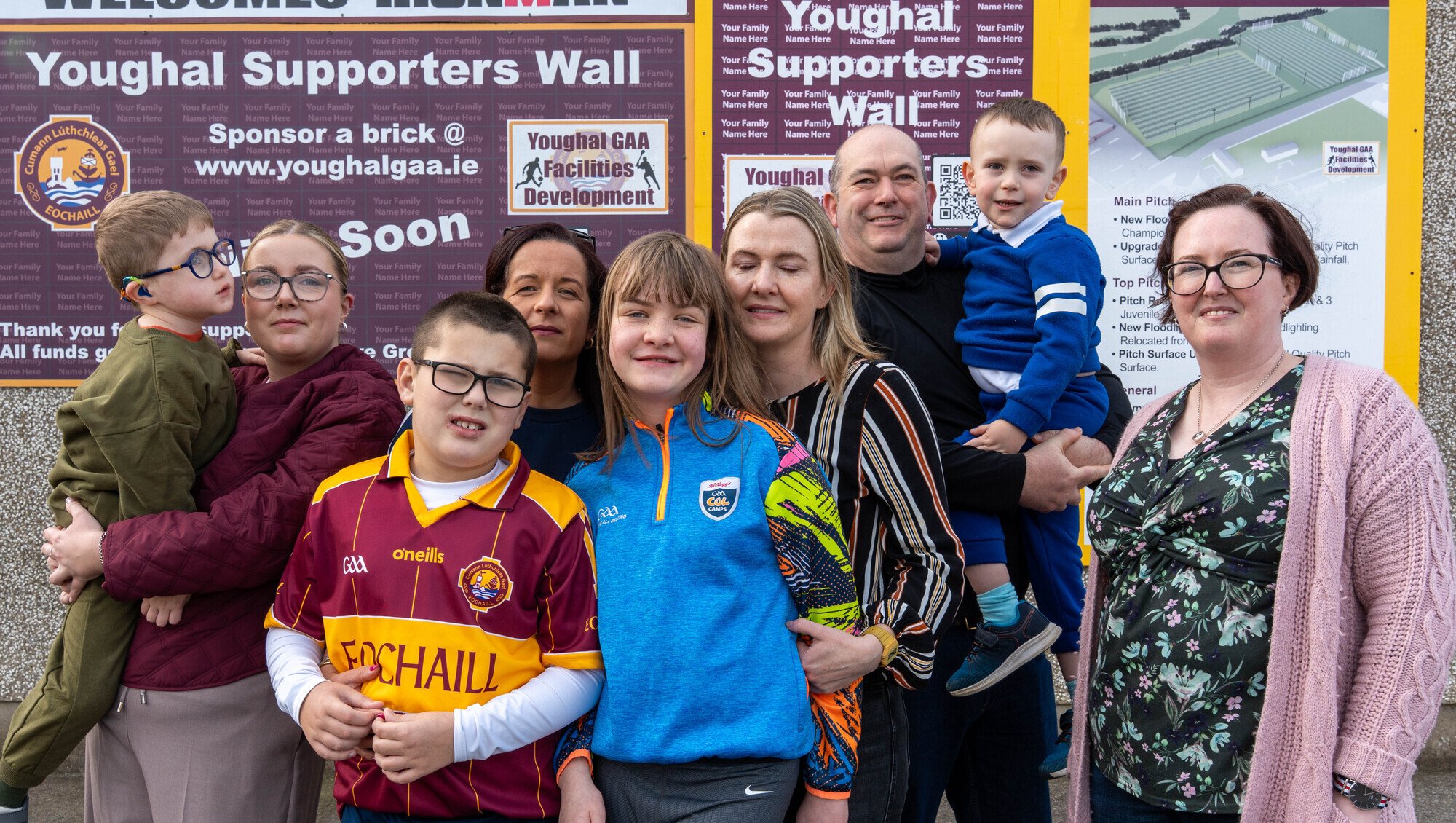
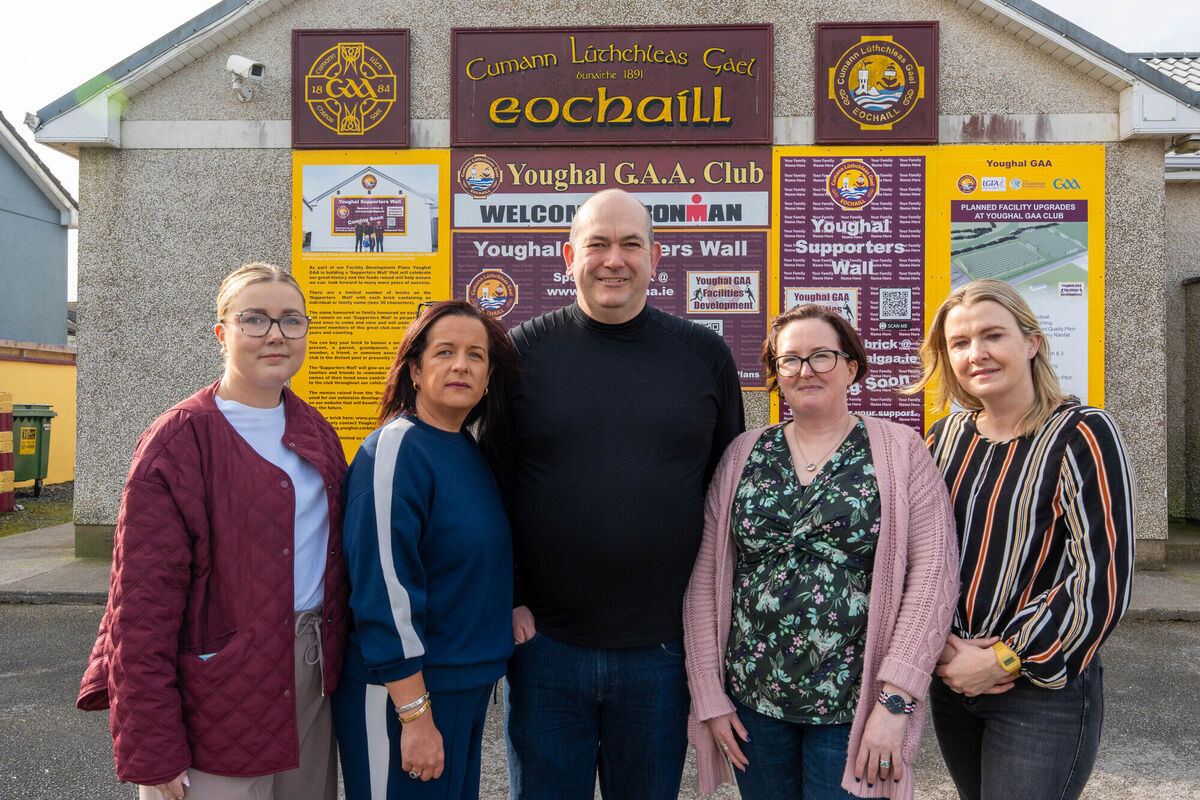
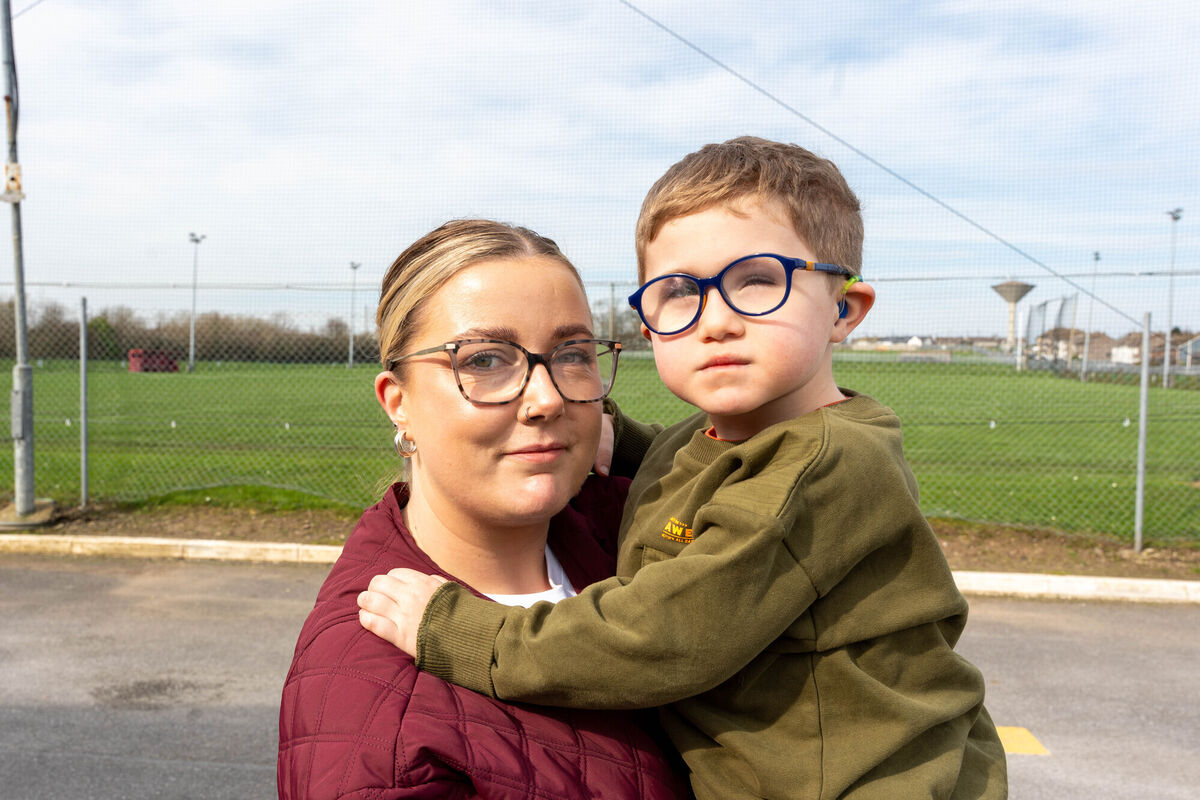
Parents and their children at Youghal GAA (left to right): Nikkie Foley and Colm (aged 5), Neasa Ormond and Jack Ormond (aged 10), Patricia O Connell and Grace (aged 11), John Phillips and Sebastian Phillips (aged 4), and Frances O’Callaghan. Picture: Noel Sweeney
The move to ‘big’ school brings new worries for parents. For the eldest child in a family, the transition from primary to post-primary is uncharted territory.
With it comes new responsibilities like lockers and timetables, exam halls, and more subjects. There’s a lot for parents to get their heads around too, long before their child sets foot in the door, like open nights and admissions policies.
If they are lucky enough to have multiple options, they will have to make important decisions about which school to send their child. Usually, as the first to break new ground, the eldest children in the family bear the brunt of these worries.
In the seaside town of Youghal, East Cork, John and Clair Philips are already thinking carefully about where their youngest child, Sebastian, a Junior Infant student who is almost six years old, will go to post-primary school.
Read More
Sebastian is autistic and pre-verbal, flourishing in his class at Bunscoile Mhuire, the primary school he attends with his sisters Olivia, nearly 12, and Isabel, who is eight.
His big sister Olivia will leave primary school long before him. She was recently diagnosed with ADHD, and her parents expect her to attend mainstream secondary school locally when she starts in September 2027.
“We don’t have the same worries,” John explained. “It's a straightforward kind of pathway, whereas Sebastian, we are already thinking about where he will go.”
All too often, the worries are different for parents of children with additional needs. Instead of open nights and first day nerves, it's the stress and worry of finding a suitable school place within a reasonable commute.
For the best part of two years, a group of parents in Youghal have been steadily gathering data, analysing enrolments and building the case for a new special school locally for children with additional needs in Youghal, East Cork and Waterford.
Initially, the ‘Bridging the Gap’ campaign, made up of Nikkie Foley, Neasa Ormond, John Phillips, Frances O’Callaghan, and Patricia O’Connell, was hopeful of establishing a new type of provision.
Spurred on each year by headlines and radio segments about the students the system failed to plan for, the group wanted to get ahead by anticipating the likely demand for classes and support in their area, and avoid repeating an annual pattern.
Now, with the summer holidays looming, the new school year is catching up on their head start in planning, and they feel as though time is running out. Children in the group are due to start in fifth and sixth class come September.
“It is very hard not to become bitter over it,” John said.
"It's been hard for us as a group to not understand why, when we’ve provided so many answers, that we are getting such a lack of engagement on how we can solve such a big problem for our area.”
The group has mapped data and completed in-depth surveys with local families, documenting the experiences of over 100 families, about travel burdens, unmet needs, and concerns around post-primary transition.
The ‘Bridging the Gap’ group said the fact that this work has been carried out voluntarily by families navigating complex education and care systems “underscores both the urgency and the depth of need”.
Their proposal is a local issue, but one that highlights issues around delayed planning, post-primary bottlenecks, and gaps in provision replicated across the country.
Youghal has just one post-primary school, Pobalscoil na Tríonóide, which takes students from 15 feeder schools in Cork and Waterford. Across these 15 mainstream primary schools, there are 18 autism classes.
Read More
At post-primary level, Pobalscoil na Tríonóide has four. There are no options for special schools closer than in Dungarvan, Carrigtwohill or Cork City.
St John’s Special School in Dungarvan has 72 pupils, with just under a third of those coming from the Youghal catchment area. Last year, the school held a lottery draw, overseen by a local garda, to decide which children on its waiting list got a place.
Through coffee mornings and weeks of work gathered around kitchen tables, the ‘Bridging the Gap’ group analysed enrollment data from the area’s 15 feeder schools.
In the process, they discovered a key figure used in forward planning for special education provision is likely to be a severe underestimation, in their locality at least.
Close to 12% of students enrolled across primary schools in the area are autistic, or awaiting an assessment, more than double the estimate of the 5% education authorities work towards nationally.
That 5% prevalence rate of autism is and of itself a recent upwards revision. In 2019, the National Council for Special Education (NCSE) put the national prevalence of autism at 1.55%, or one in every 65 students.
Of the 2,214 students across the catchment area, 113 autistic students attend mainstream with supports, 109 attend a special class, and 42 are awaiting assessment.
Gaps in provision mean that some children have been forced to commute up to 120km daily for school. Long commutes lead to anxiety, dysregulation, and displacing children from their local communities.
The Department of Further and Higher Education recently published a policy paper on accommodation, branding commutes over three hours daily “unsustainable” and “excessive” for third-level students.
“We have children in our town aged as young as four and five being bused for those times every day to access an appropriate education,” John said.
“We were talking with parents whose children are leaving home at 7am to get to Dungarvan for 9am. We were talking to parents whose children are sleeping both ways on the school transport in the morning, because they were so tired from the hours travelling everyday.
“When kids are travelling, they are going to school in a state where they are incapable of learning because they are at sensory overload.
"If you've upset your child on the way into school, maybe you shouted and roared about being late again, with a typical child, the odds are, that by break time they'll be able to get on and they will have shaken it off.
“Autistic children can't do that. When they are getting caught in traffic, when they are experiencing noise and delays due to traffic, it's taking whole days learning away from them.”
A spokesperson for the Department of Education and the NCSE said 25 new post-primary classes have been sanctioned to open for this September, including a new class in Youghal.
To date, 546 new special classes have been sanctioned by the NCSE for the next school year, including 63 in Cork.
“The recently established special schools in Cork continue to expand for the coming school year with additional places in East Cork, Rochestown, and North Cork Community Special Schools.
The department and the NCSE will continue to monitor closely the need for additional special class and special school places across East Cork as part of forward planning for the 2027/2028 school year and beyond.
“The NCSE also continues to engage closely with schools and families to track the placement of children and young people and determine the current remaining level of need for specialist places at local level.”
Neasa Ormond’s son Jack, 11, also attends Bunscoil Mhuire. “We know that we can fill a school no problem,” she said.
“They think that its ok for our children to be taken out of our community and sent to another town for school.”
If Jack becomes dysregulated, she can drive to his primary school quickly, she said. “I can help sort out the situation, and he can finish his school day.
"If I have to ship him off to another town, he’s going to be on ‘meltdown mode’; the other kids will be affected. The teacher mightn’t be able to finish her school day. It's not ideal for anyone, but especially not Jack.”
Ultimately, the goal is a new school, she said. The group has identified possible sites, even looked at costs, based on staffing, taxis and bus escorts.
“We know a school won’t be built [overnight], and time isn’t on our side. Jack is going into fifth in September. We don’t have a lot of time,” she said.
“We would take anything if they just agreed to a special school in Youghal.”
Nodlaig Murphy is a teacher at one of Bunscoile Mhuire’s five autism classes.
“My understanding is that parents at this point, unlike the parents of children in mainstream where they can just say ‘my child will go to their local secondary, done and dusted’, these parents don’t have that security.
"They have to apply in the hope their child will get a place, which in itself is a huge issue.
“They apply for places and they wait and hope and pray they get a place, and it's not necessarily with their peers. It's all down to numbers; There are X number of spaces each year, changes from year to year depending on if pupils are leaving the secondary setting.
“I have six children in my class. Will there be six places locally when they are leaving? It's not a guarantee. There’s definitely not a special school setting."
There will be students in our school who require the special school setting, she said. There are also children for whom mainstream may be an option.
“The concern with the mainstream is that in our school, they are in a small, nurturing environment.”
There’s a one adult to two children ratio in each class.
“They get a lot of regulation support. They get integrated with mainstream as much as they can, when they are able to, and they have an SNA go with them.
"If they are not regulated on a specific day, they won’t integrate, and they will stay with us in our classroom. That would be the big change if they are going up to mainstream secondary school.
A spokesperson for the Department of Education and the NCSE said special education minister Michael Moynihan intends to meet with the group again in the coming weeks to further discuss the issues raised.
For John Philips, father of Sebastian, time is of the essence.
"When your child is born, you have all your thoughts on how you think their life will go. You have it mapped out for them. Unfortunately for our children, we don't have a map for their lives right now.
"We only have the option of sending them somewhere unsuitable for their schooling or sending them somewhere where they would become dislocated from their communities, leaving their communities and becoming invisible.
"It's just as unsuitable, but just in a different manner.”
- Jess Casey is education correspondent for the

CONNECT WITH US TODAY



Be the first to know the latest news and updates