Analysis of 'Kerry Cow' bones contests claim that farming came to Ireland before 4000BCE
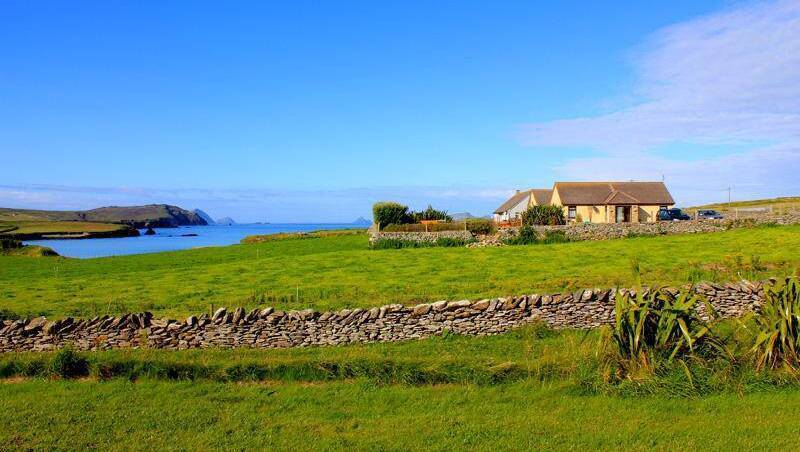
Ferriter’s Cove has dominated debates about Ireland’s prehistoric past since excavations were carried out there in the 1980s and 1990s.
Bones found in Co Kerry once thought to belong to cattle have been identified as bear and wild boar remains, challenging the long-held theory that farming arrived in Ireland before 4000BCE.
The new findings from researchers at University College Dublin (UCD) show that the so-called “Kerry Cow” bones, dated to between 8000BCE and 4000BCE, no longer support the idea that domesticated cattle — and, by extension, early farming communities — had reached or influenced Ireland before 4000BCE.
The remains, found at Ferriter’s Cove on the Dingle Peninsula more than 30 years ago, were previously believed to be the earliest evidence of domesticated farm animals on the islands of Ireland and Britain.
The discovery removes what had been considered “one of the most significant pieces of evidence” for when agriculture developed in Ireland or Great Britain. It is likely to force a rethink of when and how communities moved from Mesolithic hunter-gatherer lifestyles to Neolithic farming societies.
Ferriter’s Cove has dominated debates about Ireland’s prehistoric past since excavations were carried out there in the 1980s and 1990s.
HISTORY HUB
If you are interested in this article then no doubt you will enjoy exploring the various history collections and content in our history hub. Check it out HERE and happy reading
The remains of the “Kerry Cow” challenged existing theories about Ireland’s transition from the Mesolithic (Middle Stone Age) to the Neolithic (New Stone Age) period and had been cited as evidence that Mesolithic communities had established links with early farmers arriving from mainland Europe.
However, the theory was challenged after the remains, which had been stored at University College Cork, were sent to a laboratory in Lille, France.
Using a technique called ZooMS, which identifies species through proteins preserved in ancient bone collagen, researchers found that the fragments were not from domesticated cattle but from bear and wild boar.
Further analysis is now underway to determine whether the bear remains belonged to brown bears or polar bears, with researchers hoping the results will provide new insights into prehistoric Ireland’s bear population before the animals became extinct here during the Bronze Age.
Lead researcher Martin Moucheron, from the School of Archaeology at UCD, said: “For at least four millennia, hunting and gathering people lived on the island, and there is a common conception that they left little trace and that we know very little about them — unlike the megaliths of Neolithic farmers, who are portrayed in ways that feel very familiar in Ireland.
“But there is much we can understand about Mesolithic people just by going back to the sites and material we have, and by looking at them with new eyes and new techniques — and an open mind."
CONNECT WITH US TODAY



Be the first to know the latest news and updates