Cork's famous black swan returns to reprise her role at the lake

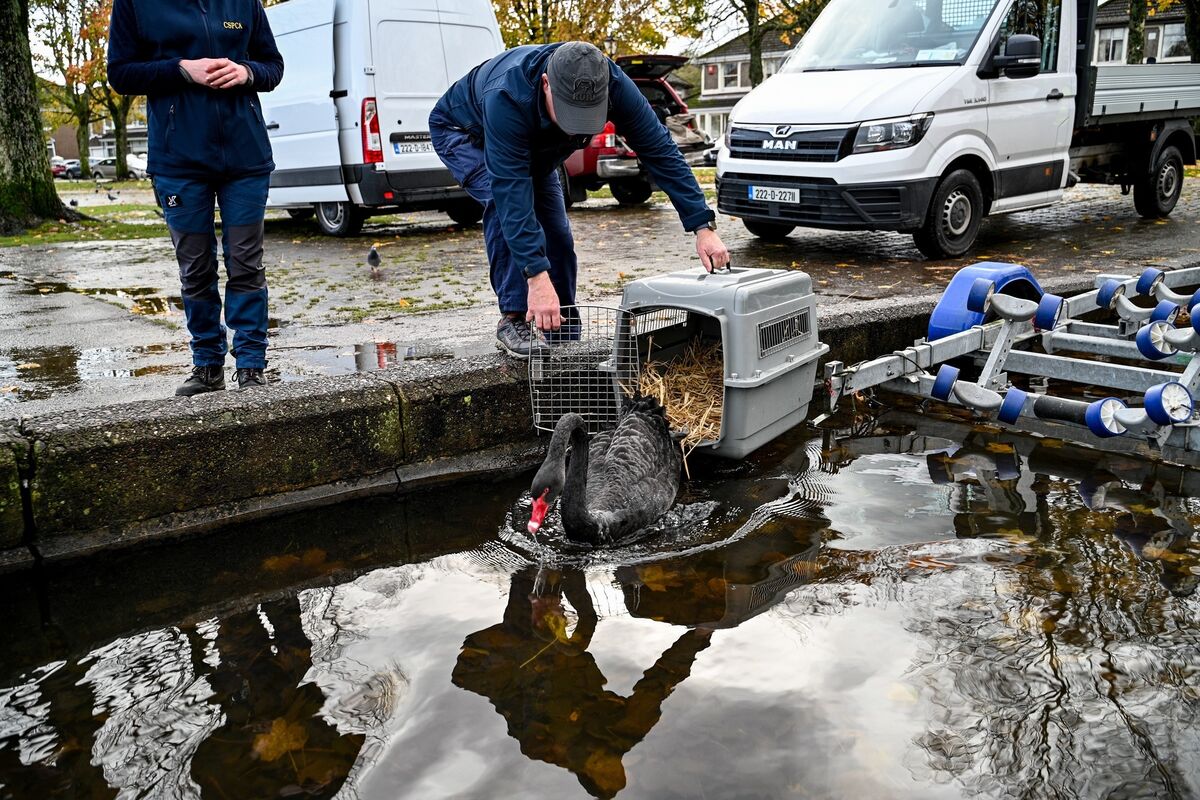
Phoebe, a rare black swan, is released back into the Lough in Cork. Picture: Chani Anderson
The cast of characters at Cork’s famous ‘swan lake’ has been restored after its last remaining black swan was returned to the wild today following weeks of medical treatment.
The Lough’s much-loved Phoebe, who lost her partner several years ago, has been diagnosed with arthritis and while she may walk with a limp, experts insist that she will be as graceful as ever on the water.
“She has plenty of years left. Being on the water is probably the best place for her now. It takes all the weight off her legs,” said Vincent Cashman of the Cork Society for the Prevention of Cruelty to Animals (CSPCA).
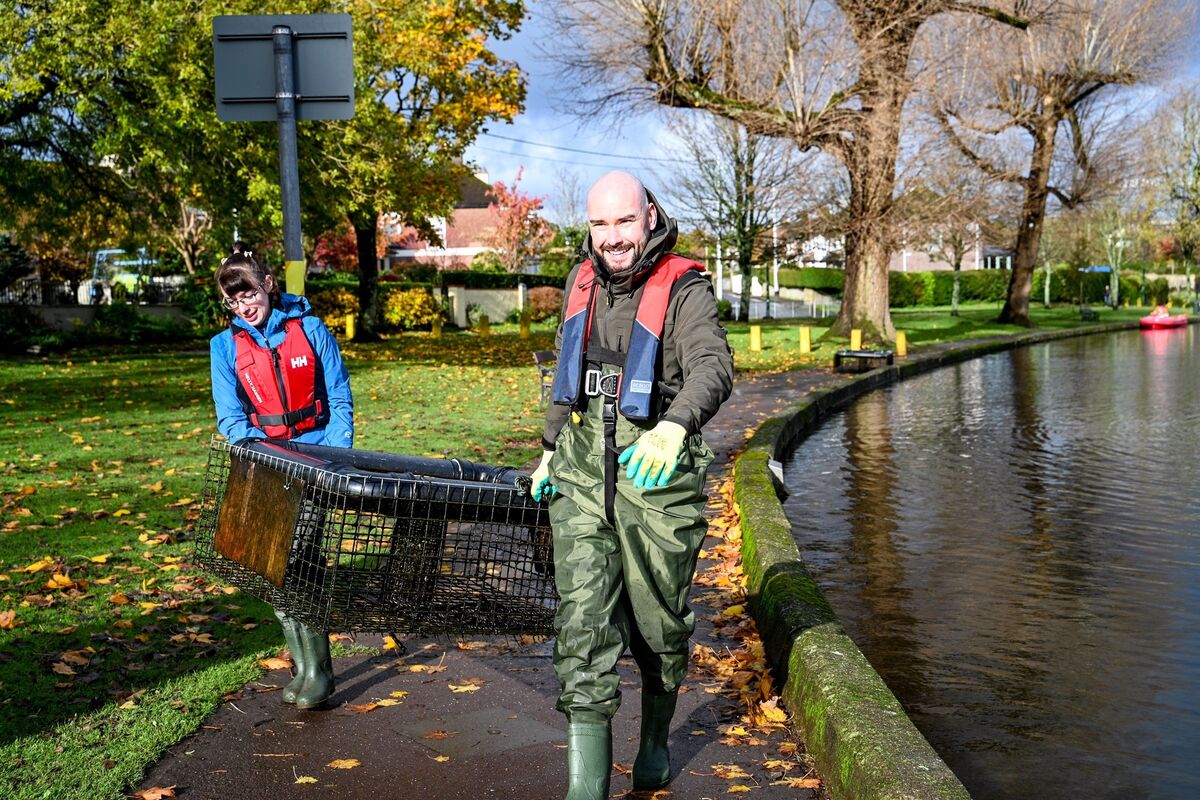
However, as Phoebe returned to the Lough, there were still some unwanted figures lurking in the water after a second attempt at trapping a group of up to eight turtles proved unsuccessful.
The CSPCA custom-made baited and humane turtle traps turned up empty again following the last inspection of the season on Thursday. The turtles are classed as an invasive species.
It means Cork City Council may now have to shell out for a turtle whisperer to catch the evasive invasive critters who are settling in for their winter hibernation on the Lough's central island.
The council’s biodiversity officer, Rosemarie McDonald, said they’ll have to come up with a cunning new plan to catch them next year.
“We need to remove them because they are disrupting the native ecosystem here,” she said.
“They could be eating the eggs of the native birds here, and they are probably eating the fish too.”
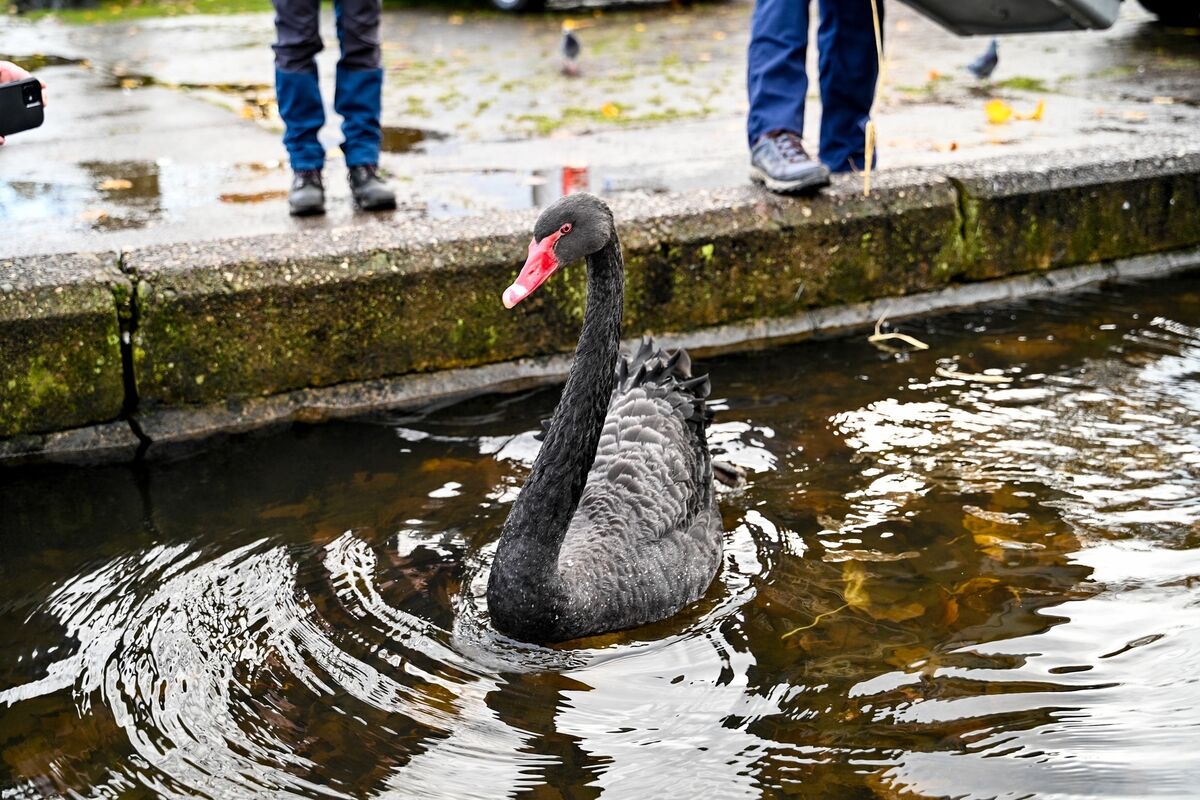
Members of the public walking at the Lough watched as Phoebe made a welcome return.
Native to Australia, black swans are rare here. The CSPCA got Phoebe from the Longford-Leitrim area about nine years ago, and she has been resident at the Lough since.
She was one of a pair but her mate mysteriously disappeared and is presumed to have died about three or four years ago. She is now the only black swan at the Lough, and has become a bit of a local celebrity.
Visitors became concerned for her health some weeks ago when they spotted her limping on the pathway which runs around the lake, and she was brought to the CSPCA.
“She was anaesthetised and x-rayed and it showed inflammation in the joint of one of the legs. She was put on a course of antibiotics," said Mr Cashman.
Phoebe arrived at the Lough on Thursday in the back of a CSCPA jeep, snuggled on a bed of straw inside a cosy carrier basket. She showed no signs of hesitation once Mr Cashman held the carrier over the water and opened its gate.
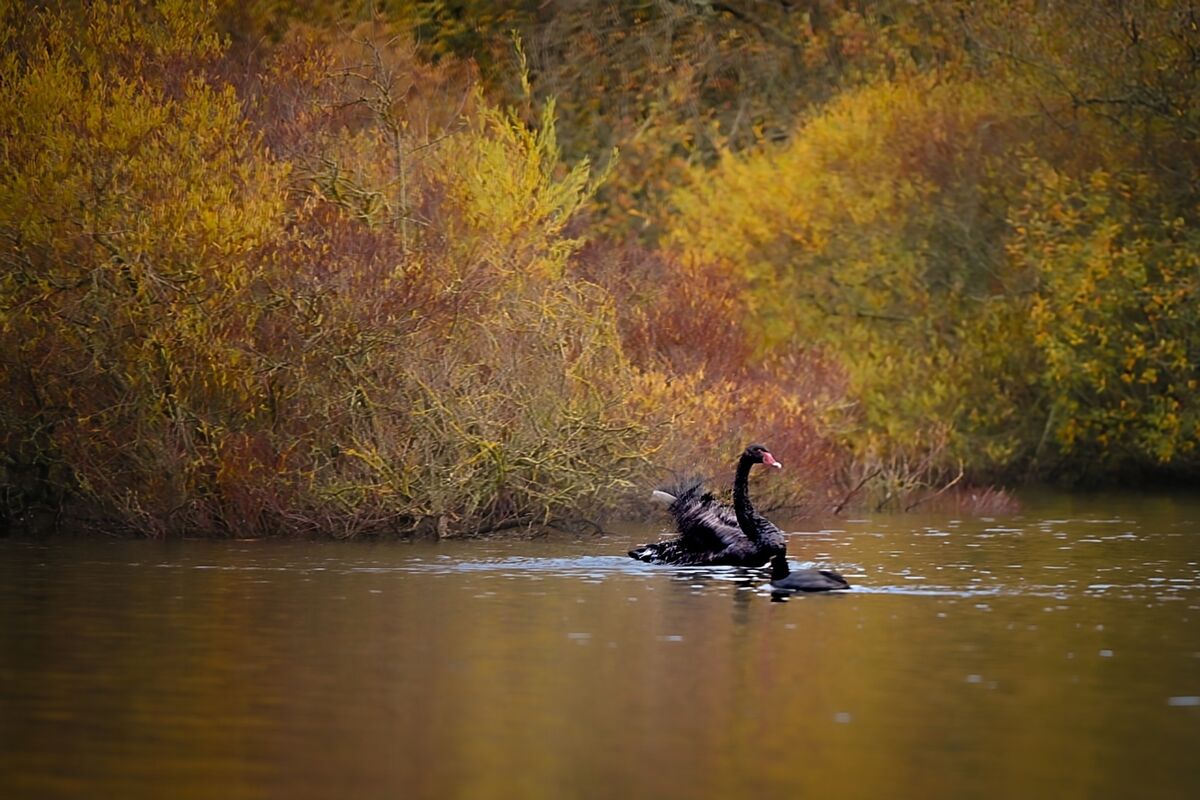
She immediately hopped out onto the water and paddled off across the lake, preening contentedly.
However, her arrival sparked concern among some of the other swans there, and they headed towards her, their heads down and their plumage up.
Mr Cashman said there will be some initial squabbling until the pecking order is restored.
Swans have a lifespan up between 25 to 30 years.
Mr Cashman encouraged visitors to the Lough who want to feed the birds to use only bird seed or green leafy vegetables.
CONNECT WITH US TODAY



Be the first to know the latest news and updates