Elegant plumage of rare black swans
A black swan turned up on the west coast of Scotland last month.

Elegant plumage of rare black swans

A black swan turned up on the west coast of Scotland last month.

ā€˜Only four others have been reported as living wild in Scotland,’ ran one media headline. In fact, this exotic species is often seen north of the border with England. Surprisingly, the sighting was discussed by swan experts online.

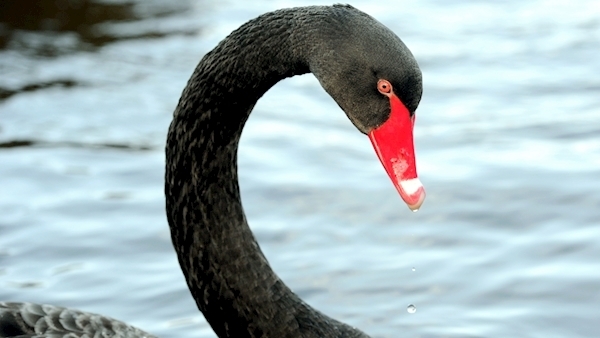
When on the ground or swimming, the black swan looks dressed for a funeral; the plumage is corrugated grey-black, the bill is bright red with a pale tip, and the eyes are red. White wing-feathers are visible when it flies. Odile, the evil female in Swan Lake, wears black. A group on the water is called a ā€˜bank’. When flying, they are a ā€˜wedge’.

ā€œAll swans are whiteā€ declared the medieval philosophers. They thought this the perfect example of a statement that is certainly true but which might, theoretically, be false. In 1697, Dutch explorer Willem de Vlamingh upset the philosophical applecart when he found black ones on the Swan River in Australia. In 1791, some of these weird birds were transported to England. They caused a sensation and it became fashionable for the great and the good to keep black swans on their estates.

The seasons are reversed in the southern hemisphere, so the newly-arrived swans insisted on nesting at odd times, their eggs having to be gathered up and incubated under farmyard hens. Such inconvenience probably added to the bird’s mystique and exclusivity as an ornamental fowl; only rich landowners had the staff and resources to tend to them.

Some adventurous black swan internees escaped to the wild; successful breeding by a feral pair was recorded for the first time in 1902. Surveyors found 37 nesting pairs in 2012. There may be up to 150 such renegades in Britain today. Breeding success is low; it’s thought that the wild population isn’t self-sustaining.

The milder Irish climate should suit these Australians. They are frequent visitors to the Lough in Cork; the Swords Estuary, Co Dublin; Bray Co Wicklow; the Claddagh in Galway and the lakes around Mullingar, Co Westmeath. A pair caused a stir last year when they took up residence in Wicklow harbour.

Black swans join flocks of native mute ones. Oddly, despite being aggressive even to their own species, mutes accept them. Though slightly smaller than the natives, the aliens are well able to defend themselves when disputes arise.

Bernard Zonfrillo of Glasgow University describes how a black swan attached itself to a family of mutes and was accepted as one of their own. When ringing the five mute cygnets, Zonfrillo had to restrain the black one, whereupon the mute cob attacked him and continued doing so until he released the adoptee.

ā€œI was quite surprised when the male mute jumped out of the water and started beating me up,ā€ he wrote. Mute swans are notoriously straight-laced when it comes to romance. Although basically monogamous, black swans have more adventurous love lives. Liaisons between blacks and mutes produce grey-black cygnets.

In the 1970s, zoologist LW Braithwaite showed that a quarter of black swan pairings are of males. A homosexual duo will associate with a female until she lays. Once she has done so, they drive her away. Taking turns incubating the eggs, they raise the cygnets together. It’s an effective strategy; more cygnets survive from these three-way unions than from male-female ones.

More in this section

Revoiced

Newsletter

Sign up to the best reads of the week from irishexaminer.com selected just for you.

Cookie Policy Privacy Policy Brand Safety FAQ Help Contact Us Terms and Conditions

Ā© Examiner Echo Group Limited