Limerick council’s tourism video an example of AI’s grim reality
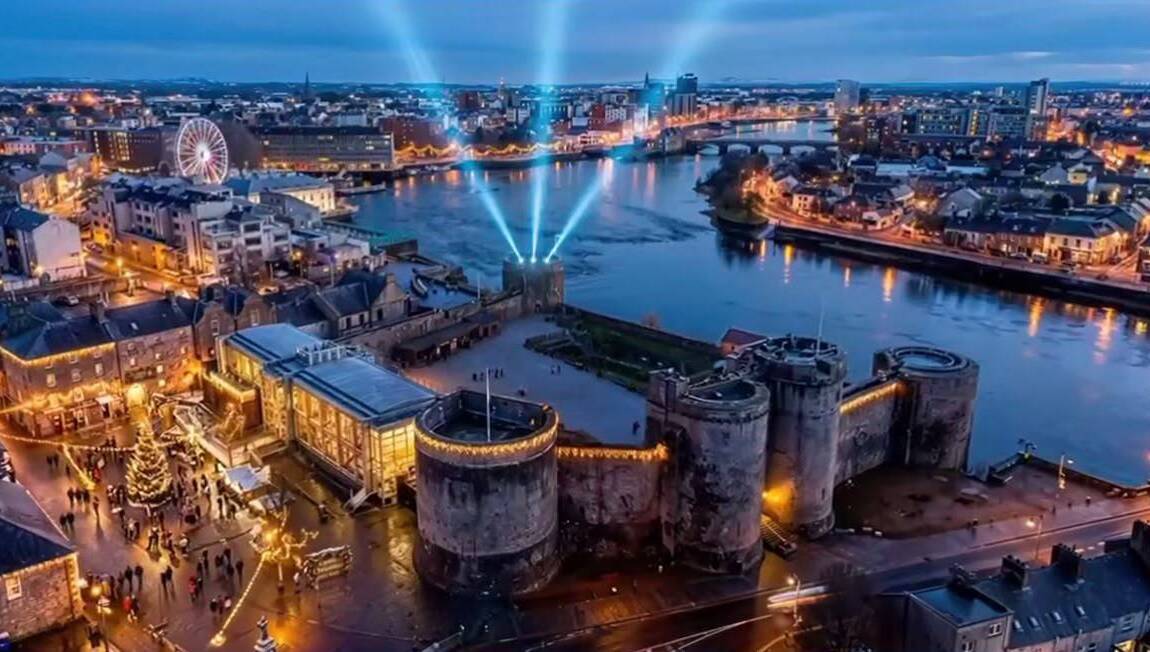
A still from the Christmas in Limerick AI-generated video. File picture
A quick poster to advertise your business? Give AI a few seconds. Fancy a video of yourself dancing with Michael Jackson to ? Not a bother. Want to see what Christmas in Limerick could look like?
Well, for €4,000 you can — with a backlash to match.
After using an AI-generated video to promote Christmas events in the city, Limerick City and County Council was widely criticised, by both elected representatives and members of the public.
The public had thoughts about Limerick’s own version of The Polar Express — as described by local councillor Sarah Kiely — none that could be expressed underneath the video, as the comments section was promptly turned off.
Dying on their hill, the council’s festivals and events team said the video had been produced by architectural rendering company Render Vision using a combination of computer-generated imagery and AI tools.
Officials said two 3D artists were assigned to the project for four weeks and it was based on technical drawings and descriptions of production elements, infrastructure, and lighting designs.
As Christmas in Limerick is a “brand-new festival concept”, they explained that creating a high-fidelity visual experience represented a complex technical challenge.
According to them, the video provides an “accurate, compelling, and realistic representation of the live event experience” to support ongoing promotional and administrative planning.
Watching the video, I rolled my eyes so far back I could nearly see the back of my skull.
Then, I thought of at least four videographers who would have done a much better job. Most likely in less than four weeks, too.
Over 70 years ago, George Orwell had warned us about the potential future of technology. Now, it’s no longer a warning tale, but a grim reality.
When he ran for election, Social Democrats councillor Shane Hickey-O’Mara promised to do everything he could to create job opportunities in the arts sector. For him, Limerick is teeming with creative talent — from animators to videographers to filmmakers.
“It was so disappointing to see this video being put out by the council, let alone their turning off the comments on the video when they didn’t like the criticism,” he said.
“It was produced by a German company and cost €4,000... This is at a time when we are consistently told that the council can’t
afford arts and culture initiatives that would aim to support and promote Limerick-based artists.”
He has worked in the arts sector for the past 14 years.
“Ask any artist and they’ll tell you how much work they can produce for €4,000,” he said. “At a time when AI is creeping into every aspect of our lives and causing deep anxiety amongst many of our artists, it’s crucial that Limerick council sets an example.”
Calling for an AI policy to be introduced, he said he hopes our taxes won’t be used to pay for any more AI videos.
The race to get ahead with AI is going faster than many people anticipated.
Could AI steal creatives’ jobs? I would like to think not, I would hope to think not. But when even a local council uses it instead of supporting their own creatives, what hope do we have?
While the tool was initially used for innovation, it is now stealing artists’ works. The systems have been scraping art, music, and books without permission or without paying a dime to their creators.
Earlier this year, Penguin Random House filed a lawsuit against OpenAI Ireland Ltd over the unauthorised memorisation and reproduction of copyrighted children’s books.
Another lawsuit saw Anthropic settling for $1.5bn after it used pirated books to train its Claude model — the largest copyright settlement in US history.
Anthropic was also sued by the Elvis Presley Estate this October for allegedly using Presley’s songs to train its AI models.
These are only a handful of lawsuits outlining the scale and speed at which the systems use the works of humans to advance AI progress.
While AI has not replaced creatives just yet, it is, however, changing the job sector in many ways. Hell, I’ve stopped counting how many times I have seen ‘AI assisted’ next to advertisements for a role title on LinkedIn. Will we be left behind if we don’t embrace AI?
While I understand local authorities are restricted in terms of budget, I would like to believe artists in Limerick deserved to be given a shot at reminding us how magical the city could become.
It might have been more surprising to stroll down to the city centre and see the Christmas magic in full action for ourselves.
But it’s not all doom and gloom. In a dystopian world where creative flair is often lost to AI, Prada has soothed many nostalgic hearts.
For their old-school Christmas advert, the brand hired Disney animator John Pomeroy to hand-draw illustrations for their winter campaign.
It’s a refreshing reminder that all is not lost, and that there is a type of magic which could never be replaced by bots.

CONNECT WITH US TODAY



Be the first to know the latest news and updates