Rural Ireland Thinks: Majority of rural dwellers welcome new rules on one-off housing
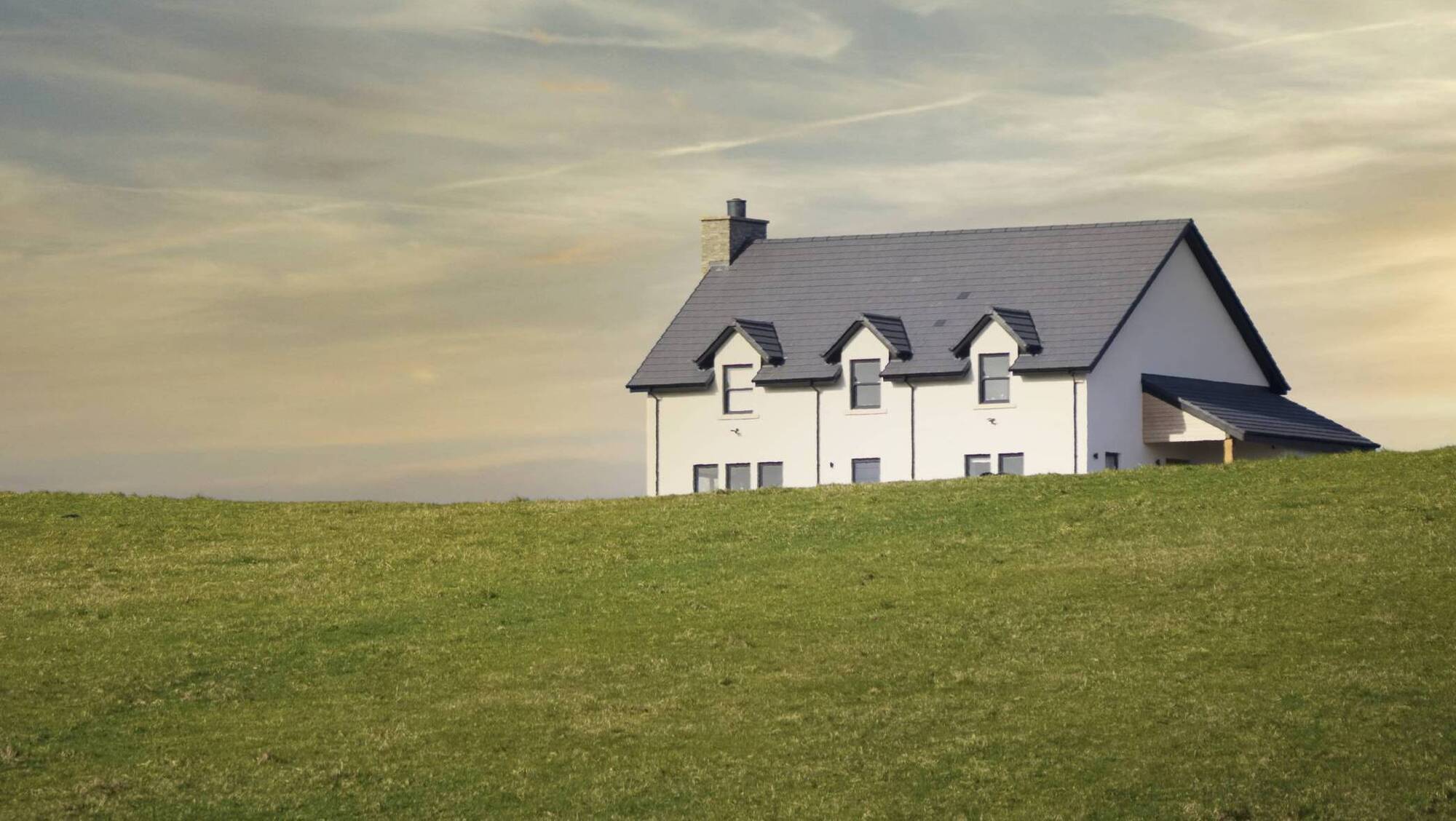
The changes could impact the roughly 109,000 people living in rural Ireland who are connected to the farming industry, according to the poll. Picture: iStock
The majority of adults living in rural Ireland welcome the Government’s moves to loosen restrictions on one-off housing, with 67% of adults in strong support of the policy.
The findings in the /Ipsos B&A poll Rural Ireland Thinks poll represent a rare win for the Department of Housing — 47% of respondents also believe the Government has no handle on the housing crisis.
The reforms were popular across all age demographics, with a 90% approval rating from those aged 65+ and an 82% approval rating from those aged 16-24.
The changes could impact the roughly 109,000 people living in rural Ireland who are connected to the farming industry, according to the poll.
“It is reassuring that we are on the right track,” local government and planning minister John Cummins told the .
Mr Cummins said the reforms would remove the “eircode lottery” and eradicate the uneven enforcement of planning regulations by different local authorities.
Current regulations requiring prospective developers of one-off homes to satisfy an economic and social need to build a one-off home are set to be relaxed under the new legislation.
Read More
Mr Cummins said he expected the plans to formally go before cabinet in early 2027, following the completion of a strategic environmental assessment.
“I don't think it's unreasonable for someone who has grown up in a rural area, has moved away, and wants to come back home and raise their family, support the local schools, support the local GAA club, to live close to their aging parents, I don’t think that’s an unreasonable expectation,” he said.
“These rule changes will make it easier for that to happen, and that will support rural Ireland.”
Others have criticised the rule changes as overtly “populist”, citing concerns more rural sprawl would stretch costly infrastructure, like roads, ambulance services and school buses.
In each case, costs would likely be borne by the general taxpayer as opposed to the individual home builder.
“Housing in the countryside may be more affordable for individual households, but the broader costs of one-off housing are always borne by society,” said Lorcan Sirr, a lecturer in housing policy in TU Dublin.
Chartered planner and lecturer at UCC Brendan O’Sullivan said the moves could lead to a “bungalow blitz” enveloping rural Ireland. He said the policy was a direct divergence from the department’s purported goals of sustainable development that would prioritise compact, high-density housing.
“When it comes to this issue, they have completely abandoned it,” he said.
Mr O’Sullivan, who worked as a planner for a host of local authorities, questioned whether there was a genuine “eircode lottery” taking place across Ireland.
“People need to drill into the data… my sense is that of all the decisions that are made, around 80%, are permitted. Whereas if you read the press, it sounds like it's the other way around — that it's 80% of refusals.”
Mr Cummins said there was no need for a “big review” to confirm such a lottery taking place.
“There has been a divergence of approach from local authority to local authority over a considerable period of time… rural housing guidelines go back 20 years.
“There's been many development plans in all counties over that period of time, and the rules have been applied in different ways by different local authorities, and that's very clear to see.”
According to research by BCE Consulting Engineers, Cork County Council saw the highest number of successful approvals for one-off housing, with 3,182 developments granted from 2021 to 2025.
Mr O’Sullivan posited increasingly spread-out developments could damage Ireland's renewable energy aims and scupper plans for onshore wind turbines.
Current legislation generally requires onshore wind turbines to be built at least 500m away from residential properties.
- The Rural Ireland Thinks Survey was funded by the News Reporting Scheme
CONNECT WITH US TODAY



Be the first to know the latest news and updates