'People in power...are living in the '50s in their head': Calls for publicly-funded childcare
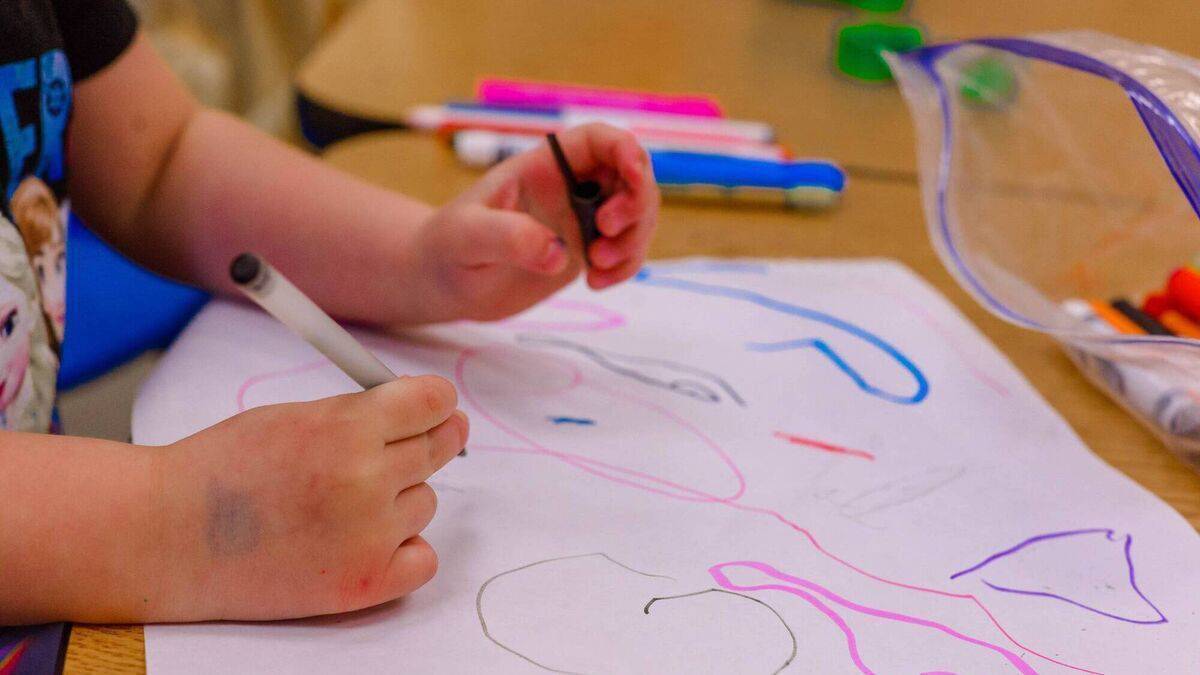
There are up to 46,000 names on waiting lists for childcare places for children aged under three, with some duplication evident as frantic parents try multiple lists to secure much-needed support. File photo
The lack of childcare options continues to heap pressure on families across Ireland, disproportionately affecting women and their careers.
The private-led model means parts of rural Ireland that are not densely populated enough to be financially viable are left in the lurch. It is too expensive, threatening to almost offset a worker's monthly wage.
A growing proportion of people in the 's Rural Ireland Thinks survey feel the cost of childcare is so high that it is becoming more of a barrier to having children.
There are up to 46,000 names on waiting lists for childcare places for children aged under three, with some duplication evident as frantic parents try multiple lists to secure much-needed support.
Some put their children's names down before they are born — even as soon as after the 12-week scan — for fear of being left without a childcare place.
Read More
If parents cannot secure a place, or if a childcare provider closes, they may try to assess the cost of a childminder, or ask a grandparent for help, or discuss which one of them will not go back to work — disproportionately impacting mothers' careers.
"This is a women's issue," Mairead Hurley of Childminding Ireland said. "Typically, it lands to the mother to figure all of this out, the juggling and the stress."
In Tullagh, Co Clare, there is no creche, pre-school or afterschool providers at all.
Petrina O'Halloran, a mother of two from Co Galway, said she was left with no childcare provision for her youngest daughter, then aged six months, when they moved to Tullagh around five years ago.
She remained out of work until she and her husband found a place with a childminder, who, this summer, stopped operating due to rising costs.
"We had a really tough summer, I'm not going to lie," she said, adding that she took unpaid parental leave over those months to manage.
She said her husband, who became self-employed in recent months, will mind their two daughters Aisling, 5, and Isobel, 8, after school.
"Tullagh is a massive growing community, it's rural, it has a massive national school, it has a massive secondary school, but there's no dedicated childcare provision.
"A lot of what Tullagh is relying on is babysitters and grandparents. It's really crazy."
She said that women were mostly affected by the lack of childcare providers.
They need a publicly-funded model of care. People say women have such equal rights now, they actually don't.
"You have people in power who are basically living in the '50s in their head, it's absolutely ridiculous."
Deirdre, a primary school teacher from Tramore who has a two-year-old daughter and 10-month-old son, said she intended to return to work under a job share system in September.
She said she thought he would get a place in her daughter's "fabulous" creche by November when he turned one, but he does not have a place.
They considered a childminder but found the rates too expensive, at €12.50 an hour, so now are hoping he gets a place in September next year, though they have no guarantee.
She said:
She said of having to delay going back to work: "It's frustrating that the choice was taken out of your hands, this is my third year out and I had been hoping to go back.
"So many people are in the same boat. I have a friend whose mam will be travelling two hours down the country every week, to spend a few days with them each week to help her out.
"Everyone is trying to come up with their own solution and it feels like it shouldn't be that hard."
She called for an "overhaul" of the system, which she said has been "broken for years", rather than tweaks and partial changes.
One suggestion is for early-years graduates, who have the same level of qualifications as primary school teachers, to be paid by the State.
Frances Byrne, director of policy with Early Childhood Ireland, said that if the government set a future date by which early years graduates would be paid the same as teachers, it would have an impact now.
"Immediately, conversations would change in universities, and members would have the confidence to open up rooms if they knew they could get the staff," she said.
"Staffing is the number one issue affecting childcare providers," former children's minister and Green Party leader Roderic O'Gorman said.
"We need to recognise that childcare providers are qualified to do a similar job as primary school teachers and we need to pay them accordingly."
He said there are various challenges with the provision of childcare in urban and rural areas, and finding an appropriate space to deliver childcare was one issue.
"All schools should be obliged to consider opening up a room for afterschool. School buildings can sit idle after 3.30pm every day, but if they could be booked for afterschool care, it could address the lack of sites where afterschool could be delivered."
The 2025 programme for government commits to reducing the cost of childcare to €200 per month per child, and pledges to fund the development of State-led early learning and childcare services.
Up to eight buildings were due to be selected for investment this year, with each one providing more than 100 places.
Minister for Children Norma Foley has said that they were on “a long journey” to get to the pledged cap of €200 a month, and said the government were “committed” to “looking after parents”.

CONNECT WITH US TODAY



Be the first to know the latest news and updates