Heatwaves and wildfires are setting back improvements in air quality – UN
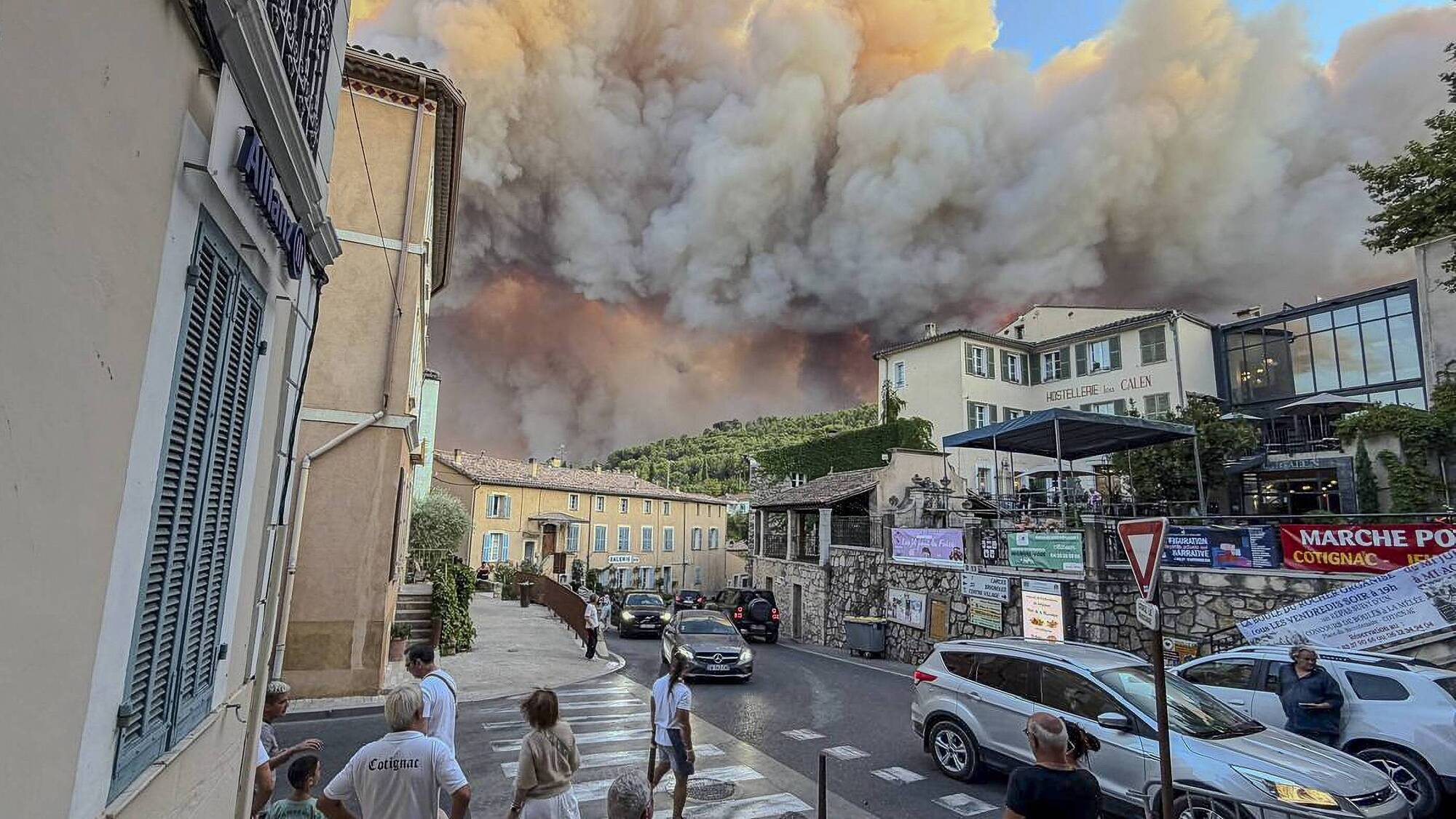
Bystanders watch the smoke and flames from a wildfire on July 21 this year in Cotignac, France. The UN's World Meteorological Organization is warning that success at curbing air pollution is being negated by wildfires. Picture: FBM Media/Getty
Big increases in wildfires and heatwaves supercharged by the climate crisis are hindering improvements to air quality around the world, UN experts have said.
Regions that had recorded a fall in pollution emitted by cars and industrial sites are facing new threats to air quality because of exposure to smoke from wildfires, according to a new report, while rising temperatures caused by intense heatwaves are causing a surge in ground-level ozone.
In turn, the pollution generated by these climate-linked events is itself contributing to climate breakdown, creating a feedback loop that risks dragging the world deeper into environmental catastrophe.
“Air quality and climate cannot be treated as separate subjects; they are deeply intertwined and have to be treated together,” said Lorenzo Labrador, a scientific officer of the World Meteorological Organization (WMO), which issued the report.
The WMO publishes its air quality and climate bulletin annually, to coincide with the UN’s international day for clean air. Among its key findings was that extreme wildfires are increasing, leading to serious health consequences because of the toxicity of the smoke they are emitting.
CLIMATE & SUSTAINABILITY HUB
This trend, “driven by a feedback loop between climate change and fire-conducive weather conditions”, is leading to an “urgent and growing public health threat”. As well as carrying high concentrations of fine particulate matter, smoke from wildfires causes oxidative stress in people’s bodies.
Read More
“Systematic reviews and experimental studies consistently link wildfire smoke exposure to increased asthma attacks, hospitalisations for chronic obstructive pulmonary disease (COPD), spiked respiratory medication use, as well as impacts on mental health and birth outcomes,” the report said. According to one study cited, a tripling of wildfires since the 1990s had contributed to almost 100,000 deaths a year between 2010 and 2018.
The report also raises the alarm about ground-level ozone pollution, which is exacerbated by the kinds of intense and prolonged heatwaves that have affected Europe over this past summer.
“Ozone is a very powerful oxidant,” Labrador said. “So once it gets to the lung, it essentially oxidises lung tissue and causes inflammation and circulatory problems, and eventually heart problems.” In heavily polluted regions, roughly one in five deaths from COPD is now attributed to long-term exposure to ozone, the report said.
Every year the WMO includes in the report anomalies in the concentrations of fine particulate matter, referred to as PM2.5. These microscopic particles and droplets, smaller than 2.5µm suspended in the air, are a severe health hazard because they can penetrate deep into people’s lungs and bloodstream. But they also pose a significant risk to the climate.
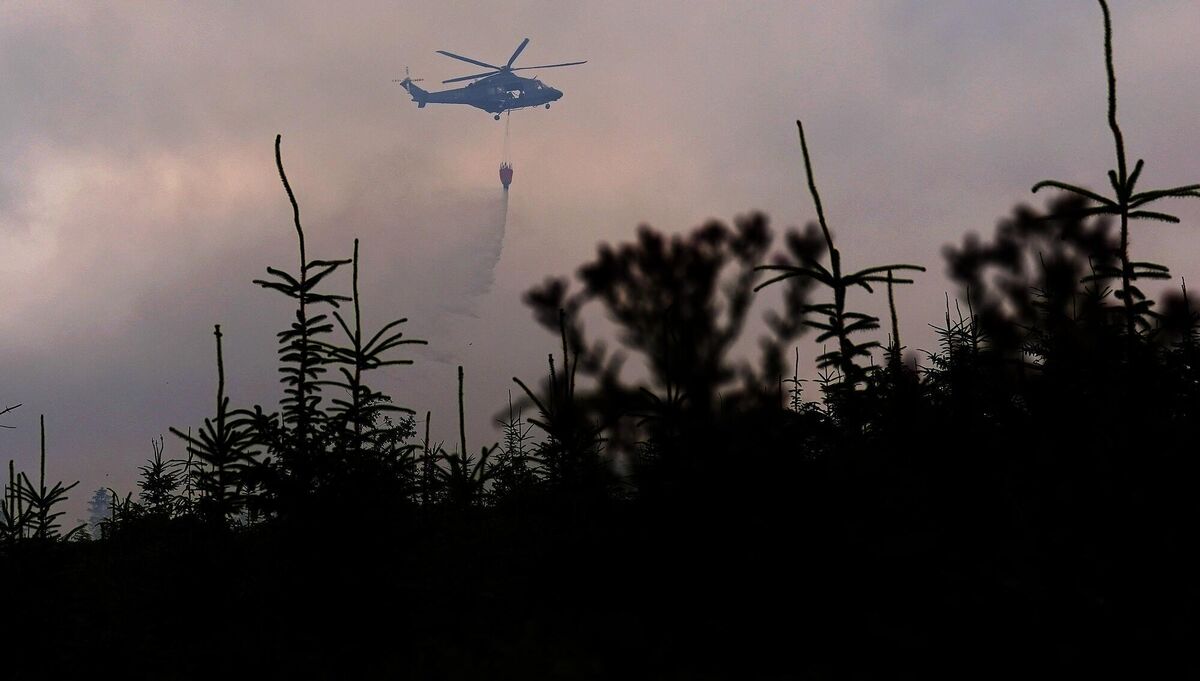
PM2.5 is emitted by fossil fuel-driven industrial activities, farming, domestic heating and transport, as well as by wildfires and dust storms.
The combination of particulates and air is called aerosol.
Once airborne, atmospheric aerosol can affect the Earth’s climate by modifying the properties, lifetime and brightness of clouds, affecting how they impact the planet’s climate, the report explains.
Eventually, those particles will settle back to earth, and there they also have an impact on the climate. One example is the deposition of black carbon – or soot – on snow and ice. When such particles deposit on ice they darken the surfaces and stop it reflecting light back into space, further accelerating global heating.
The report explains that this process leads to a positive feedback loop: “Increasing aridity and land-use change are expected to enhance aerosol emissions, creating a powerful climate feedback loop where a warming climate increases fires and dust emissions, which enhances deposition on snow and ice surfaces, which in turn accelerates melt, thereby ultimately reinforcing warming.”
The WMO’s message is that climate and air quality must be tackled together, Labrador emphasised. “Which is not terribly hard because if you abate emissions of greenhouse gases, you are at the same time reducing emissions of air quality degrading substances,” he said.
“And that leads me to the best solution that there is, which is a general abatement of global greenhouse gas emissions and fossil fuel burning.”
- The Guardian

CLIMATE & SUSTAINABILITY HUB
CONNECT WITH US TODAY



Be the first to know the latest news and updates