‘Supersized’ El Niño puts planet in ‘uncharted waters’ as extreme weather risks grow
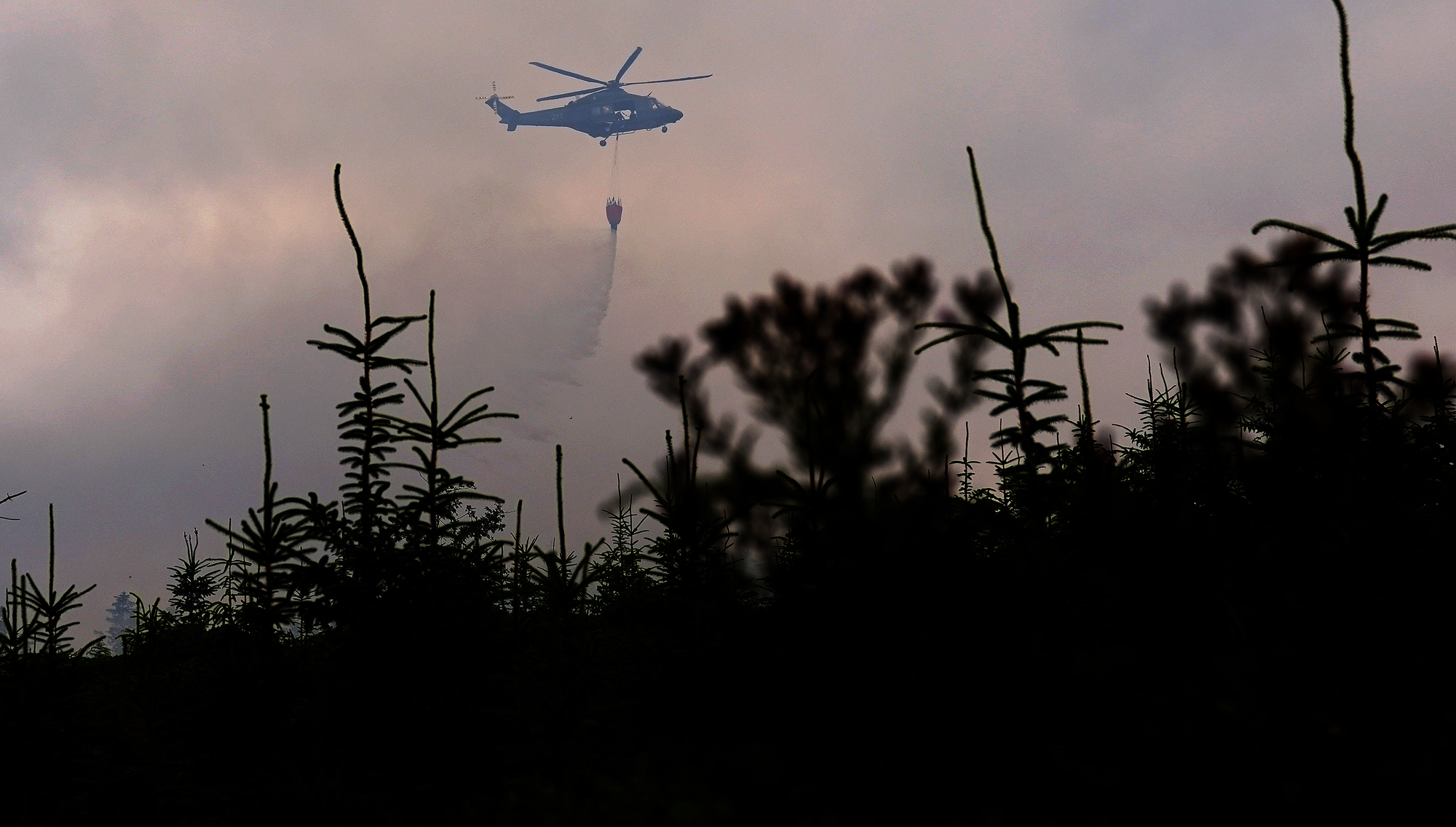
Members of the Irish Air Corps provide aerial support in tackling a major wildfire as it continues to burn at Slievenamon in Co Tipperary. Picture: PA
A “supersized” El Nino has pushed the planet into “uncharted waters”, with more floods, drought, and extreme heat forecast in the coming months, with the potential to threaten millions of lives.
Fuelled by exceptionally warm ocean conditions across the tropical Pacific, El Nino — a climate phenomenon characterised by a warming of ocean surface temperatures which influences global weather — is now expected to strengthen further during the coming months to a very strong intensity.
It will peak towards the end of this year, with climate impacts continuing well into 2027, the World Meteorological Organization (WMO) now warns.
Forecasts from the WMO indicate an almost 100% likelihood that El Niño will persist through to February 2027.
“El Nino is being supersized before our eyes. The science leaves no room for doubt: The planet is in uncharted waters, and those waters are heating up,” said UN secretary general António Guterres.
“Sea surface temperatures are rising, temperatures keep climbing, and the world is in the danger zone of extreme weather. The race now is between rising risks and our commitment to take climate action and protect people. We must win that race.”
Read More
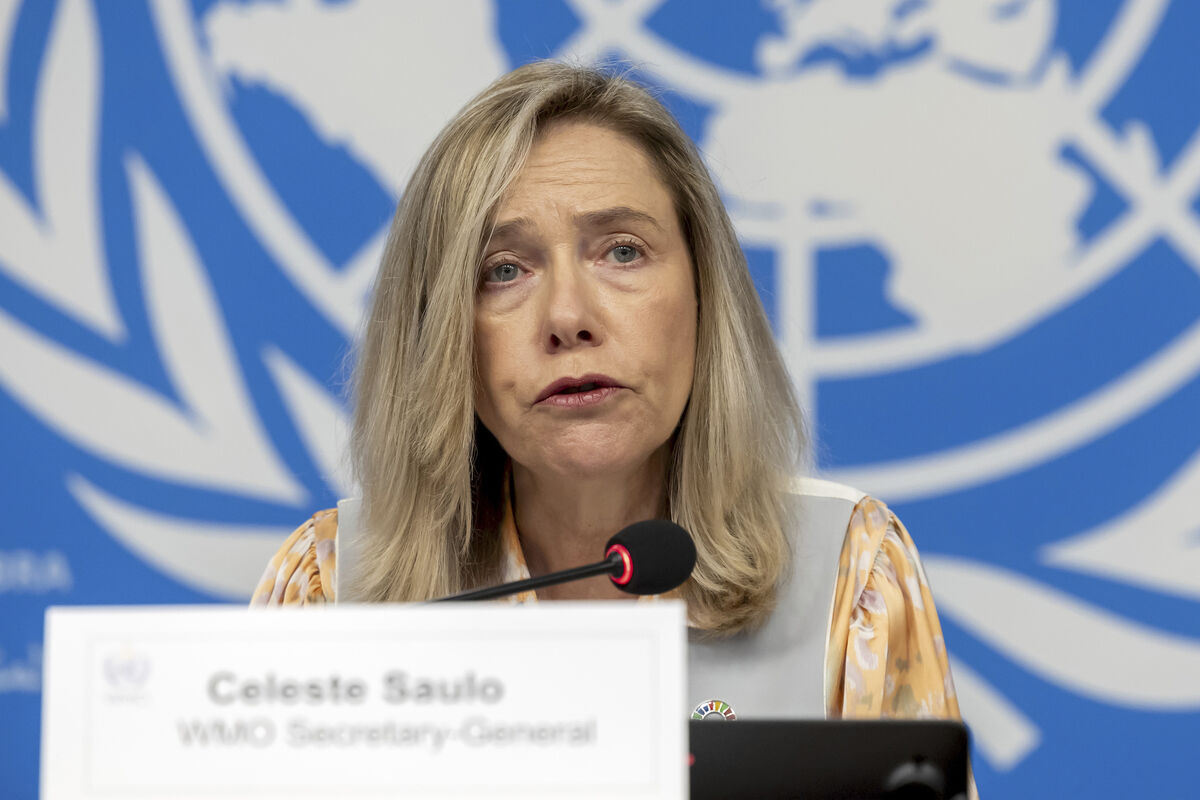
El Nino has the potential to deliver a massive blow to communities and economies across the world, said WMO secretary-general Celeste Saulo.
“We are already seeing disruption and devastation from droughts and floods and we expect these impacts to increase as El Nino intensifies,” she said.
“This exceptional El Nino demands exceptional preparation and response. We have no time to lose.”
The widely-used Niño 3.4 index, which measures sea surface temperature anomalies in central-eastern equatorial Pacific has strengthened markedly from an average +1.5C above normal during May-July 2026 and +2.0C above normal in July.
Weekly values subsequently increased further between late July and mid-August, ranging from approximately +2.2C to +2.6C above average, indicating continued intensification. And subsurface ocean temperatures are even more exceptionally warm, reaching more than 8C above average during July and early August in some areas.
Unicef has warned that more than 162m children — more than two-thirds of all children in Eastern and Southern Africa — live in areas exposed to the impact of the strengthening 2026/2027 El Nino.
Intensifying drought, extreme heat, and flooding threaten children’s nutrition, health, access to safe water, sanitation, education, and safety.
Forecasts provide a narrow but critical window to act before the most severe consequences are felt, it warned.
“The threat from El Nino is growing, and the risks for children are already clear,” said Etleva Kadilli, Unicef regional director for Eastern and Southern Africa.
“Across the region, children are facing food and water insecurity, overstretched health services and disrupted learning.
"Further, major climate shocks will likely push children and the systems they rely on to breaking point.”
Unicef assessments point to urgent and overlapping risks for children in Djibouti, Eritrea, Ethiopia, Kenya, Madagascar, Malawi, Mozambique, Somalia, South Sudan, Sudan, Uganda, Zambia and Zimbabwe.
• In Somalia, flooding could directly affect up to 2.5m people under the most severe scenario mapping, driving displacement and impacting children’s access to food, healthcare, safe water and education.
• In Ethiopia, tens of thousands of children are likely to be affected, particularly in areas already facing severe food insecurity and vulnerability.
• And, in South Sudan, drought, extreme heat and localised flooding threaten to deepen food insecurity and malnutrition, increase disease outbreaks and compound famine risks and large-scale displacement.
The WMO’s is the second major climate warning this week, after the UN said it is “unavoidable” that the target of limiting global warming to 1.5C, established by the 2015 Paris Agreement, will not now be met.
The effects of this will be “irreversible,” the UN warned, calling for urgent measures to halt global temperature rise as quickly as possible.
The UN said global heating will reach at least 1.8C under even the most optimistic future, adding that every fraction of temperature rise intensifies destructive extreme weather, glacier melt, ecosystem loss, and island and coastal city submersion.
Heating of up to 3C above preindustrial levels could lead to glaciers losing more than a quarter of their mass by 2100, raising sea levels by up to 13cm.
Global food production could decline by up to 14% by 2050 if there are not effective strategies to adapt.
The El Nino warnings come as Met Éireann’s latest climate statement shows that August was warmer and drier than average, with the mean temperature of 16.27C making it the ninth warmest on record since 1900.

CLIMATE & SUSTAINABILITY HUB
CONNECT WITH US TODAY



Be the first to know the latest news and updates