Helen McEntee witnesses ‘devastating’ impact of Israeli bombardment in southern Lebanon
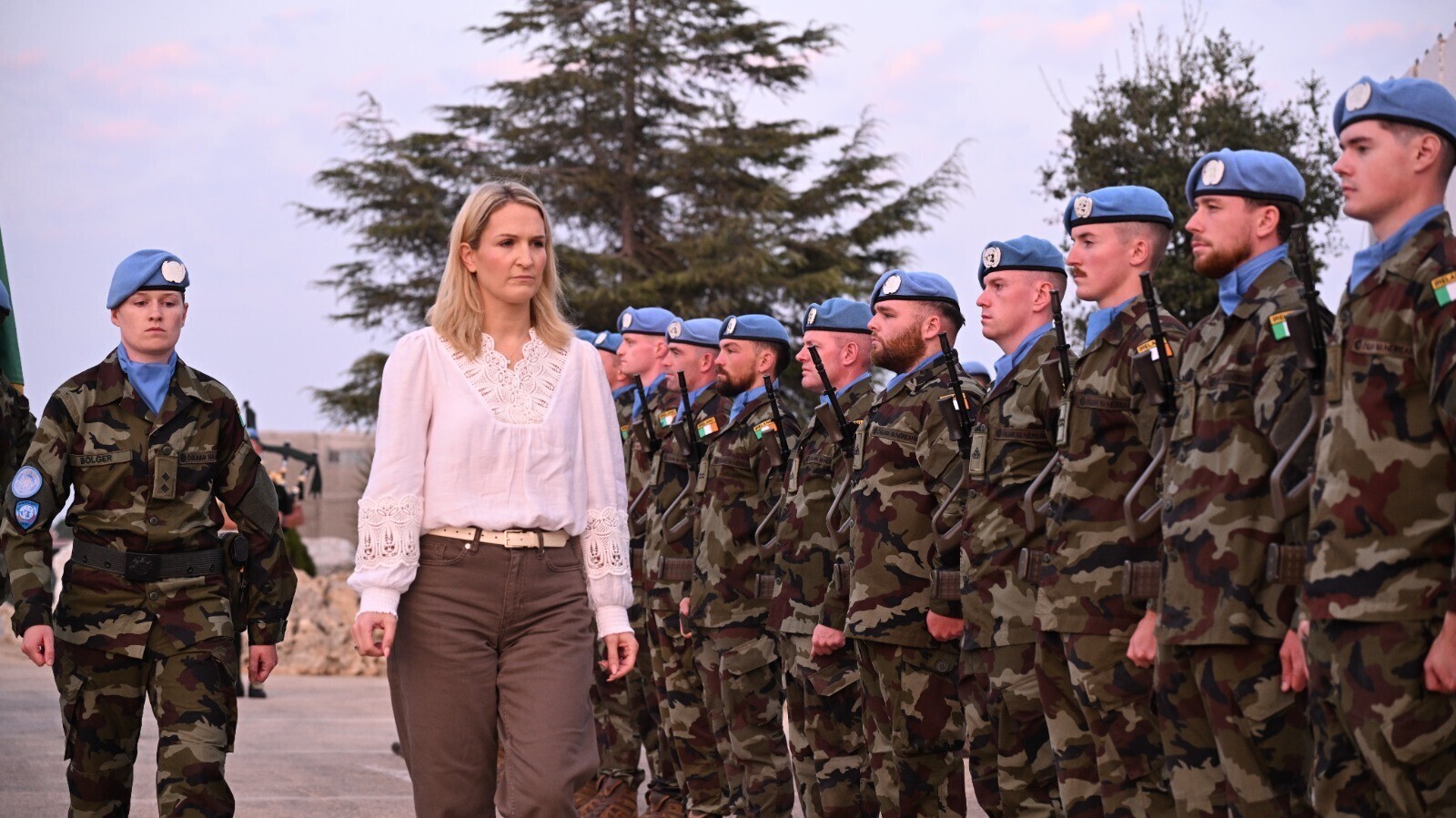
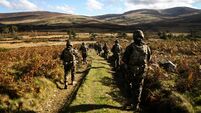
Defence minister Helen McEntee meeting Irish peacekeepers at UNP 2-45, also known as Camp Shamrock, in Southern Lebanon. Picture: Defence Forces /Press Association
Defence minister Helen McEntee said towns and villages in southern Lebanon have been “completely devastated” by mass Israeli bombardment and look like they have been "hit by an earthquake".
Speaking during a visit to Irish troops serving with the departing UNIFIL mission, the minister said there is “no sign of life” in these once-vibrant towns and villages.
During a high-security visit with Chief of Staff Lieutenant General Rossa Mulcahy, Ms McEntee said the UN peacekeeping mission, including the 300-strong Irish contingent, were the only ones that can independently record what the Israeli Defence Force (IDF) was doing in the region.
Once the mission leaves next year, she said the local communities will have “absolutely no ability” to do so and that the world is aware of the absence of independent monitoring in Gaza.
Read More
Last July the UN estimated that, since the escalation of hostilities in March this year, more than 4,300 people have reportedly been killed by Israel in Lebanon.
This includes at least 392 women and 253 children in attacks on residential buildings that killed entire families and targeted health workers.
The UN said more than 12,000 people have been injured during the same period, including more than 1,450 women and 1,036 children.
It said that an estimated 620,000 women and girls have been displaced since March 2026, including around 16,000 pregnant women as a result of evacuation and Israeli ‘displacement orders’.
Israeli prime minister Benjamin Netanyahu said the bombing and the creation by the IDF of a ‘security zone’ across southern Lebanon was to “restore security” to the north of Israel from rockets fired at civilians by Hezbollah, the Iranian-backed militia, from southern Lebanon.
Ms McEntee, who is also minister of foreign affairs, travelled from Beirut to the UNIFIL HQ in the coastal town of Naqoura in southern Lebanon.
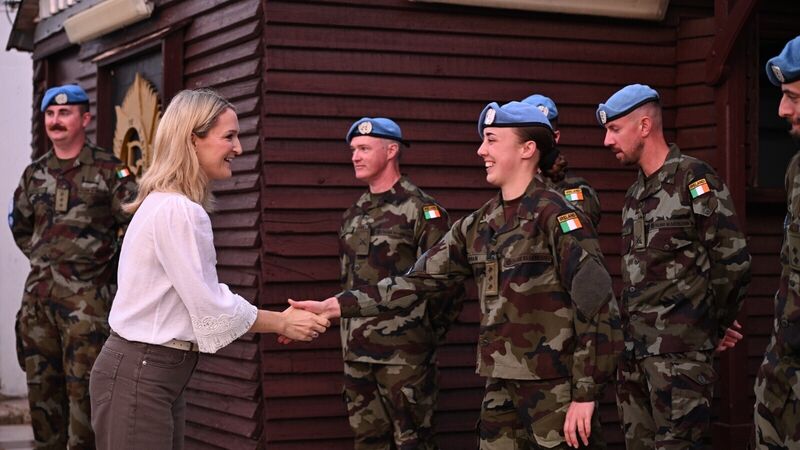
She said the impact of the bombing was particularly evident travelling from there across to Camp Shamrock (2-45) in the eastern side of southern Lebanon and just 7km from the official border with Israel.
“It looks like everywhere has been hit by an earthquake, although it’s not an earthquake,” she said.
“Every single village, bar one, are completely devastated. There’s no sign of life. It’s pretty devastating.”
The minister said even the Christian villages, which have not been impacted in the same way, are diminished in population.
She said the Irish troops are able to document all the military damage, whereas the local community have “absolutely no ability” to monitor the IDF.
Speaking from Camp Shamrock, she said: “We are surrounded by the IDF. They have been moving forward to make sure they have a buffer zone, an area that there’s no coming back from.”
The minister said the levelled villages and towns will find it “very difficult to build back up again” as the level of destruction was “devastating”.
She commended the work and professionalism of the Irish troops and said one of the biggest challenges - which, she said, has been “seen in Gaza” - is that with the ending of UNIFIL there will be no independent presence to monitor what is happening.
The minister said the Government was committed to ensuring there is some international presence, no matter how small it will be, to monitor and support the people and the Lebanese Armed Forces (LAF).
Under pressure from the United States and Israel, the UN Security Council voted in August 2025 to end the force's mandate on December 31 2026, with the drawdown of equipment and troops to start in early 2027.
Ireland boasts a continuous peacekeeping presence in Lebanon since 1978 and is one of UNIFIL’s longest-serving contributing nations.
Ms McEntee has said that the Government would like Ireland to contribute to a proposed EU mission in the Lebanon, which would be smaller, but stressed this could not happen until the current triple-lock mechanism – requiring UN authorisation – was scrapped.
Legislation allowing for that has been introduced into the Oireachtas.
Lt Gen Mulcahy said the operating environment for UNIFIL had “changed dramatically” in the last 12 months, when he visited with the Taoiseach.
He said conditions for the Irish contingent were “difficult and challenging”, but that they were capable, trained and well-equipped to continue doing their job.
He said the Defence Forces was currently preparing the next battalion – the 69th – to fly out to Lebanon in the coming weeks.
The 128th Infantry Battalion is finishing its tour.
The chief of staff said the replacement troops had expertise in planning and drawdown, which will begin in early 2027.
He said the end of the mission will be a “reset” for the Army but that he was confident there will be further missions in 2027 and 2028.
In relation to the possibility of expanding the Irish presence in the Nato-led (UN mandate) KFOR in Kosovo and the EU mission in Bosnia he indicated they will be examining that.
He said in both cases so-called ‘Force Generation Conferences’ will be held, which will examine future requirements and that over the next “12-18 months” he and his team will put options to the Department of Defence and the minister.
Ms McEntee said it was clear from speaking to Irish troops in the Lebanon that they are “keen” for the Defence Forces to continue operating in overseas missions.
During the visit, running from October 25-27, the minister is meeting president Joseph Aoun, minister for foreign affairs and emigrants Youssef Rajji, and minister of justice Adel Nassar.
Topics for discussion include the death of Private Seán Rooney, who was killed when his armoured vehicle was ambushed as it drove through Al-Aqbiya, a town controlled by Hezbullah, in December 2022.
The 24-year-old was the 48th Irish solider to die in Lebanon.
Ms McEntee is also meeting the EU Ambassador to Lebanon, and discuss the newly established European Union Support Mission (EUSM) in assisting Lebanese institutions and supporting long-term stability.

CONNECT WITH US TODAY



Be the first to know the latest news and updates